Exploring the FRI/FRII radio dichotomy with the Fermi satellite
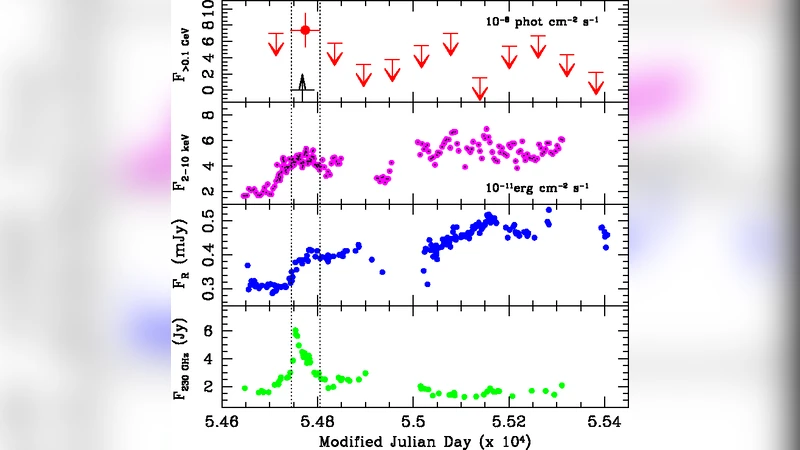
Misaligned Active Galactic Nuclei (MAGNs), i.e., radio galaxies and quasars with the jet not directly pointing at the observer, are a new class of GeV emitters. In low power radio galaxies (i.e., FRIs), gamma-rays are mainly produced in compact jet regions, although in at least one case, Centaurus A, high energy photons from the radio lobes have been also observed. The first localization of the gamma-ray dissipation zone in a high power radio galaxy (i.e., FRII) excludes major contributions from extended regions. The study of the FRII source 3C111 indicates that gamma-ray photons are produced in the jet. The site, coincident with the radio core, is estimated to be at a distance <~0.3 pc from the black hole. Although the place where high energy photons are produced is probably similar in FRIs and FRIIs, high power radio galaxies are rarer in the GeV sky. Our study of all the radio sources belonging to four complete radio catalogs (3CR, 3CRR, MS4, 2Jy) disfavors the idea that the paucity of FRIIs is due to their larger distance (and therefore to their faintness) and supports other possibilities, pointing to beaming/jet structural differences between FRIs and FRIIs.
💡 Research Summary
The paper presents a comprehensive investigation of the gamma‑ray properties of misaligned active galactic nuclei (MAGN), focusing on the long‑standing dichotomy between low‑power Fanaroff‑Riley type I (FR I) and high‑power Fanaroff‑Riley type II (FR II) radio galaxies as observed by the Fermi Large Area Telescope (LAT). Using the LAT’s all‑sky monitoring in the 0.1–100 GeV band, the authors first confirm that the majority of FR I detections are associated with compact jet regions close to the central engine, while a notable exception—Centaurus A—shows that extended radio lobes can also produce detectable gamma‑rays.
The study then turns to a prototypical FR II source, 3C 111. By correlating gamma‑ray variability with simultaneous radio, optical, and X‑ray observations, the authors localize the gamma‑ray emission site to the radio core, at a projected distance of less than ~0.3 pc from the supermassive black hole. This finding demonstrates that, despite their higher jet power, FR IIs also generate gamma‑rays predominantly in the innermost jet, rather than in large‑scale structures.
To assess why FR IIs are under‑represented in the LAT catalog, the authors cross‑matched four complete radio samples—3CR, 3CRR, MS4, and 2 Jy—containing several hundred radio galaxies. They find that roughly 10 % of FR Is are LAT‑detected, whereas fewer than 2 % of FR IIs appear, a disparity that cannot be explained solely by distance or flux‑limit effects. Simulations that scale the expected gamma‑ray fluxes according to each source’s radio luminosity and redshift show that, given the LAT’s sensitivity, many FR IIs should be observable if they emitted gamma‑rays with similar efficiencies to FR Is.
The authors therefore argue that intrinsic differences in jet physics are responsible. FR IIs typically possess highly collimated, relativistic jets that produce strong Doppler beaming only when the jet axis is closely aligned with the line of sight. In misaligned systems, the beaming factor drops sharply, reducing the observed gamma‑ray flux. FR Is, by contrast, have slower, less collimated jets that suffer less severe de‑beaming, and their broader jet structures may host more widespread particle acceleration sites, leading to a higher detection rate. The paper also discusses the role of jet stratification (spine‑sheath configurations) and shear‑layer instabilities, which can affect particle acceleration efficiency and thus gamma‑ray output.
In summary, the paucity of FR II detections in the GeV sky is not a simple selection effect but reflects fundamental differences in jet speed, collimation, and beaming geometry between the two Fanaroff‑Riley classes. The work highlights the need for high‑resolution very‑long‑baseline interferometry (VLBI) and coordinated multi‑wavelength campaigns to map the inner jet regions of FR IIs, and for advanced simulations of relativistic jet dynamics to quantify how structural variations translate into observable gamma‑ray signatures.