Optical Intensity Interferometry with the Cherenkov Telescope Array
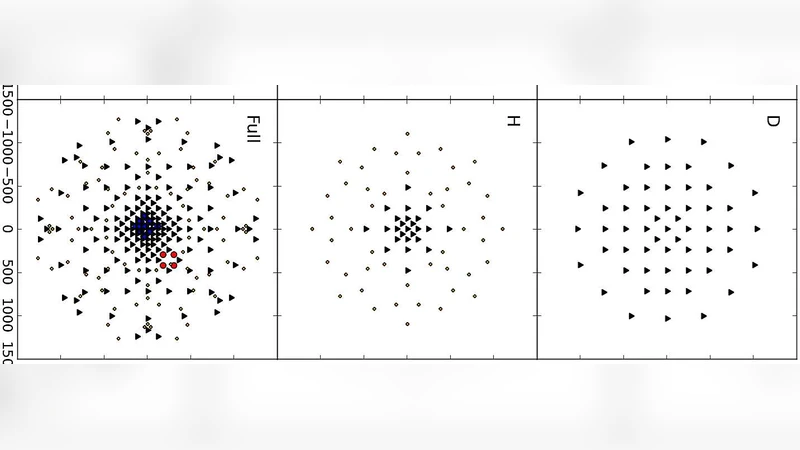
With its unprecedented light-collecting area for night-sky observations, the Cherenkov Telescope Array (CTA) holds great potential for also optical stellar astronomy, in particular as a multi-element intensity interferometer for realizing imaging with sub-milliarcsecond angular resolution. Such an order-of-magnitude increase of the spatial resolution achieved in optical astronomy will reveal the surfaces of rotationally flattened stars with structures in their circumstellar disks and winds, or the gas flows between close binaries. Image reconstruction is feasible from the second-order coherence of light, measured as the temporal correlations of arrival times between photons recorded in different telescopes. This technique (once pioneered by Hanbury Brown and Twiss) connects telescopes only with electronic signals and is practically insensitive to atmospheric turbulence and to imperfections in telescope optics. Detector and telescope requirements are very similar to those for imaging air Cherenkov observatories, the main difference being the signal processing (calculating cross correlations between single camera pixels in pairs of telescopes). Observations of brighter stars are not limited by sky brightness, permitting efficient CTA use during also bright-Moon periods. While other concepts have been proposed to realize kilometer-scale optical interferometers of conventional amplitude (phase-) type, both in space and on the ground, their complexity places them much further into the future than CTA, which thus could become the first kilometer-scale optical imager in astronomy.
💡 Research Summary
The paper proposes repurposing the Cherenkov Telescope Array (CTA), originally designed for very‑high‑energy gamma‑ray astronomy, as a kilometer‑scale optical intensity interferometer. Intensity interferometry measures the second‑order coherence function g^(2)(τ) by correlating the arrival times of photons recorded at separate telescopes. Unlike traditional amplitude (phase) interferometry, it does not require optical path length control, is virtually immune to atmospheric turbulence, and can be implemented with purely electronic links.
CTA’s planned configuration—tens of telescopes with mirror diameters from 4 m to 30 m and a total light‑collecting area of several thousand square metres—provides the photon flux needed to achieve high signal‑to‑noise ratios on bright stars (visual magnitude ≲ 6). The authors argue that each camera pixel can act as an independent photon counter, and that existing CTA cameras already operate at hundreds of megahertz sampling rates, making them suitable for nanosecond‑scale timing. By routing the digitised photon streams over high‑speed fiber or wireless links to a central correlator (implemented on FPGA, GPU, or dedicated DSP hardware), cross‑correlations between any pair of telescopes can be computed in real time.
Simulations assuming baselines up to 1 km show that sub‑milliarcsecond angular resolution (≈ 0.5 mas) is attainable, an order of magnitude improvement over current optical interferometers such as the VLTI. This resolution would enable direct imaging of phenomena that are presently only inferred: the oblateness of rapidly rotating stars, temperature gradients across their surfaces, the inner rims and wind‑launching regions of Be‑type circumstellar disks, and mass‑transfer streams in close binaries. Because the measurement relies on photon statistics rather than phase, bright‑moon conditions do not significantly degrade performance; thus CTA could be used throughout most nights without competing with its primary gamma‑ray schedule.
The technical requirements identified are (1) fast, low‑noise photon detectors (e.g., micro‑channel plates or silicon photomultipliers), (2) high‑bandwidth digital signal processing capable of handling billions of correlation operations per second, and (3) robust timing synchronization across the array (sub‑nanosecond precision). The authors note that these requirements overlap substantially with those already being developed for CTA’s gamma‑ray observations, so the additional hardware and software investment is modest.
In contrast to other proposals for kilometer‑scale optical interferometers—whether space‑based formation‑flying telescopes or ground‑based large‑baseline amplitude interferometers—the intensity‑interferometer approach avoids the need for nanometer‑level optical path stabilization, complex delay lines, and extensive adaptive optics. Consequently, the risk, cost, and development timeline are dramatically reduced, positioning CTA as the first practical kilometer‑scale optical imager.
The paper concludes that CTA‑based intensity interferometry would open a new observational window on stellar surfaces, circumstellar environments, and binary interactions, delivering unprecedented spatial detail while leveraging an existing, world‑class infrastructure. Future work should focus on optimizing real‑time correlation algorithms, improving detector quantum efficiency, and extending the technique to multi‑wavelength (spectrally resolved) imaging to extract both spatial and spectral information simultaneously.