Status of the TREND project
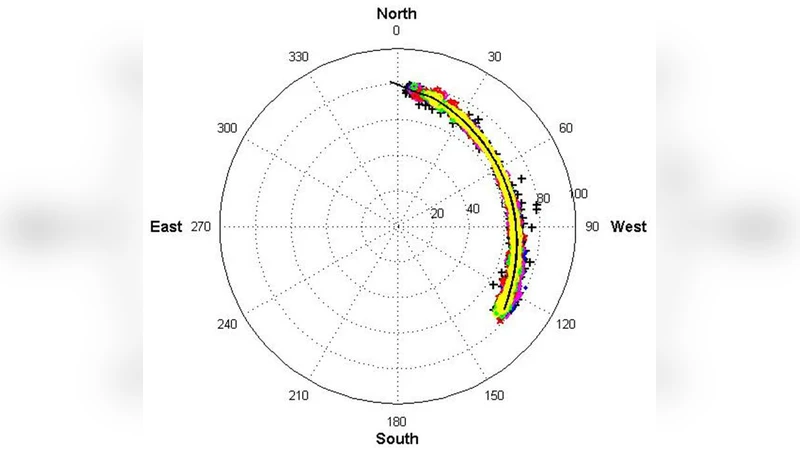
The Tianshan Radio Experiment for Neutrino Detection (TREND) is a sino-french collaboration (CNRS/IN2P3 and Chinese Academy of Science) developing an autonomous antenna array for the detection of high energy Extensive Air Showers (EAS) on the site of the 21CMA radio observatory. The autonomous detection and identification of EAS was achieved by TREND on a prototype array in 2009. This result was confirmed soon after when EAS radio-candidates could be tagged as cosmic ray events by an array of particle detectors running in parallel at the same location. This result is an important milestone for TREND, and more generally, for the maturation of the EAS radio-detection technique. The array is presently composed of 50 antennas covering a total area of ~1.2 km^2, running in steady conditions since March 2011. We are presently processing the data to identify EAS radio-candidates. In a long term perspective, TREND is intended to search for high energy tau neutrinos. Here we only report on the results achieved so far by TREND.
💡 Research Summary
The Tianshan Radio Experiment for Neutrino Detection (TREND) is a Sino‑French collaboration between the Chinese Academy of Sciences and CNRS/IN2P3 that aims to develop a large‑scale, fully autonomous radio antenna array for the detection of high‑energy extensive air showers (EAS) and, ultimately, ultra‑high‑energy tau neutrinos. The project builds on the concept that the coherent radio emission produced by the geomagnetic deflection of shower electrons and positrons can be captured with broadband antennas operating in the 30–80 MHz band. In 2009 a prototype consisting of a handful of antennas demonstrated that an on‑site trigger, based on real‑time pulse amplitude, timing coincidences, and polarization criteria, could autonomously identify candidate EAS events. Crucially, these radio candidates were cross‑checked with a parallel particle detector array located at the same site, confirming that the majority of the radio triggers corresponded to genuine air‑shower events. This validation represented a milestone for the field, showing that a purely radio‑based detection system can achieve reliable self‑triggering without external particle detectors.
Since March 2011 the full TREND array has been operating continuously. It now comprises 50 dual‑polarized antennas spread over roughly 1.2 km² on the Tianshan plateau, a location chosen for its low anthropogenic radio background and favorable geomagnetic conditions. Each antenna is equipped with low‑noise front‑end electronics and digitizes the incoming waveform at a sampling rate sufficient to resolve sub‑nanosecond structures. The data acquisition system aggregates the digitized streams, applies a hierarchical trigger (first‑level threshold on individual antennas, second‑level coincidence across multiple stations), and stores events for offline analysis. Over the past several years TREND has accumulated millions of triggered waveforms; after applying quality cuts (e.g., pulse shape, signal‑to‑noise ratio, direction reconstruction consistency) a few thousand events remain as high‑confidence EAS candidates. Ongoing analyses are focused on refining the reconstruction of shower geometry, estimating primary energy from the radio amplitude, and quantifying the residual background from atmospheric lightning, human‑made transmitters, and thermal noise.
A central scientific driver of TREND is the search for ultra‑high‑energy tau neutrinos that skim the Earth’s crust, emerge as tau leptons, and decay in the atmosphere, producing upward‑going air showers. Such events would generate radio pulses with distinctive polarization patterns and arrival directions that differ from the predominantly downward‑going cosmic‑ray showers. To exploit this signature, TREND is developing dedicated trigger algorithms that prioritize near‑horizontal trajectories and implement machine‑learning classifiers trained on simulated neutrino‑induced showers. The long‑term plan envisions scaling the array to several square kilometres, improving antenna density, and integrating real‑time direction‑finding capabilities to issue rapid alerts to partner observatories.
In summary, TREND has successfully demonstrated autonomous radio detection of extensive air showers, validated its triggers against conventional particle detectors, and now operates a stable 50‑antenna array covering 1.2 km². The project is actively processing its data set to extract a robust catalog of EAS events and is laying the groundwork for the first radio‑based tau‑neutrino searches. The results to date underscore the maturity of the radio‑detection technique and its potential to complement existing cosmic‑ray and neutrino observatories, opening a new observational window on the highest‑energy particles in the Universe.