The H.E.S.S. extragalactic sky
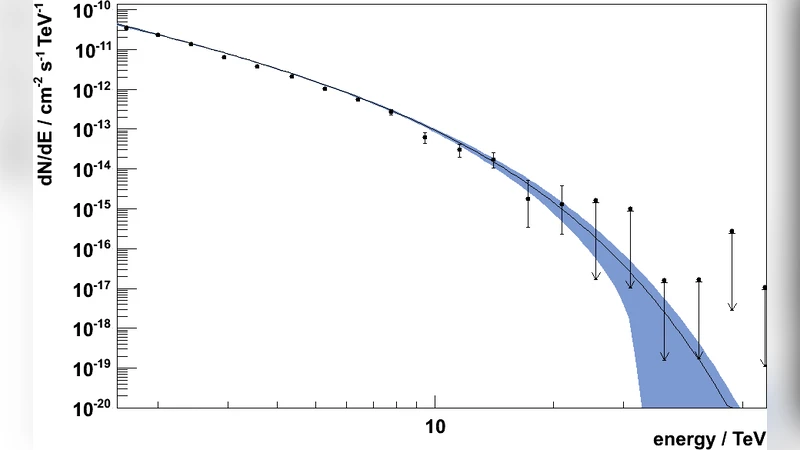
The H.E.S.S. Cherenkov telescope array, located on the southern hemisphere in Namibia, studies very high energy (VHE; E>100 GeV) gamma-ray emission from astrophysical objects. During its successful operations since 2002 more than 80 galactic and extra-galactic gamma-ray sources have been discovered. H.E.S.S. devotes over 400 hours of observation time per year to the observation of extra-galactic sources resulting in the discovery of several new sources, mostly AGNs, and in exciting physics results e.g. the discovery of very rapid variability during extreme flux outbursts of PKS 2155-304, stringent limits on the density of the extragalactic background light (EBL) in the near-infrared derived from the energy spectra of distant sources, or the discovery of short-term variability in the VHE emission from the radio galaxy M 87. With the recent launch of the Fermi satellite in 2008 new insights into the physics of AGNs at GeV energies emerged, leading to the discovery of several new extragalactic VHE sources. Multi-wavelength observations prove to be a powerful tool to investigate the production mechanism for VHE emission in AGNs. Here, new results from H.E.S.S. observations of extragalactic sources will be presented and their implications for the physics of these sources will be discussed.
💡 Research Summary
The paper provides a comprehensive overview of the extragalactic science accomplished with the High Energy Stereoscopic System (H.E.S.S.) – a ground‑based array of imaging atmospheric Cherenkov telescopes located in Namibia. Since its commissioning in 2002, H.E.S.S. has accumulated more than 400 hours per year dedicated to extragalactic observations, leading to the detection of roughly 30 very‑high‑energy (VHE, E > 100 GeV) sources outside the Milky Way, the majority of which are active galactic nuclei (AGN) of the blazar class, a few radio galaxies, and one starburst galaxy.
Key results highlighted in the article include:
-
Extreme rapid variability in PKS 2155‑304 – In July 2006 the BL Lac object exhibited a flare in which the VHE flux increased by a factor of >100 within a few minutes. The short variability timescale implies an emitting region of only a few tens of Schwarzschild radii, challenging simple one‑zone synchrotron self‑Compton (SSC) models and suggesting either multi‑zone structures, magnetic reconnection, or ultra‑compact shock acceleration near the black‑hole jet base.
-
Constraints on the extragalactic background light (EBL) – By measuring the attenuated spectra of distant BL Lac objects, H.E.S.S. derived upper limits on the near‑infrared EBL density that are lower than many earlier model predictions. This result reduces the inferred opacity of the Universe to VHE photons, thereby affecting estimates of star‑formation history and galaxy evolution.
-
Detection of short‑term VHE variability in the radio galaxy M 87 – H.E.S.S. observed flux changes on day‑scale timescales, providing the first clear evidence that VHE emission can arise from the vicinity of the super‑massive black hole in a misaligned jet system. The variability supports scenarios involving shocks or magnetic reconnection close to the jet launching region rather than emission from large‑scale jet knots.
-
Synergy with the Fermi‑LAT mission – Since the launch of the Fermi satellite in 2008, simultaneous GeV–TeV observations have become routine. Many AGN first identified by Fermi have subsequently been detected by H.E.S.S., allowing the construction of continuous spectral energy distributions (SEDs) across five decades in energy. These broadband SEDs reveal the classic double‑humped structure, but also expose deviations that require more sophisticated modeling (e.g., external Compton components, hadronic contributions, or multi‑zone SSC).
Methodologically, the paper emphasizes the importance of long‑term monitoring, stereoscopic reconstruction, and the low energy threshold achieved after the addition of the fifth, larger telescope (H.E.S.S. II). The combination of high sensitivity, good angular resolution (≈0.1°), and a wide field of view enables the detection of faint, distant sources and the study of rapid flux changes.
In the discussion, the authors argue that the observed phenomena collectively push the frontier of high‑energy astrophysics. The ultra‑fast variability demands compact acceleration zones and extreme particle energies, while the EBL limits refine cosmological photon fields. The detection of VHE emission from a radio galaxy broadens the class of extragalactic VHE emitters beyond blazars, suggesting that jet orientation is not the sole factor governing VHE visibility.
Finally, the paper looks ahead to the Cherenkov Telescope Array (CTA), which will inherit H.E.S.S.’s legacy of deep extragalactic surveys but with an order of magnitude improvement in sensitivity and a broader energy coverage (down to ~20 GeV). CTA will enable population studies of faint AGN, precise measurements of the EBL evolution, and real‑time multi‑messenger campaigns that combine VHE gamma‑rays with neutrinos and gravitational waves. The authors conclude that H.E.S.S. has established a solid foundation for extragalactic VHE astronomy, and its results will continue to shape theoretical models and future observational strategies.