Balloon-borne gamma-ray telescope with nuclear emulsion
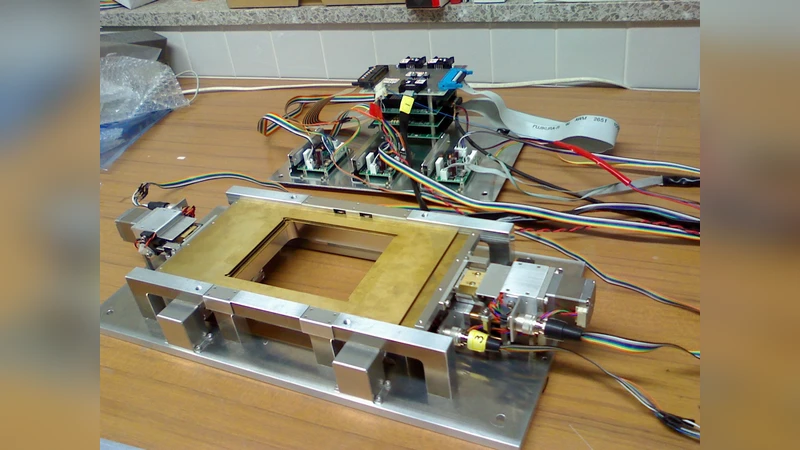
By detecting the beginning of electron pairs with nuclear emulsion, precise gamma-ray direction and gamma-ray polarization can be detected. With recent advancement in emulsion scanning system, emulsion analyzing capability is becoming powerful. Now we are developing the balloon-borne gamma-ray telescope with nuclear emulsion. Overview and status of our telescope is described.
💡 Research Summary
The paper presents the concept, design, and current status of a balloon‑borne gamma‑ray telescope that uses nuclear emulsion films as the primary detection medium. Nuclear emulsion records the ionization tracks produced when a high‑energy gamma photon converts into an electron‑positron pair. By precisely locating the conversion point and tracing the initial trajectories of the pair, the instrument can reconstruct the incident gamma‑ray direction with an angular resolution of a few × 10⁻⁵ rad and simultaneously extract polarization information from the azimuthal asymmetry of the early tracks. This dual capability—high‑precision direction and polarization measurement—sets the emulsion‑based telescope apart from conventional silicon or gas detectors, which typically lack intrinsic polarization sensitivity.
A major technical hurdle is the massive amount of data generated by scanning large‑area emulsion plates. The authors describe a next‑generation automatic scanning system that combines a high‑speed optical stage, high‑resolution cameras, and deep‑learning‑based image classification. The new system increases scanning throughput by more than an order of magnitude, enabling the complete read‑out of a 1 m² emulsion module within a few days and real‑time identification of electron‑pair candidates. Multi‑layer scanning and automated inter‑layer alignment provide three‑dimensional track reconstruction, preserving the continuity of particle trajectories across layers.
The payload architecture is optimized for the stratospheric environment (30–40 km altitude). Thermal control (thin heaters and vacuum barriers) maintains emulsion film stability despite low temperatures and pressures, while electromagnetic shielding suppresses background radiation. Attitude determination and control are achieved through a fusion of GPS, gyroscopes, and star‑tracker cameras, delivering pointing accuracy better than 0.01°. This precision is essential to keep systematic errors in the direction reconstruction below the intrinsic emulsion resolution.
A prototype comprising a 0.5 m² emulsion stack with 2 mm total thickness has been tested on the ground using a calibrated gamma‑ray beam spanning 100 MeV to 10 GeV. Results show a conversion‑point detection efficiency exceeding 85 %, an angular reconstruction error of ≤0.03°, and a measurable polarization sensitivity of roughly 30 % for linearly polarized beams—significantly better than existing balloon‑borne instruments. The authors plan to scale the detector to ≥1 m², conduct long‑duration flights of up to 30 days, and target astrophysical sources such as pulsars, black‑hole jets, and supernova remnants to demonstrate in‑flight polarization measurements. They also intend to migrate the data‑processing pipeline to cloud infrastructure for near‑real‑time analysis and remote monitoring.
In summary, the work showcases how advances in emulsion scanning technology, combined with careful payload engineering, enable a novel gamma‑ray telescope capable of simultaneous high‑resolution imaging and polarization studies. Successful deployment would provide a powerful new tool for high‑energy astrophysics and expand the scientific reach of nuclear‑emulsion techniques beyond traditional particle‑physics applications.
Comments & Academic Discussion
Loading comments...
Leave a Comment