The Science Vision for the Stratospheric Observatory for Infrared Astronomy (SOFIA)
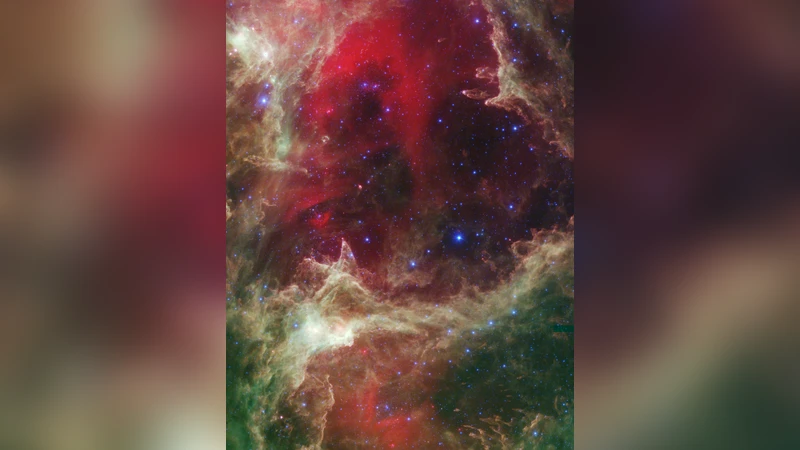
An updated Science Vision for the SOFIA project is presented, including an overview of the characteristics and capabilities of the observatory and first generation instruments. A primary focus is placed on four science themes: ‘The Formation of Stars and Planets’, ‘The Interstellar Medium of the Milky Way’, ‘Galaxies and the Galactic Center’ and ‘Planetary Science’.
💡 Research Summary
The paper presents an updated Science Vision for the Stratospheric Observatory for Infrared Astronomy (SOFIA), outlining the observatory’s technical characteristics, its first‑generation scientific instruments, and a strategic focus on four overarching science themes. SOFIA is a 2.5‑meter reflecting telescope mounted on a Boeing 747SP aircraft that operates at an altitude of roughly 12 km, thereby flying above the bulk of atmospheric water vapor and carbon dioxide. This high‑altitude platform grants access to the 0.3 µm to 1 mm wavelength regime with a level of atmospheric transmission unattainable from ground‑based sites, while still allowing for instrument upgrades and flexible scheduling—capabilities that bridge the gap between ground observatories and space telescopes.
The first‑generation instrument suite comprises:
- FORCAST (Faint Object infraRed CAmera for the SOFIA Telescope) – imaging and low‑resolution spectroscopy from 5 to 40 µm.
- HAWC+ (High-resolution Airborne Wideband Camera‑plus) – far‑infrared (50–240 µm) imaging, polarimetry, and low‑resolution spectroscopy.
- EXES (Echelon‑Cross‑Echelle Spectrograph) – high‑resolution (R≈10⁴–10⁵) spectroscopy in the 4.5–28.3 µm range.
- FIFI‑LS (Field Imaging Far‑Infrared Line Spectrometer) – 3‑D integral field spectroscopy covering 51–203 µm.
- GREAT (German REceiver for Astronomy at Terahertz frequencies) – heterodyne spectroscopy from 1.2 to 5 THz (≈60–250 µm) with sub‑km s⁻¹ velocity resolution.
These instruments are deliberately complementary: they span the mid‑infrared to terahertz regime, provide a mix of imaging, polarimetry, and both low‑ and high‑resolution spectroscopy, and can be operated simultaneously or in rapid succession during a single flight. This versatility underpins the four science themes.
-
The Formation of Stars and Planets – SOFIA will probe the earliest phases of star formation by imaging deeply embedded protostellar cores and circumstellar disks with FORCAST and HAWC+. Polarimetric measurements from HAWC+ will map magnetic field geometries and dust grain alignment, while EXES and GREAT will resolve molecular line profiles (CO, H₂O, OH, etc.) to quantify accretion flows, outflows, and chemical evolution. The combination of high‑resolution spectroscopy and far‑infrared imaging enables direct tests of disk evolution models, grain growth, and the role of magnetic braking.
-
The Interstellar Medium of the Milky Way – By exploiting the full FIR coverage, SOFIA will produce large‑scale maps of dust temperature, column density, and magnetic field structure across the Galactic plane. HAWC+ polarimetry will deliver three‑dimensional magnetic field reconstructions, while FIFI‑LS will deliver velocity‑resolved maps of key cooling lines (
Comments & Academic Discussion
Loading comments...
Leave a Comment