ARIANNA: A radio detector array for cosmic neutrinos on the Ross Ice Shelf
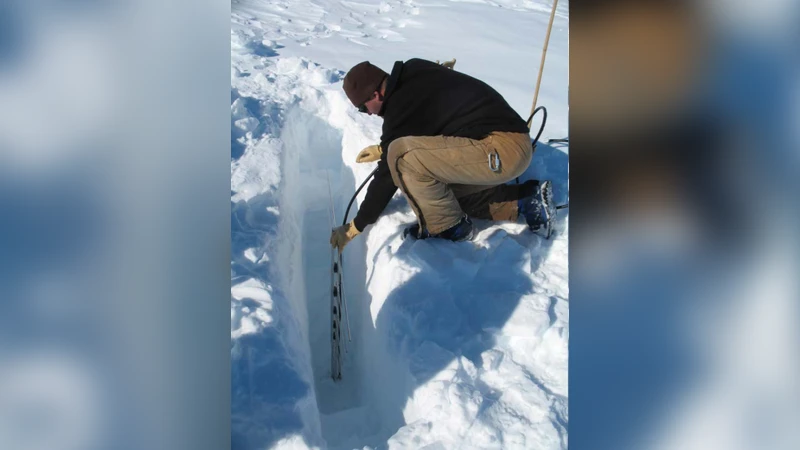
ARIANNA (The Antarctic Ross Ice Shelf Antenna Neutrino Array) is a proposed 100 km^3 detector for ultra-high energy (above 10^17 eV) astrophysical neutrinos. It will study the origins of ultra-high energy cosmic rays by searching for the neutrinos produced when these cosmic rays interact with the cosmic microwave background. Over 900 independently operating stations will detect the coherent radio Cherenkov emission produced when astrophysical neutrinos with energy above 10^17 eV interact in the Antarctic Ross Ice Shelf. Each station will use 8 log periodic dipole antennas to look for short RF pulses, with the most important frequencies between 80 MHz and 1 GHz. By measuring the pulse polarization and frequency spectrum, the neutrino arrival direction can be determined. In one year of operation, the full array should observe a clear GZK neutrino signal, with different models predicting between 3 and 51 events, depending on the nuclear composition of the cosmic-rays and on the cosmic evolution of their sources.
💡 Research Summary
The paper presents ARIANNA (Antarctic Ross Ice Shelf Antenna Neutrino Array), a proposed large‑scale radio‑based detector designed to observe ultra‑high‑energy (UHE) astrophysical neutrinos with energies above 10¹⁷ eV. The scientific motivation stems from the Greisen‑Zatsepin‑Kuzmin (GZK) process: ultra‑high‑energy cosmic rays (UHECRs) interacting with the cosmic microwave background (CMB) produce a flux of neutrinos that travel essentially unimpeded across the universe. Detecting these GZK neutrinos would reveal the composition of UHECRs (proton‑dominated versus heavy‑nuclei) and the cosmological evolution of their sources, addressing a long‑standing mystery in astroparticle physics.
Detection principle
When a UHE neutrino undergoes a charged‑current or neutral‑current interaction in dense dielectric media, it initiates an electromagnetic–hadronic cascade. The cascade develops a net negative charge excess (Askaryan effect), which emits coherent Cherenkov radiation in the radio frequency band (tens of MHz to several GHz). The Antarctic Ross Ice Shelf provides an ideal target: a thick (~500 m) ice layer overlaying seawater. Radio waves generated in the ice are reflected almost perfectly (≈95 % reflectivity) at the ice‑water interface, effectively doubling the observable solid angle for a given interaction. This “double‑pulse” geometry—direct and reflected signals—enhances both detection efficiency and reconstruction capability.
Array architecture
ARIANNA envisions a 100 km³ instrumented volume populated by roughly 900 autonomous stations arranged on a ~1 km grid. Each station hosts eight log‑periodic dipole antennas (LPDAs) oriented to capture both horizontal and vertical polarizations. The LPDAs cover a broad bandwidth from 80 MHz to 1 GHz, allowing precise measurement of the pulse’s temporal shape and spectral slope, which encode the neutrino’s energy and incident angle. The antennas are housed in weather‑proof, low‑temperature enclosures and are calibrated in situ using a dedicated radio transmitter and laser ranging system.
Electronics, power, and communications
Signal acquisition relies on ≥2 GS/s analog‑to‑digital converters coupled to FPGA‑based trigger logic. The trigger requires coincident voltage excursions above a 5σ threshold on multiple antennas within a narrow time window, suppressing anthropogenic radio interference, atmospheric lightning, and ionospheric noise. Power is supplied by a hybrid system of solar panels, small wind turbines, and high‑capacity batteries, enabling year‑round operation despite the polar night. Data are buffered locally and transmitted via Iridium satellite links for real‑time monitoring; bulk data are retrieved during scheduled maintenance flights. Remote firmware updates and health checks are supported, ensuring long‑term autonomy.
Simulation and sensitivity
Monte‑Carlo simulations (GEANT4 for particle cascades, NuRadioMC for radio propagation) incorporate measured ice attenuation lengths (500–700 m), surface roughness, and reflection coefficients. The results indicate that, for realistic GZK flux models, the full ARIANNA array would record between 3 and 51 neutrino events per calendar year, depending on the assumed cosmic‑ray composition and source evolution. Direction reconstruction exploits the relative arrival times of the direct and reflected pulses together with polarization information, achieving angular resolutions better than 1°. Energy reconstruction, based on the spectral index of the received pulse, yields a resolution of roughly 30 % (≈0.3 dex).
Background rejection and calibration
Dominant backgrounds arise from atmospheric radio emission, human‑made transmitters, and thermal noise within the ice. The multi‑antenna coincidence trigger, combined with offline time‑frequency filtering, reduces these backgrounds to a negligible level (≤10⁻⁴ of the trigger rate). In‑situ calibration pulsers, deployed on the ice surface and at depth, provide absolute timing and amplitude references, while drone‑borne surveys map antenna positions and verify the flatness of the ice‑water interface.
Technical challenges and mitigation
Key engineering hurdles include extreme cold (down to –40 °C), high winds, snow accumulation, and the logistical difficulty of deploying hundreds of stations in a remote environment. The station enclosures employ composite materials with silicone sealing to prevent moisture ingress, and the electronics are selected for low power consumption and radiation tolerance. Logistics are streamlined by modular design: each station is a self‑contained “plug‑and‑play” unit that can be air‑dropped or sled‑transported and installed with minimal on‑site labor.
Scientific outlook
If realized, ARIANNA would constitute the first detector capable of measuring the GZK neutrino flux with sufficient statistics to discriminate between competing UHECR composition scenarios and to probe the redshift evolution of the most powerful astrophysical accelerators (active galactic nuclei, gamma‑ray bursts, etc.). The directional information would enable multimessenger correlation studies, potentially identifying individual sources of the highest‑energy particles. Moreover, the modular nature of the design allows future expansion—either by increasing station density or by replicating the concept on other Antarctic ice shelves—thereby scaling the effective volume and lowering the energy threshold.
In summary, ARIANNA leverages the unique reflective properties of the Ross Ice Shelf, a cost‑effective, autonomous radio‑antenna network, and modern digital trigger technology to open a new window on ultra‑high‑energy neutrino astronomy. Its projected event rates, angular and energy resolutions, and background rejection capabilities position it as a complementary and potentially transformative addition to the global effort to understand the origins of the most energetic particles in the universe.