Cosmic Ray in the Northern Hemisphere: Results from the Telescope Array Experiment
The Telescope Array (TA) is the largest ultrahigh energy (UHE) cosmic ray observatory in the northern hemisphere TA is a hybrid experiment with a unique combination of fluorescence detectors and a stand-alone surface array of scintillation counters. We will present the spectrum measured by the surface array alone, along with those measured by the fluorescence detectors in monocular, hybrid, and stereo mode. The composition results from stereo TA data will be discussed. Our report will also include results from the search for correlations between the pointing directions of cosmic rays, seen by the TA surface array, with active galactic nuclei.
💡 Research Summary
The Telescope Array (TA) experiment, the largest ultra‑high‑energy (UHE) cosmic‑ray observatory in the Northern Hemisphere, combines a surface detector (SD) array of 507 scintillation counters with three fluorescence‑detector (FD) stations. This paper presents a comprehensive set of results obtained with the SD alone, and with the FD in monocular, hybrid, and stereo modes, together with composition studies based on Xmax measurements and a search for correlations with active galactic nuclei (AGN).
Detector Overview and Reconstruction
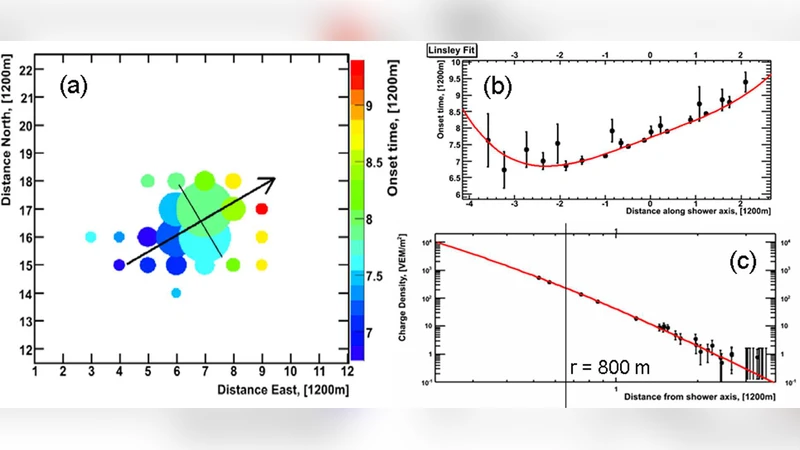
Each SD unit consists of two 3 m² plastic scintillators read out by wavelength‑shifting fibers and a single photomultiplier tube (PMT). The units are spaced on a 1.2 km grid, powered by solar panels, and communicate via a 2.4 GHz wireless link. An event trigger requires three adjacent stations each recording ≥3 VEM (vertical equivalent muon). Arrival times and particle densities are fitted with a modified Linsley time‑delay function and the AGASA lateral‑density function (LDF) to determine the shower core, direction, and the density at 800 m from the core (S800), which is the primary energy estimator for the SD.
Each FD station houses 12–14 telescopes with 6.8 m² mirrors and 256 hexagonal PMTs covering a 1.1° pixel. The FD records 10 MHz FADC waveforms; pixels exceeding a 3σ night‑sky background are used to define the shower‑detector plane (SDP). In monocular mode the shower geometry is obtained by fitting the pixel arrival times to a timing equation that yields the impact parameter (R_P) and the in‑plane angle (ψ). Stereo reconstruction, using two FD stations, determines the shower axis from the intersection of two SDPs, improving the resolution to ≈5 % in R_P and ≈1° in ψ. Hybrid reconstruction adds the precise SD timing to the FD fit, further sharpening the geometry.
Energy Spectrum and Calibration
During the first year of operation the SD energies were on average 27 % higher than the FD energies for the same hybrid events. After applying a uniform scaling factor of 1.27 to the SD energies, the SD spectrum aligns closely with the FD monocular spectrum from the Middle Drum (MD) station and with the spectrum measured by the High‑Resolution Fly’s Eye (HiRes). The combined spectrum shows a clear suppression at the expected Greisen‑Zatsepin‑Kuzmin (GZK) cutoff, confirming the HiRes observation and contrasting with the earlier AGASA claim of a continuation of the spectrum. Figures in the paper demonstrate the histogram of FD–SD energy differences, the log‑log correlation, and the final rescaled SD spectrum overlaid with the FD monocular and hybrid spectra.
Composition from Xmax
Stereo FD events provide precise measurements of the depth of shower maximum (Xmax). The Xmax distribution is compared with CORSIKA simulations using the QGSJET‑II hadronic model for proton and iron primaries. The TA data match the proton simulation in both mean Xmax and distribution width, while the iron prediction lies significantly deeper and broader. The mean Xmax versus log E plot further supports a predominantly protonic composition across the energy range studied, consistent with HiRes results and in tension with the heavier composition trend reported by the Pierre Auger Observatory at energies above 10¹⁹ eV. Ongoing analyses of Xmax width, shower‑profile shape, and hybrid composition are nearing completion.
Anisotropy and AGN Correlation Search
Using the SD data, the TA collaboration tested the Auger claim that a substantial fraction of events above 5.7×10¹⁹ eV correlate within 3.1° of AGN from the Veron‑Cetty catalog (z < 0.018). In the TA sky, 15 of 20 high‑energy events satisfy this angular criterion, a rate compatible with isotropic expectations; no statistically significant excess is observed. A broader search for large‑scale anisotropy also yields results consistent with isotropy.
Conclusions
The TA experiment demonstrates the power of a hybrid detection approach: after a modest energy‑scale correction, the SD and FD spectra are mutually consistent and both exhibit the GZK suppression. Xmax measurements indicate a light (proton‑dominated) composition, aligning with HiRes and contrasting with Auger’s heavy‑composition indication. No compelling evidence for anisotropy or AGN correlation is found in the Northern Hemisphere data set. These results provide a robust benchmark for UHE cosmic‑ray physics and set the stage for future refinements in energy calibration, composition modeling, and anisotropy searches as the TA exposure continues to grow.
Comments & Academic Discussion
Loading comments...
Leave a Comment