Results from the Pierre Auger Observatory
The Pierre Auger Observatory is the largest observatory of high-energy cosmic rays. It is located in Argentina and has been taking data since January 2004. Extensive air showers initiated by cosmic rays are measured by the hybrid detector, which combines the sampling of particle density at ground by water-Cherenkov tanks and the measurement of atmospheric fluorescence light by telescopes. New detection techniques, like radio and microwave measurement, are also being tested. Results regarding the energy spectrum, mass composition and arrival directions of cosmic rays are presented here.
💡 Research Summary
The Pierre Auger Observatory (PAO), operating since 2004 in the semi‑desert of Malargüe, Argentina, is the world’s largest detector of ultra‑high‑energy cosmic rays (UHECRs). Its hybrid design combines a surface array of more than 1,600 water‑Cherenkov detectors (1.5 km triangular grid) with four fluorescence‑telescope sites, each hosting six telescopes. The surface detectors run autonomously with near‑100 % uptime, measuring the particle density at ground and providing an energy estimator (S₃₈). The fluorescence telescopes operate on clear, moonless nights (≈13 % duty cycle) and record the isotropic UV fluorescence emitted by atmospheric nitrogen, yielding a calorimetric energy measurement (E_FD) and the depth of shower maximum (Xₘₐₓ). Hybrid events, observed simultaneously by both systems, are used to calibrate S₃₈ against E_FD, establishing a common energy scale with a systematic uncertainty of about 22 %.
The combined energy spectrum shows two prominent features. First, at ≈4 × 10¹⁸ eV the spectrum flattens – the so‑called “ankle”. This may mark the transition from a predominantly Galactic component to an extragalactic one, or it could be a propagation effect of extragalactic protons. Second, above ≈4 × 10¹⁹ eV the flux is strongly suppressed. The suppression is compatible with the Greisen‑Zatsepin‑Kuzmin (GZK) effect, i.e., energy losses of protons (and nuclei) interacting with the cosmic microwave background, but it could also reflect the maximum acceleration energy of the sources.
Composition is inferred from Xₘₐₓ and its event‑by‑event fluctuations. At energies around 10¹⁸ eV the average Xₘₐₓ is consistent with light primaries (protons). As the energy rises toward 10¹⁹ eV and beyond, the mean Xₘₐₓ shifts to shallower depths and the fluctuations decrease, indicating a gradual transition to heavier nuclei (e.g., iron). These trends are compared with air‑shower simulations using contemporary hadronic interaction models (QGSJETII, EPOS‑v1.99, Sibyll 2.1). While model‑dependent uncertainties remain, the data robustly suggest an increasingly heavy composition at the highest energies, although statistics above 4 × 10¹⁹ eV are still limited.
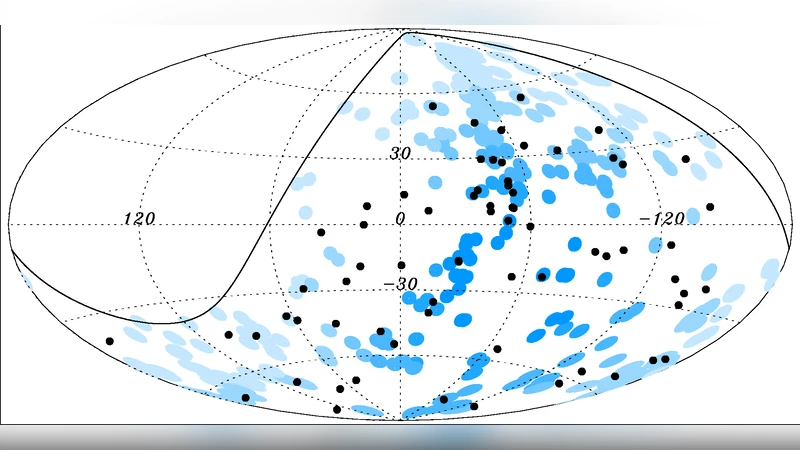
Arrival‑direction studies reveal anisotropy only at the highest energies. For events with E > 5.5 × 10¹⁹ eV (69 events), 38 % lie within 3° of active galactic nuclei (AGN) located within 75 Mpc, compared with 21 % expected for an isotropic sky. The most significant excess is observed near the nearby radio galaxy Centaurus A. No excess is seen toward the Galactic Center, and large‑scale dipole searches have yielded only upper limits. These results support the notion that the sources of the most energetic cosmic rays must be relatively nearby (within the GZK horizon) and that magnetic deflections, especially for heavier nuclei, still blur the source‑cosmic‑ray connection.
To extend the scientific reach, PAO is implementing several upgrades. The High‑Elevation Auger Telescopes (HEAT) – three fluorescence telescopes tilted 45° upward – lower the fluorescence energy threshold to ≈10¹⁷ eV, enabling studies of the Galactic‑to‑extragalactic transition. A denser surface‑detector infill, coupled with underground muon counters, will improve composition sensitivity down to ≈5 × 10¹⁷ eV. Radio detection is being pursued through the Auger Engineering Radio Array (AERA), which records 30–80 MHz emission from air showers, offering a cost‑effective, 100 % duty‑cycle complement to the existing detectors. Parallel efforts explore microwave emission (C‑band and Ku‑band) using parabolic antennas. The multi‑messenger, multi‑technique approach aims to reduce systematic uncertainties below the current 1 % level, providing tighter constraints on energy reconstruction, mass composition, and source identification.
In summary, the Pierre Auger Observatory has delivered precise measurements of the UHECR flux, identified a clear ankle and a high‑energy suppression, demonstrated a trend toward heavier composition at the highest energies, and found a modest but statistically significant correlation with nearby AGN. Ongoing upgrades promise to push the energy threshold lower, improve composition diagnostics, and explore novel detection channels, thereby sharpening our understanding of the origin and propagation of the most energetic particles in the Universe.
Comments & Academic Discussion
Loading comments...
Leave a Comment