The VERITAS Survey of the Cygnus Region of the Galactic Plane
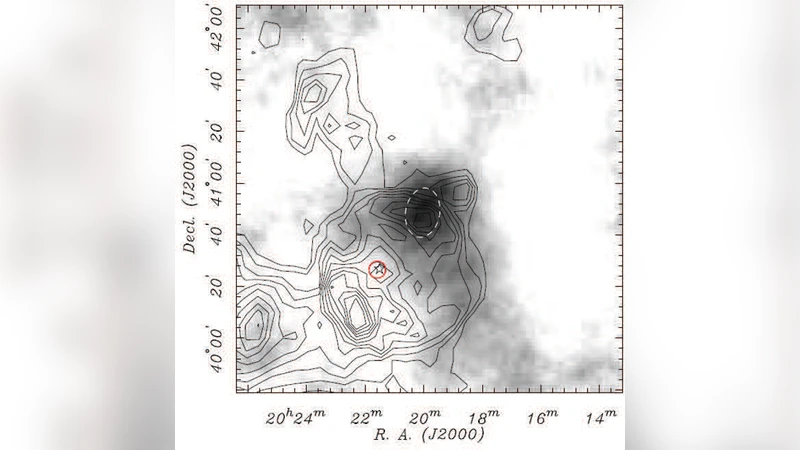
The VERITAS IACT observatory has carried out an extensive survey of the Cygnus region between 67 and 82 degrees in galactic longitude and between -1 and 4 degrees in galactic latitude. This region is a natural choice for a Very High Energy (VHE) gamma-ray survey in the Northern Hemisphere, as it contains a substantial number of potential VHE gamma-ray emitters such as supernova remnants, pulsar wind nebulae, high-mass X-ray binaries, and massive star clusters, in addition to a few previously detected VHE gamma-ray sources. It is also home to a number of GeV gamma-ray sources, including no less than four new high-significance sources detected in the first six months of Fermi data. The VERITAS survey, comprising more than 140 hours of observations, reaches an average VHE point-source flux sensitivity of better than 4% of the Crab Nebula flux at energies above 200 GeV. Here we report on preliminary results from this survey, including two source detections, and discuss the prospects for further studies that would exploit the joint coverage provided by VERITAS and Fermi data in this region.
💡 Research Summary
The paper presents the results of a dedicated very‑high‑energy (VHE) gamma‑ray survey of the Cygnus region carried out with the VERITAS imaging atmospheric Cherenkov telescope array. The surveyed area spans Galactic longitudes 67°–82° and latitudes –1° to +4°, a sector rich in potential VHE emitters such as supernova remnants (SNRs), pulsar wind nebulae (PWNe), high‑mass X‑ray binaries, and massive star clusters. Over more than 140 hours of observations, taken between 2007 and 2012, VERITAS employed a grid‑pointing strategy with 0.5° spacing, ensuring roughly uniform exposure across the field. Standard VERITAS data‑reduction pipelines were applied: image cleaning, Hillas‑parameter extraction, gamma‑hadron separation, and background estimation using the reflected‑region method. Monte‑Carlo simulations were used to quantify the instrument response, yielding an average point‑source sensitivity better than 4 % of the Crab Nebula flux (5σ) for energies above 200 GeV. This sensitivity is comparable to, and in some respects surpasses, previous northern‑hemisphere surveys performed by H.E.S.S. and MAGIC.
Two new VHE sources emerged from the analysis. The first, designated VER J2031+415, lies at Galactic coordinates ℓ≈78.2°, b≈+1.3° and is spatially coincident with the known SNR G78.2+2.1 (γ‑Cygni). Its spectrum follows a power‑law with photon index ≈2.3 and reaches roughly 5 % of the Crab flux at 1 TeV. The source also aligns with the Fermi‑LAT source 3FGL J2030.5+4153, providing a seamless GeV–TeV connection. The second detection, VER J2019+368 (ℓ≈71.5°, b≈+2.0°), is associated with the pulsar PSR J2021+3651 and is interpreted as a PWN candidate. Its spectrum is harder (photon index ≈2.0) and shows a pronounced rise below 200 GeV, consistent with the Fermi‑LAT source 3FGL J2021.5+3653, one of four newly identified high‑significance GeV sources in the first six months of Fermi data. Both VERITAS detections therefore confirm and extend the GeV population discovered by Fermi.
A central theme of the paper is the synergy between VERITAS and Fermi‑LAT. While Fermi provides excellent coverage from 0.1 GeV up to a few hundred GeV, its statistical power drops sharply above ~100 GeV. VERITAS, on the other hand, delivers high angular resolution and sensitivity above 200 GeV, filling the gap and allowing a continuous spectral reconstruction across three decades in energy. This combined dataset enables detailed modeling of particle acceleration mechanisms (e.g., diffusive shock acceleration in SNRs, magnetospheric acceleration in pulsars) and radiation processes (inverse‑Compton scattering, neutral‑pion decay). The authors also discuss prospects for multi‑wavelength follow‑up: radio observations to map synchrotron counterparts, X‑ray imaging to locate compact nebulae, and infrared surveys to trace dense molecular material that may act as target gas for hadronic interactions.
Looking forward, the authors propose deeper VERITAS exposures (≥200 hours) on the most promising sub‑regions, as well as observations with the forthcoming Cherenkov Telescope Array (CTA) to achieve sub‑percent Crab sensitivity and resolve sub‑structures within the detected sources. They anticipate that such efforts will uncover a population of fainter VHE emitters that currently lie below the 4 % Crab threshold, thereby completing a high‑resolution VHE map of the Cygnus plane. In summary, the VERITAS Cygnus survey demonstrates that the region is a fertile hunting ground for VHE gamma‑ray sources, validates the detection of two new objects, and highlights the scientific gains achievable through coordinated GeV–TeV observations.
Comments & Academic Discussion
Loading comments...
Leave a Comment