Recent Results from IceCube and AMANDA
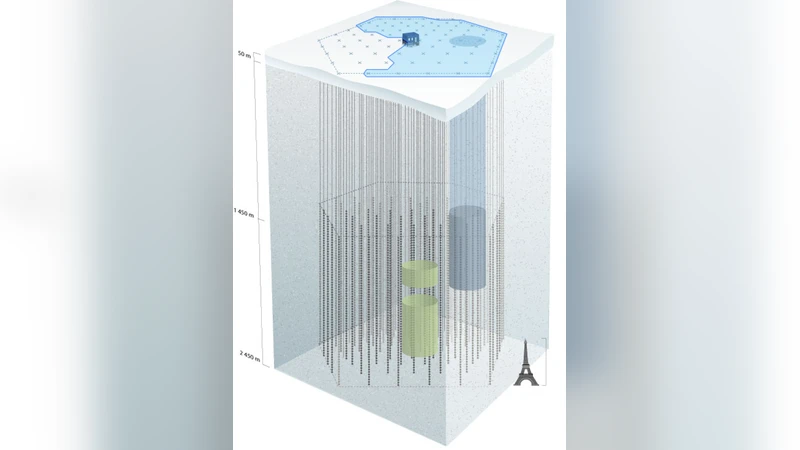
IceCube is a cubic kilometer neutrino telescope under construction at the South Pole, a successor to the first-generation AMANDA telescope. IceCube is now three quarters complete, with completion expected in early 2011, and data taken with the partially built detector already provides a sensitivity surpassing the complete AMANDA-II data set. Results from searches for astrophysical sources of neutrinos and for evidence of dark matter with both AMANDA and IceCube are summarized. We also discuss plans for Deep Core, an enhancement of IceCube designed to extend its sensitivity to neutrinos below the TeV scale.
💡 Research Summary
The paper presents a comprehensive overview of the latest scientific results obtained with the IceCube neutrino observatory and its predecessor, the AMANDA detector, both located at the South Pole. IceCube is a cubic‑kilometre scale array of digital optical modules (DOMs) embedded deep in the Antarctic ice, designed to detect Cherenkov light from relativistic charged particles produced in neutrino interactions. As of early 2010 the detector is three‑quarters complete, with 78 of the planned 86 strings deployed, providing an instrumented volume of roughly 0.75 km³. Even in this partially built configuration, IceCube already surpasses the sensitivity of the fully operational AMANDA‑II (which comprised 19 strings and 677 DOMs) by a factor of two to three, depending on the analysis channel.
The authors first summarize the construction status and technical performance of IceCube. The DOMs are spaced 17 m along each string, and the strings are separated by about 125 m, optimizing both angular resolution and energy reconstruction. The deep, ultra‑clear ice below 1500 m depth yields long photon scattering lengths, which together with the dense instrumentation leads to a high signal‑to‑noise ratio for muon‑track events. Calibration with atmospheric muons demonstrates an angular resolution better than 1° for TeV‑scale neutrinos and an energy resolution of ~30 % in log‑energy.
The paper then details the astrophysical neutrino searches performed with both detectors. Point‑source analyses use unbinned likelihood methods that combine directional information, reconstructed energy, and estimated background rates. Data collected with IceCube between 2007 and 2009 (≈ 200 days of livetime) show no statistically significant excess from any of the pre‑selected candidate sources (e.g., the Galactic Center, known supernova remnants, active galactic nuclei, and gamma‑ray bursts). Upper limits are set assuming an E⁻² spectrum, yielding a 90 % confidence level flux limit of Φνμ < 1.4 × 10⁻¹¹ TeV⁻¹ cm⁻² s⁻¹ at 1 TeV, which improves the AMANDA‑II limit by roughly a factor of three.
Diffuse flux searches, which aim to detect an isotropic background of high‑energy neutrinos from unresolved sources, are also reported. By fitting the observed energy spectrum of up‑going muon tracks, IceCube constrains the all‑sky νμ+ν̄μ flux to E²Φ < 3 × 10⁻⁸ GeV cm⁻² s⁻¹ sr⁻¹ in the 10 TeV–1 PeV range. This result is the most stringent to date and excludes several optimistic models of cosmogenic neutrino production.
Dark‑matter searches are conducted by looking for an excess of neutrinos from the Sun and the Earth, where Weakly Interacting Massive Particles (WIMPs) could accumulate and annihilate. Using the same muon‑track dataset, IceCube derives limits on the spin‑dependent (σ_SD) and spin‑independent (σ_SI) WIMP‑nucleon cross sections. For a WIMP mass of ~100 GeV, the spin‑dependent limit reaches σ_SD < 10⁻⁴ pb, comparable to or better than the most sensitive direct‑detection experiments. Limits from the Earth are similarly competitive for masses above ~500 GeV.
A major focus of the paper is the description of Deep Core, an infill array of six additional strings with tighter DOM spacing (7 m) and deployment in the clearest ice at depths >2100 m. Deep Core lowers the effective energy threshold of IceCube to ~10 GeV, opening a new physics program that includes atmospheric neutrino oscillation measurements, searches for low‑mass WIMPs, and detection of neutrinos from galactic supernovae. Simulations indicate a factor of five improvement in effective area at 10–30 GeV compared with the standard IceCube configuration.
In conclusion, the authors emphasize that IceCube, even before full completion, already provides world‑leading limits on astrophysical neutrino fluxes and WIMP‑induced neutrino signals. The forthcoming completion of the full array and the commissioning of Deep Core will extend the detector’s reach both to higher energies (enhanced point‑source sensitivity) and to lower energies (precision neutrino oscillation and low‑mass dark‑matter searches). The paper outlines future plans for data analysis refinements, hardware upgrades (e.g., next‑generation DOMs), and multi‑messenger collaborations that will further exploit IceCube’s unique capabilities.