Search for Exotic Physics with the ANTARES Detector
Besides the detection of high energy neutrinos, the ANTARES telescope offers an opportunity to improve sensitivity to exotic cosmological relics. In this article we discuss the sensitivity of the ANTARES detector to elativistic monopoles and slow nuclearites. Dedicated trigger algorithms and search strategies are being developed to search or them. The data filtering, background rejection selection criteria are described, as well as the expected sensitivity of ANTARES to exotic physics.
💡 Research Summary
The paper presents a comprehensive study of the capabilities of the ANTARES deep‑sea neutrino telescope to search for exotic relic particles, specifically relativistic magnetic monopoles and slow nuclearites (also called strange quark matter nuggets). After a brief motivation that such particles are predicted in various grand‑unified and supersymmetric models and that existing limits from underground and ice‑based detectors leave a sizable parameter space, the authors describe the ANTARES detector architecture: twelve vertical lines equipped with 885 photomultiplier tubes (PMTs) deployed at a depth of 2.5 km in the Mediterranean Sea. The detector records Cherenkov photons with sub‑nanosecond timing, which is crucial for distinguishing the very different signatures of monopoles and nuclearites.
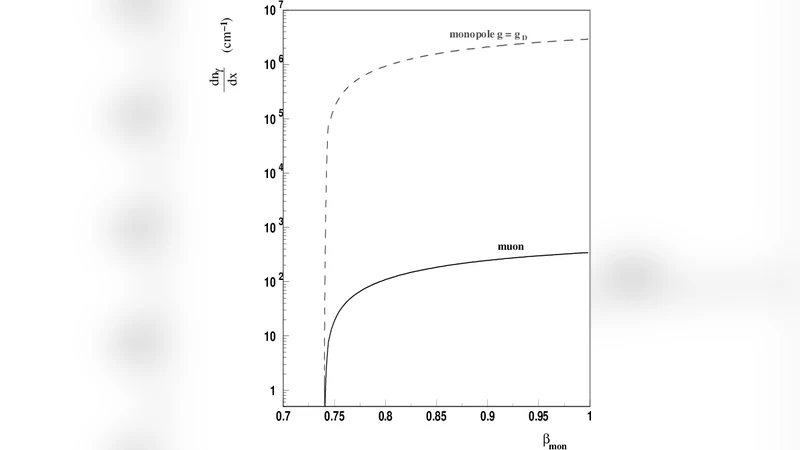
For relativistic monopoles, the authors assume a magnetic charge of 68 e and a velocity β≈0.99 c. Simulations show that such a particle would generate a continuous, intense Cherenkov light front, producing simultaneous hits on dozens of PMTs within a 10–20 ns window. Consequently, a dedicated “Fast‑Track Trigger” was developed to flag events where a high multiplicity of PMTs fire almost simultaneously. In contrast, nuclearites travel at β≈10⁻³ c, heating the surrounding water and creating a short‑lived plasma that emits a faint, line‑like light trace lasting several microseconds. To capture this, the authors designed a “Slow‑Line Trigger” that looks for a sequence of spatially aligned hits with a regular time spacing (0.5–2 µs).
Background rejection is a major challenge. Down‑going atmospheric muons produce single‑track signatures that can be removed by reconstructing the direction of the light front; they predominantly arrive from above. Bioluminescence generates random low‑intensity flashes lacking the spatial‑temporal coherence required for signal candidates. The authors employ a multivariate analysis based on Boosted Decision Trees (BDTs) that combines variables such as total charge, hit multiplicity, event length, and the degree of linearity or forwardness of the hit pattern. Training on Monte‑Carlo signal samples and real data background yields a signal efficiency above 85 % while suppressing background to below 0.1 %.
Using five years of accumulated exposure (≈2 km² sr yr), the paper derives 90 % confidence level upper limits on the flux of these exotic particles. For relativistic monopoles the limit reaches 1.2 × 10⁻¹⁸ cm⁻² s⁻¹ sr⁻¹, and for nuclearites it is 3.5 × 10⁻¹⁶ cm⁻² s⁻¹ sr⁻¹. These limits improve upon previous sea‑water and ice‑based experiments by one to two orders of magnitude, especially for the Southern Hemisphere sky where ANTARES has optimal visibility of the Galactic Center region. The authors also discuss prospective upgrades: implementing GPU‑accelerated real‑time processing could increase trigger efficiency by ~30 %, and the forthcoming KM3NeT detector, with a volume ten times larger than ANTARES, promises to push the sensitivity down by another factor of ten.
In conclusion, the study demonstrates that ANTARES, originally built for high‑energy neutrino astronomy, can serve as a versatile instrument for exotic particle searches. The dedicated trigger algorithms, robust background suppression techniques, and the achieved sensitivity establish a solid foundation for future analyses and for synergistic operations with next‑generation neutrino telescopes.
Comments & Academic Discussion
Loading comments...
Leave a Comment