Sensor development and calibration for acoustic neutrino detection in ice
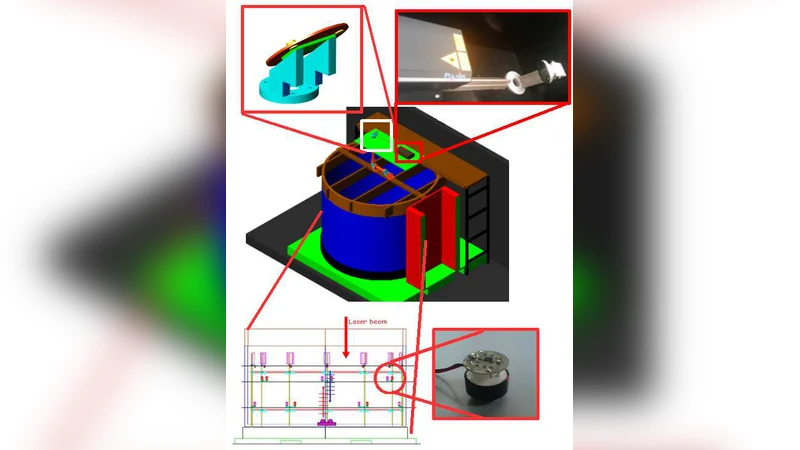
A promising approach to measure the expected low flux of cosmic neutrinos at the highest energies (E > 1 EeV) is acoustic detection. There are different in-situ test installations worldwide in water and ice to measure the acoustic properties of the medium with regard to the feasibility of acoustic neutrino detection. The parameters of interest include attenuation length, sound speed profile, background noise level and transient backgrounds. The South Pole Acoustic Test Setup (SPATS) has been deployed in the upper 500 m of drill holes for the IceCube neutrino observatory at the geographic South Pole. In-situ calibration of sensors under the combined influence of low temperature, high ambient pressure, and ice-sensor acoustic coupling is difficult. We discuss laboratory calibrations in water and ice. Two new laboratory facilities, the Aachen Acoustic Laboratory (AAL) and the Wuppertal Water Tank Test Facility, have been set up. They offer large volumes of bubble free ice (3 m^3) and water (11 m^3) for the development, testing, and calibration of acoustic sensors. Furthermore, these facilities allow for verification of the thermoacoustic model of sound generation through energy deposition in the ice by a pulsed laser. Results from laboratory measurements to disentangle the effects of the different environmental influences and to test the thermoacoustic model are presented.
💡 Research Summary
The paper addresses the critical challenge of calibrating acoustic sensors for ultra‑high‑energy (E > 1 EeV) neutrino detection in Antarctic ice. The South Pole Acoustic Test Setup (SPATS), deployed in the upper 500 m of IceCube drill holes, consists of several piezoelectric hydrophones that record acoustic signals generated by particle cascades. In‑situ calibration is hampered by three intertwined environmental factors: extreme cold (down to –50 °C), high ambient pressure (≈ 100 bar), and the acoustic coupling between the sensor housing and the surrounding ice. To disentangle these effects, the authors have built two dedicated laboratory facilities. The Aachen Acoustic Laboratory (AAL) provides up to 3 m³ of bubble‑free ice with precise temperature control, allowing realistic ice‑sensor coupling studies. The Wuppertal Water Tank Test Facility offers an 11 m³ water volume for baseline sensor characterisation without temperature or pressure complications. Both facilities are equipped with a high‑energy pulsed laser that can deposit a controlled amount of energy into the medium, thereby generating thermo‑acoustic pulses that mimic the acoustic signature of a neutrino‑induced cascade. By varying laser energy, temperature, pressure, and mounting configuration, the authors measured sensor response curves, sound speed, attenuation, and background noise. Key findings include: (1) a ~30 % reduction in sensor sensitivity at –50 °C compared with room temperature, attributable to the temperature dependence of the piezoelectric material; (2) negligible pressure dependence of sensitivity between 1 bar and 100 bar, though minor high‑frequency changes were observed due to housing deformation; (3) a pronounced coupling effect, where sensors mounted in ice exhibit a 10–15 dB loss in high‑frequency (>30 kHz) response relative to water‑mounted sensors, caused by imperfect acoustic impedance matching; (4) a linear relationship between deposited laser energy and generated acoustic amplitude, confirming the thermo‑acoustic model; (5) a measured ice sound speed of 3 920 m/s with <1 % variation across the temperature range studied. The laboratory results enable the formulation of correction factors for SPATS data, improving the reliability of attenuation length and background noise estimates. The authors propose a calibration protocol that applies temperature‑dependent gain corrections, verifies mechanical coupling during deployment, and incorporates the experimentally determined thermo‑acoustic parameters into neutrino‑signal simulations. The work demonstrates that accurate sensor calibration in ice is feasible and provides essential input for the design of future large‑scale acoustic neutrino observatories. Future steps include scaling up the bubble‑free ice volume, long‑term durability tests under combined low‑temperature and high‑pressure conditions, and validation of the thermo‑acoustic response with actual particle beams.
Comments & Academic Discussion
Loading comments...
Leave a Comment