Physics Capabilities of the IceCube DeepCore Detector
IceCube-DeepCore is a compact Cherenkov detector located in the clear ice of the bottom center of the IceCube Neutrino Telescope. Its purpose is to enhance the sensitivity of IceCube for low neutrino energies (< 1 TeV) and to lower the detection threshold of IceCube by about an order of magnitude to below 10 GeV. The detector is formed by 6 additional strings of 360 high quantum efficiency phototubes together with the 7 central IceCube strings. The improved sensitivity will provide an enhanced sensitivity to probe a range of parameters of dark matter models not covered by direct experiments. It opens a new window for atmospheric neutrino oscillation measurements of muon neutrino disappearance or tau neutrino appearance in an energy region not well tested by previous experiments, and enlarges the field of view of IceCube to a full sky observation when searching for potential neutrino sources. The first string was succesfully installed in January 2009, commissioning of the full detector is planned early 2010.
💡 Research Summary
The IceCube‑DeepCore detector is a densely instrumented sub‑array added to the core of the IceCube Neutrino Telescope at the South Pole. By deploying six additional strings of 60 high‑quantum‑efficiency (HQE) photomultiplier tubes (PMTs) alongside the seven central IceCube strings, DeepCore comprises 13 strings and 360 HQE PMTs. The HQE devices have roughly a 35 % higher photon detection efficiency than the standard IceCube modules, which, together with a tighter geometry (40 m inter‑string spacing and 7 m vertical spacing) and placement in the clearest ice (2100–2450 m depth), dramatically lowers the energy threshold from ~100 GeV to below 10 GeV.
A dedicated low‑energy trigger and the surrounding IceCube array acting as an active veto suppress atmospheric muon background, allowing clean reconstruction of events in the 10 GeV–1 TeV range. Simulations predict that DeepCore will record on the order of 10⁴ atmospheric neutrino interactions per year in the 10–100 GeV band, with angular resolution of a few degrees and energy resolution of ~30 % at 20 GeV.
The physics program capitalizes on this capability in three major areas. First, indirect dark‑matter searches: Weakly Interacting Massive Particles (WIMPs) captured in the Sun or Earth annihilate into neutrinos with energies typically between 10 and 100 GeV. DeepCore’s sensitivity in this band probes WIMP masses and annihilation channels that are inaccessible to current direct‑detection experiments, providing complementary constraints on supersymmetric and other beyond‑Standard‑Model scenarios.
Second, precision measurements of atmospheric neutrino oscillations. The 10–100 GeV window bridges the gap between long‑baseline accelerator experiments (∼ GeV) and the high‑energy IceCube analyses (> 100 GeV). DeepCore can observe muon‑neutrino disappearance and tau‑neutrino appearance with sufficient statistics to refine the mixing angle θ₂₃ and the mass‑splitting Δm²₃₂, and to test the octant of θ₂₃ and possible non‑standard interactions.
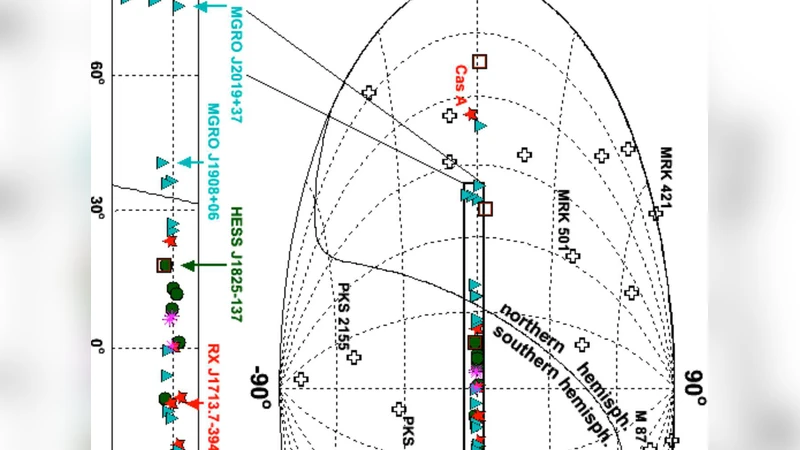
Third, low‑energy neutrino astronomy. Because DeepCore retains the full‑sky field of view of IceCube, it can monitor the entire celestial sphere for transient or steady sources that emit neutrinos in the sub‑TeV regime, such as the Galactic Center, super‑nova remnants, and low‑luminosity active galactic nuclei. The enhanced photon collection efficiency and low background enable searches for neutrino bursts from nearby supernovae and for steady fluxes from dark‑matter‑rich regions.
The deployment timeline began with the successful installation of the first DeepCore string in January 2009. Completion of all six strings and full commissioning were scheduled for early 2010. Early data will be used to validate the optical properties of the ice, the performance of the HQE PMTs, and the low‑energy trigger algorithms. Over the subsequent years, the accumulated dataset is expected to deliver world‑leading limits on WIMP annihilation, improve the precision of atmospheric oscillation parameters, and open a new observational window for low‑energy neutrino astrophysics, thereby extending IceCube’s scientific reach into a regime previously unexplored by large‑volume Cherenkov detectors.
Comments & Academic Discussion
Loading comments...
Leave a Comment