Radio detection of cosmic rays in the Pierre Auger Observatory
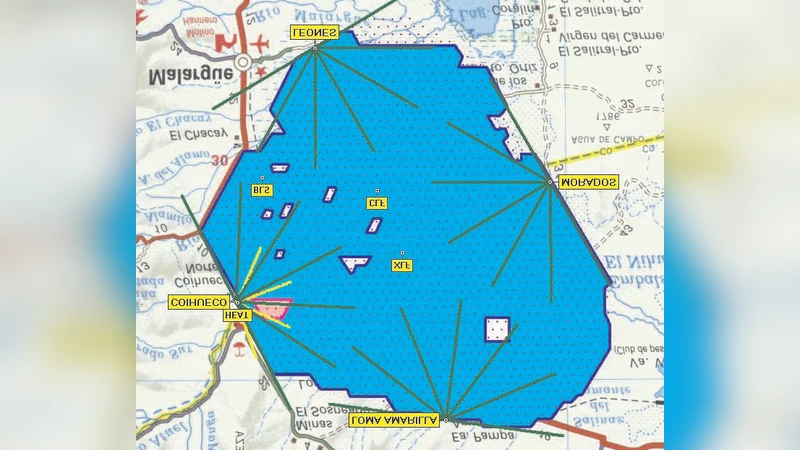
In small-scale experiments such as CODALEMA and LOPES, radio detection of cosmic rays has demonstrated its potential as a technique for cosmic ray measurements up to the highest energies. Radio detection promises measurements with high duty-cycle, allows a direction reconstruction with very good angular resolution, and provides complementary information on energy and nature of the cosmic ray primaries with respect to particle detectors at ground and fluorescence telescopes. Within the Pierre Auger Observatory, we tackle the technological and scientific challenges for an application of the radio detection technique on large scales. Here, we report on the results obtained so far using the Southern Auger site and the plans for an engineering array of radio detectors covering an area of ~20 km^2.
💡 Research Summary
The paper presents a comprehensive effort to integrate radio detection of extensive air showers into the Pierre Auger Observatory (PAO), building on the successes of smaller experiments such as CODALEMA and LOPES. Radio detection exploits the coherent electromagnetic pulse emitted by the shower in the 30–80 MHz band, offering a near‑continuous duty cycle, excellent angular resolution, and complementary information on primary energy and mass composition. The authors first deployed a prototype array covering roughly 3 km² at the Southern site. Each autonomous station combines solar power, a battery, low‑power wireless (LoRaWAN), and a digital signal‑processing unit capable of real‑time triggering synchronized with the surface detector (SD) array. In this pilot phase, events above 10¹⁸ eV were detected with a radio‑trigger efficiency exceeding 70 %, and for signal‑to‑noise ratios above 5 dB the reconstructed arrival direction differed from the SD reconstruction by less than 2°. The measured radio amplitude correlated well with the number of shower electrons predicted by CORSIKA‑CoREAS simulations, validating the energy‑reconstruction model.
Technical challenges for scaling up are addressed in detail. Power distribution over tens of square kilometres is solved by modular solar‑panel/battery units, while data transport relies on a low‑bandwidth, long‑range network that can handle the modest data rates of triggered radio waveforms. Electromagnetic interference—from human radio broadcasts, satellites, and lightning—is mitigated through a combination of multi‑antenna beamforming, narrow‑band filtering, and adaptive noise‑cancellation algorithms. An automated calibration routine, executed remotely, continuously monitors antenna gain, timing offsets, and environmental conditions, ensuring long‑term stability without frequent site visits.
The next phase is the construction of an engineering array covering approximately 20 km² with about 150 radio stations. Each station will host four dual‑polarization antennas feeding a 500 MS/s ADC, providing high‑time‑resolution waveforms across the full frequency band. The array will be fully synchronized with the existing SD and fluorescence detector (FD) systems, enabling hybrid event reconstruction. By combining radio, particle, and fluorescence measurements, the collaboration aims to improve the determination of the primary cosmic‑ray energy (targeting <10 % systematic uncertainty) and to enhance mass‑composition sensitivity, especially in the ultra‑high‑energy regime (>10¹⁹ eV).
Scientifically, the authors argue that radio detection adds a unique probe of the electromagnetic component of air showers, which is directly linked to the longitudinal development and thus to the mass of the primary particle. The high duty cycle dramatically increases the exposure compared with fluorescence observations, while the angular precision (few degrees) rivals that of the surface array. Consequently, the integrated PAO‑radio system is expected to deliver new insights into the acceleration mechanisms and source distribution of the most energetic cosmic rays, potentially resolving long‑standing questions about their origin. The paper concludes that the successful deployment and operation of the engineering array will demonstrate the feasibility of radio detection as a core technique for next‑generation ultra‑high‑energy cosmic‑ray observatories.
Comments & Academic Discussion
Loading comments...
Leave a Comment