Dark Matter Searches with the Fermi Large Area Telescope
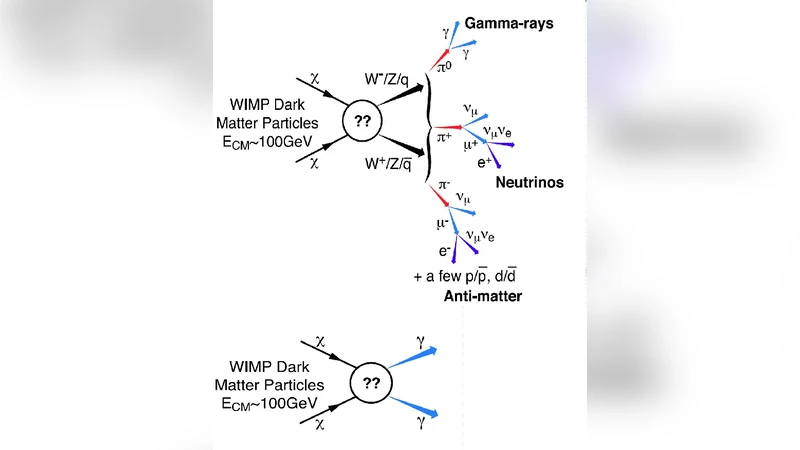
The Fermi Gamma-Ray Space Telescope, successfully launched on June 11th, 2008, is the next generation satellite experiment for high-energy gamma-ray astronomy. The main instrument, the Fermi Large Area Telescope (LAT), with a wide field of view (> 2 sr), a large effective area (> 8000 cm2 at 1 GeV), sub-arcminute source localization, a large energy range (20 MeV - 300 GeV) and a good energy resolution (close to 8% at 1 GeV), has excellent potential to either discover or to constrain a Dark Matter signal. The Fermi LAT team pursues complementary searches for signatures of particle Dark Matter in different search regions such as the galactic center, galactic satellites and subhalos, the milky way halo, extragalactic regions as well as the search for spectral lines. In these proceedings we examine the potential of the LAT to detect gamma-rays coming from Weakly Interacting Massive Particle annihilations in these regions with special focus on the galactic center region.
💡 Research Summary
The Fermi Gamma‑Ray Space Telescope, launched on 11 June 2008, carries the Large Area Telescope (LAT) – a next‑generation gamma‑ray instrument with a field of view exceeding 2 sr, an effective area of > 8000 cm² at 1 GeV, sub‑arcminute source localization, and an energy range of 20 MeV to 300 GeV with ~8 % resolution at 1 GeV. These capabilities make LAT uniquely suited to search for the high‑energy photons expected from the annihilation or decay of Weakly Interacting Massive Particles (WIMPs), a leading class of particle dark‑matter candidates.
The paper outlines five complementary search strategies pursued by the LAT collaboration: (1) the Galactic Center (GC), where the dark‑matter density – and thus the J‑factor – is maximal; (2) dwarf spheroidal galaxies and subhalos, which offer low astrophysical backgrounds and well‑constrained distances; (3) the Milky Way halo, providing a large solid angle for statistical analyses of diffuse emission; (4) extragalactic regions such as nearby galaxies and galaxy clusters, where the integrated J‑factor of many objects can be exploited; and (5) spectral line searches, targeting the monochromatic γ‑ray signatures from direct χχ → γγ or χχ → γZ annihilation channels.
A major focus of the work is the GC region. Although the expected signal is strongest there, the area is crowded with pulsars, supernova remnants, and intense diffuse emission, making background modeling a critical challenge. The authors employ state‑of‑the‑art GALPROP‑based cosmic‑ray propagation models combined with LAT‑measured diffuse spectra to construct a high‑precision background template. Simulations of ten years of all‑sky scanning indicate that LAT can probe annihilation cross sections down to ⟨σv⟩ ≈ 10⁻²⁶ cm³ s⁻¹ for WIMP masses below ~100 GeV, a sensitivity comparable to the canonical thermal relic value and competitive with ground‑based Cherenkov telescopes.
For dwarf galaxies and subhalos, the analysis uses a non‑point‑source detection algorithm to identify spatially extended excesses that could correspond to previously unseen dark‑matter clumps. Candidate subhalos are then cross‑checked with multi‑wavelength data (radio, X‑ray) to rule out conventional astrophysical sources. The paper demonstrates that, for the most promising dwarfs (e.g., Segue 1, Ursa Minor), LAT can set limits on ⟨σv⟩ at the level of a few × 10⁻²⁶ cm³ s⁻¹, again approaching the thermal benchmark.
In the halo analysis, the authors perform a template‑fit of the full‑sky diffuse emission, allowing for a smooth dark‑matter component with a Navarro‑Frenk‑White (NFW) or Einasto profile. By marginalizing over uncertainties in the cosmic‑ray source distribution and gas maps, they derive robust constraints that are less susceptible to localized background fluctuations.
Extragalactic searches exploit the collective J‑factor of galaxy clusters and the isotropic gamma‑ray background. Stacking analyses of the brightest nearby clusters yield limits comparable to those from individual dwarfs, while the isotropic background analysis provides complementary constraints on high‑mass WIMPs (≳ 500 GeV).
Spectral line searches benefit from LAT’s relatively good energy resolution. The authors show that a 5σ detection of a line at ~1 TeV would require an annihilation cross section of ⟨σv⟩ ≈ 10⁻²⁸ cm³ s⁻¹, roughly one to two orders of magnitude better than current ground‑based limits. Even non‑detections improve the existing bounds on the loop‑suppressed χχ → γγ channel.
Overall, the paper argues that LAT’s combination of wide sky coverage, long exposure, and precise energy and positional reconstruction enables a comprehensive dark‑matter program. By simultaneously probing multiple astrophysical environments and employing sophisticated background modeling, LAT can either discover a WIMP signal or push the annihilation cross‑section limits well below the thermal relic benchmark across a broad mass range. The results underscore LAT’s pivotal role in bridging particle physics and astrophysics, and they set the stage for future missions with even finer energy resolution and larger effective areas.
Comments & Academic Discussion
Loading comments...
Leave a Comment