Gravitational Wave Astronomy Using Pulsars: Massive Black Hole Mergers & the Early Universe
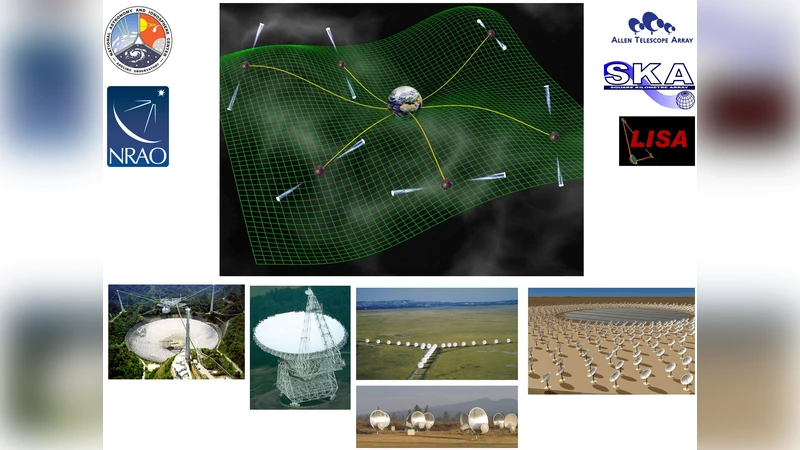
Gravitational waves (GWs) are fluctuations in the fabric of spacetime predicted by Einstein’s theory of general relativity. Using a collection of millisecond pulsars as high-precision clocks, the nanohertz band of this radiation is likely to be directly detected within the next decade. Nanohertz-frequency GWs are expected to be emitted by mergers of massive black hole binary systems, and potentially also by cosmic strings or superstrings formed in the early Universe. Direct detection of GWs will open a new window to the Universe, and provide astrophysical information inaccessible via electromagnetic observations. In this paper, we describe the potential sources of low-frequency GWs and the current status and key advances needed for the detection and exploitation of GWs through pulsar timing.
💡 Research Summary
Gravitational‑wave (GW) astronomy in the nanohertz band relies on pulsar timing arrays (PTAs), which treat an ensemble of millisecond pulsars as a galaxy‑scale set of ultra‑stable clocks. When a low‑frequency GW passes through the Earth‑pulsar system, it perturbs the space‑time metric, causing correlated deviations—timing residuals—in the arrival times of pulses from many pulsars. By measuring these residuals over years to decades, PTAs can detect GW signals with periods of months to years, a regime inaccessible to ground‑based interferometers such as LIGO/Virgo/KAGRA (which operate at 10–10³ Hz) and to the forthcoming space‑based LISA (operating around 10⁻⁴–10⁻¹ Hz).
The paper outlines three principal sources expected to dominate the nanohertz GW sky. First, massive black‑hole binaries (MBHBs) with component masses of 10⁶–10⁹ M⊙, formed during galaxy mergers, emit a stochastic background with a characteristic strain spectrum h_c ∝ f⁻²⁄³. Individual nearby binaries may also be resolved as continuous wave sources. Second, cosmic strings or super‑strings—topological defects created during symmetry‑breaking phase transitions in the early Universe—produce bursts and a distinct stochastic background with a spectral index near –1, offering a unique probe of high‑energy physics beyond the Standard Model. Third, other early‑Universe phenomena such as inflationary relics, phase‑transition turbulence, or primordial black‑hole mergers could contribute additional low‑frequency power.
Current PTA collaborations—NANOGrav (North America), PPTA (Australia), EPTA (Europe), and the International PTA (IPTA) that combines them—have amassed 10–15 years of timing data for roughly 30–50 pulsars each. Recent analyses have placed upper limits on the GW energy density Ω_GW ≲ 10⁻⁹ at f ≈ 1 nHz. Notably, the NANOGrav 12.5‑year dataset revealed a common red‑noise process across many pulsars, but the Hellings‑Downs angular correlation pattern expected for a genuine GW background has not yet been confirmed, leaving the signal ambiguous.
Technical challenges dominate the path to detection. Intrinsic pulsar spin noise, dispersion‑measure variations caused by the interstellar medium, and pulse‑profile evolution introduce timing jitter that can mask GW‑induced residuals. Systematic errors from Solar‑System ephemerides, terrestrial clock standards, and instrumental drifts generate a “common mode” that mimics a GW signal if not properly modeled. Moreover, the nanohertz regime demands long baselines; a signal with a period of several years cannot be distinguished from low‑frequency noise without at least a comparable observation span.
To overcome these obstacles, the authors advocate several coordinated advances. Expanding the pulsar sample is paramount: the Square Kilometre Array (SKA) and the Five‑Hundred‑Meter Aperture Spherical Telescope (FAST) will discover thousands of new millisecond pulsars, dramatically increasing the array’s sky coverage and improving sensitivity roughly as √N. Upgrading back‑ends with wide‑band digital receivers (e.g., ROACH‑2, CASPER) will boost per‑epoch signal‑to‑noise ratios and enable simultaneous multi‑frequency observations that better correct dispersion‑measure fluctuations. On the analysis side, Bayesian hierarchical models that jointly fit for common GW signals, individual pulsar noise, and ephemeris uncertainties are becoming standard, while machine‑learning techniques are being explored to separate correlated GW signatures from stochastic noise. International data‑sharing through IPTA ensures uniform calibration and maximizes the effective observing time.
The scientific payoff of a successful nanohertz GW detection is profound. Direct measurement of the MBHB background will reveal the merger rate of massive galaxies, constrain the mass‑function of supermassive black holes, and test models of galaxy‑black‑hole co‑evolution. Detection (or stringent limits) of a cosmic‑string background would provide the first empirical evidence for topological defects and could discriminate among grand‑unified theories and string‑theory scenarios. Finally, the low‑frequency GW window offers a complementary test of general relativity on cosmological scales, probing alternative gravity theories (e.g., massive graviton, scalar‑tensor models) that predict deviations from the standard strain spectrum.
In summary, the paper presents a comprehensive roadmap: continued long‑term, high‑precision timing of an expanding pulsar array, coupled with next‑generation instrumentation and sophisticated statistical pipelines, is expected to yield the first definitive nanohertz GW detection by the end of the 2020s. Such a breakthrough will open a new observational frontier, linking the dynamics of the most massive black‑hole binaries, the physics of the early Universe, and fundamental tests of gravity in a single, coherent framework.
Comments & Academic Discussion
Loading comments...
Leave a Comment