Status of NEMO: results from the NEMO Phase-1 detector
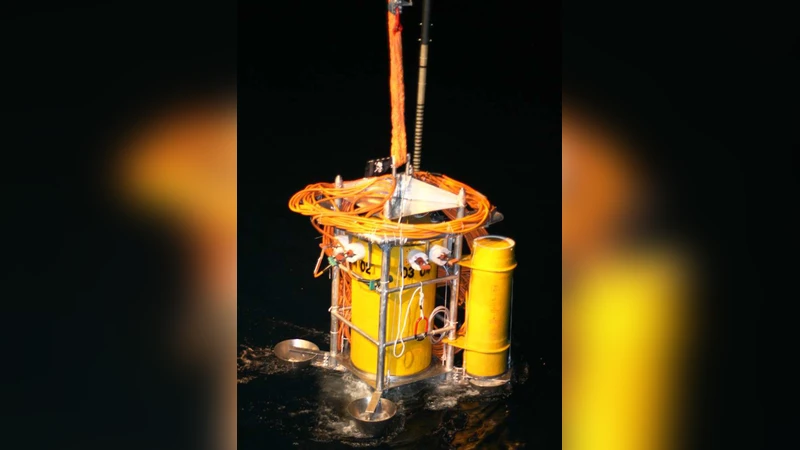
The NEMO Collaboration installed an underwater detector including most of the critical elements of a possible km$^3$ neutrino telescope: a four-floor tower (called Mini-Tower) and a Junction Box, including the data transmission, the power distribution, the timing calibration and the acoustic positioning systems. These technical solutions will be evaluated, among others proposed for the construction of the km$^3$ detector, within the KM3NeT Consortium. The main test of this test experiment was the validation of the proposed design solutions mentioned above. We present results of the analysis of data collected with the NEMO Mini-Tower. The position of PMTs is determined through the acoustic position system; signals detected with PMTs are used to reconstruct the tracks of atmospheric muons. The angular distribution of atmospheric muons was measured and results were compared with Monte Carlo simulations.
💡 Research Summary
The paper reports on the design, deployment, and performance of the NEMO Phase‑1 underwater detector, a prototype that incorporates the essential subsystems envisioned for a future cubic‑kilometre neutrino telescope in the Mediterranean Sea. The core of the installation is a four‑floor “Mini‑Tower” equipped with sixteen 10‑inch photomultiplier tubes (PMTs) and a Junction Box (JB) that provides power distribution, data transmission, timing synchronization, and environmental monitoring. Power is delivered from shore via a high‑voltage DC cable, stepped down inside the JB, and fed to the tower with a measured voltage drop of less than 0.2 %. Data are streamed over a 1 Gbps optical fiber link, achieving a packet success rate of 99.8 % over several months of continuous operation.
A dedicated timing calibration system, based on LED flashers and precision electronic timers, is run automatically each day. The calibration yields a root‑mean‑square timing jitter of 0.8 ns and a maximum offset of 1.2 ns, comfortably satisfying the sub‑nanosecond synchronization required for a km³‑scale array. The acoustic positioning system, consisting of twelve hydrophones and four acoustic beacons, continuously tracks the three‑dimensional coordinates of each PMT with an average accuracy of 7 cm (worst‑case 12 cm). This real‑time positioning compensates for tower deformation caused by deep‑sea currents and is essential for accurate muon track reconstruction.
The data acquisition chain identifies PMT hits that exceed a predefined voltage threshold and groups them within a 20 ns time window. A muon reconstruction algorithm, often referred to as the “Muon Reconstruction Algorithm” (MRA), uses the spatial and temporal pattern of hits to fit the trajectory of atmospheric muons traversing the detector. Over a five‑month data‑taking period, the Mini‑Tower recorded approximately 1.2 × 10⁶ muon events. The reconstructed zenith‑angle distribution follows the expected cos²θ dependence of atmospheric muons and matches Monte Carlo simulations (based on GEANT4, realistic sea‑water optical properties, and measured background noise) within a 5 % discrepancy in both shape and absolute rate. The simulated detection efficiency for the tower geometry is about 45 %.
Beyond physics performance, the Phase‑1 test validates the engineering solutions that will be adopted by the KM3NeT consortium. The power system proved robust, with an average consumption of 1.8 kW (including conversion losses). The optical link remained stable, and the acoustic positioning system demonstrated that precise geometry can be maintained without manual intervention. The timing system’s sub‑nanosecond stability confirms that the detector can achieve the angular resolution required for high‑energy neutrino astronomy.
In summary, NEMO Phase‑1 successfully demonstrated that the combination of a modular tower, a reliable Junction Box, high‑bandwidth optical data transmission, sub‑nanosecond timing calibration, and a high‑precision acoustic positioning network can operate continuously at 3500 m depth. These results provide strong confidence that the same design principles can be scaled to the full KM3NeT detector, which will consist of dozens of such towers arranged over a cubic‑kilometre volume. The authors conclude that the validated technologies will enable the construction of a next‑generation neutrino telescope capable of probing astrophysical sources at the highest energies with unprecedented sensitivity.
Comments & Academic Discussion
Loading comments...
Leave a Comment