Diffusive Molecular Communications with Reactive Molecules: Channel Modeling and Signal Design
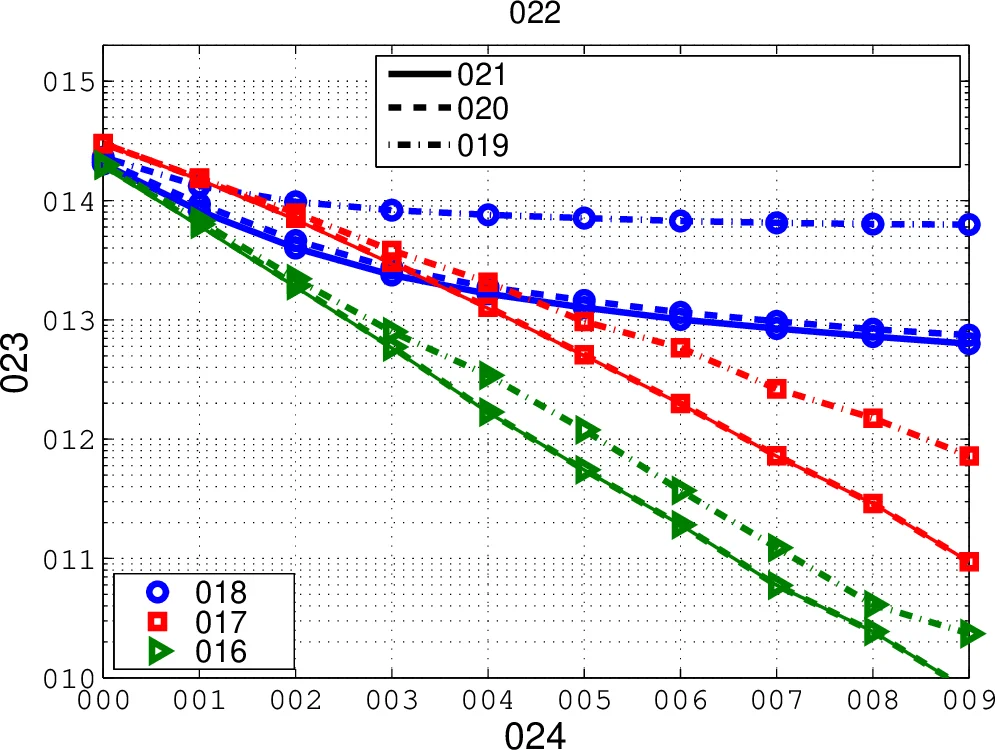
This paper focuses on molecular communication (MC) systems using two types of signaling molecules which may participate in a reversible bimolecular reaction in the channel. The motivation for studying these MC systems is that they can realize the concept of constructive and destructive signal superposition, which leads to favorable properties such as inter-symbol interference (ISI) reduction and avoiding environmental contamination due to continuous release of signaling molecules into the channel. This work first presents a general formulation for binary modulation schemes that employ two types of signaling molecules and proposes several modulation schemes as special cases. Moreover, two types of receivers are considered: a receiver that is able to observe both types of signaling molecules (2TM), and a simpler receiver that can observe only one type of signaling molecules (1TM). For both of these receivers, the maximum likelihood (ML) detector for general binary modulation is derived under the assumption that the detector has perfect knowledge of the ISI-causing sequence. In addition, two suboptimal detectors of different complexity are proposed, namely an ML-based detector that employs an estimate of the ISI-causing sequence and a detector that neglects the effect of ISI. The proposed detectors, except for the detector that neglects ISI for the 2TM receiver, require knowledge of the channel response (CR) of the considered MC system. Moreover, the CR is needed for performance evaluation of all proposed detectors. However, deriving the CR of MC systems with reactive signaling molecules is challenging since the underlying partial differential equations that describe the reaction-diffusion mechanism are coupled and non-linear. Therefore, we develop an algorithm for efficient computation of the CR and validate its accuracy via particle-based simulation.
💡 Research Summary
This paper investigates diffusion‑based molecular communication (MC) systems that employ two distinct signaling molecule types which can participate in a reversible bimolecular reaction within the propagation medium. The authors motivate the study by highlighting that such reactive MC enables both constructive and destructive superposition of signals, thereby offering a means to reduce inter‑symbol interference (ISI) and to avoid long‑term environmental contamination caused by continuous molecule release.
The system model consists of a point‑source transmitter located at the origin of an unbounded n‑dimensional (n = 1, 2, 3) environment and a passive receiver. The transmitter releases type‑A and type‑B molecules according to a prescribed schedule; the numbers of released molecules are denoted N_tx^A and N_tx^B. Three binary modulation schemes are defined:
- Conventional MoSK – a binary “1” triggers the release of only type‑A molecules, while a binary “0” triggers only type‑B molecules.
- Proposed OOK – a binary “1” releases type‑A molecules at the beginning of the symbol interval and, after a delay τ₁ (chosen as the peak time of the impulse response for a solitary A release), releases type‑B molecules that chemically cancel the remaining A molecules. A binary “0” releases nothing.
- Proposed OSK (Order Shift Keying) – the information is encoded in the order of releases: for a “1”, A is released first followed by B after τ₁; for a “0”, B is released first followed by A after τ₀ (the peak time for a solitary B release).
These schemes exploit the reaction A + B ↔ C (with forward rate k_f and reverse rate k_r) to shorten the channel impulse response (CR) and thus mitigate ISI without severely diminishing the peak concentration at the receiver.
Two receiver architectures are considered:
- 2TM (two‑type molecule) receiver – capable of counting both A and B molecules.
- 1TM (single‑type molecule) receiver – capable of counting only A molecules (the more practical configuration).
For each receiver, the authors derive:
- A genie‑aided maximum‑likelihood (ML) detector that assumes perfect knowledge of the previously transmitted symbols (the ISI‑causing sequence). This detector provides an upper bound on achievable performance.
- An ML‑based sub‑optimal detector that replaces the unknown ISI sequence with an estimate obtained from past observations.
- An ISI‑neglecting detector that ignores past symbols entirely and makes a decision based solely on the current observation.
The optimal and sub‑optimal detectors require knowledge of the channel response (CR), i.e., the expected number of observed molecules as a function of time for any arbitrary release pattern. Deriving the CR for reactive MC is challenging because the governing reaction‑diffusion partial differential equations (PDEs) are coupled and nonlinear. Existing approaches (constant‑enzyme approximations, finite‑difference methods, or particle‑based Monte‑Carlo simulations) are either inaccurate for the present scenario or computationally prohibitive.
To address this, the paper proposes a novel CR computation algorithm that discretizes only the time dimension while solving the spatial part analytically. By exploiting the unbounded environment and the passive receiver, the reaction‑diffusion PDEs can be decoupled: the diffusion component yields a Gaussian kernel, and the reaction term can be integrated analytically over each time step. This yields a fast, closed‑form update rule for the concentration of each species at the receiver location. The algorithm’s accuracy is validated against particle‑based simulations, showing sub‑percent errors while being orders of magnitude faster than full finite‑difference schemes.
Simulation studies are performed in a three‑dimensional space with realistic diffusion coefficients (D_A = D_B ≈ 100 µm²/s) and reaction rates (k_f ≈ 10⁶ M⁻¹s⁻¹, k_r ≈ 10³ s⁻¹). Key findings include:
- ISI reduction – Both OOK and OSK achieve more than 60 % reduction in ISI energy compared with conventional MoSK.
- Peak preservation – The reactive schemes retain at least 90 % of the peak impulse response, unlike enzyme‑based degradation which lowers the peak.
- BER improvement – For the 2TM receiver, the ML‑based sub‑optimal detector attains a bit‑error rate (BER) of ≈10⁻⁴ at an SNR of 10 dB, whereas MoSK yields ≈10⁻² under the same conditions.
- Detector trade‑offs – The ISI‑neglecting detector for 2TM suffers a modest performance loss (≈2× higher BER) but offers minimal computational burden, making it attractive for ultra‑low‑power nanodevices. For 1TM, the ML‑based detector combined with OSK still approaches the genie‑aided bound, demonstrating that even a single‑type receiver can benefit substantially from reactive signaling.
Overall, the paper demonstrates that incorporating reversible chemical reactions into MC enables a form of “signal cancellation” that simultaneously curtails ISI and limits environmental buildup of signaling molecules. The proposed modulation formats, detection strategies, and especially the efficient CR computation method constitute a comprehensive framework for designing practical, high‑performance molecular communication links in nanonetworks and bio‑inspired communication scenarios.
Comments & Academic Discussion
Loading comments...
Leave a Comment