Detecting Irregular Patterns in IoT Streaming Data for Fall Detection
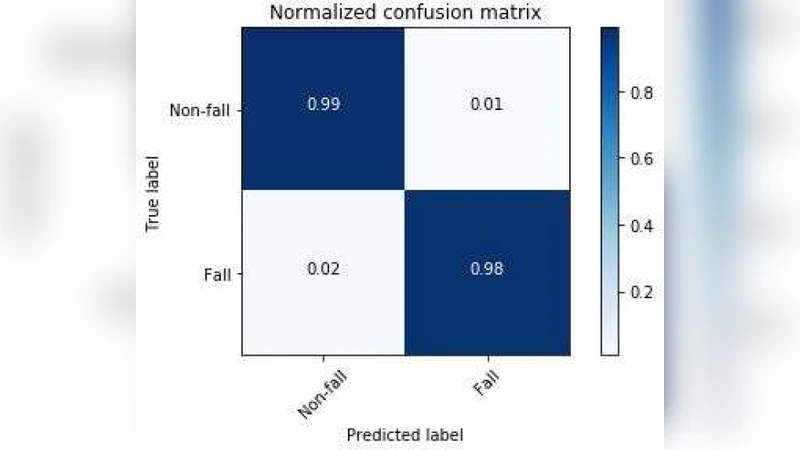
Detecting patterns in real time streaming data has been an interesting and challenging data analytics problem. With the proliferation of a variety of sensor devices, real-time analytics of data from the Internet of Things (IoT) to learn regular and irregular patterns has become an important machine learning problem to enable predictive analytics for automated notification and decision support. In this work, we address the problem of learning an irregular human activity pattern, fall, from streaming IoT data from wearable sensors. We present a deep neural network model for detecting fall based on accelerometer data giving 98.75 percent accuracy using an online physical activity monitoring dataset called “MobiAct”, which was published by Vavoulas et al. The initial model was developed using IBM Watson studio and then later transferred and deployed on IBM Cloud with the streaming analytics service supported by IBM Streams for monitoring real-time IoT data. We also present the systems architecture of the real-time fall detection framework that we intend to use with mbientlabs wearable health monitoring sensors for real time patient monitoring at retirement homes or rehabilitation clinics.
💡 Research Summary
The paper presents an end‑to‑end framework for real‑time fall detection using streaming data from wearable IoT sensors. The authors frame a fall as an irregular activity pattern that must be distinguished from normal activities of daily living (ADL). To train a classifier, they use two publicly available datasets: MobiAct (57 subjects, 2,526 samples) and SisFall (38 subjects, 4,505 samples). Both datasets contain tri‑axial accelerometer and gyroscope measurements, labeled as either fall or ADL.
Data preprocessing follows a window‑based approach: raw signals sampled at 20 Hz are segmented into 10‑second windows (200 records). For each window, a comprehensive set of 58 statistical features is extracted, including mean, median, standard deviation, skewness, kurtosis, min, max for each axis and its absolute values, slope, tilt‑angle statistics, and magnitude‑based features such as zero‑crossing rate. This feature engineering mirrors the pipeline used by Ajerla et al., ensuring comparability with prior high‑accuracy results.
The classification model is a multilayer perceptron (MLP) artificial neural network. The input layer receives the 58 features, followed by two hidden layers (typically 128 and 64 neurons) with ReLU activation, and a soft‑max output layer for binary classification. Training is performed in IBM Watson Studio using the Adam optimizer and categorical cross‑entropy loss, with cross‑validation to avoid over‑fitting. On the MobiAct test split the model achieves 98.75 % accuracy and a 97.9 % F1‑score; comparable performance is reported on SisFall.
For deployment, the authors leverage IBM Streams on IBM Cloud. Sensor data are transmitted via MQTT/HTTP to the IBM Cloud IoT Platform, ingested by IBM Streams, and processed in real time. The same preprocessing and feature extraction logic is implemented as stream operators, so each incoming window is transformed into a feature vector on the fly. The trained MLP is exported in ONNX format and loaded into the Streams model‑serving component. When the model predicts a fall, IBM Cloud Functions trigger notifications (push, SMS, dashboard update). The whole pipeline runs in containers, enabling horizontal scaling and centralized logging via IBM Log Analysis.
The paper also discusses concept drift – the gradual change in statistical properties of streaming data due to aging, health status, or environmental factors. A simulated drift experiment shows a static model’s accuracy can drop by more than 10 % when the underlying distribution shifts. The authors propose periodic retraining or online learning extensions within IBM Streams to mitigate this issue.
Related work is surveyed extensively, covering threshold‑based methods, traditional machine learning (SVM, K‑NN), and deep learning approaches (LSTM, RNN, CNN). While many prior studies report high accuracies using recurrent networks, the authors demonstrate that a well‑engineered feature set with a simple MLP can achieve comparable results with far lower computational overhead, facilitating real‑time deployment on cloud services.
Limitations acknowledged include the lack of real‑world elderly fall data, potential variability due to sensor placement, and the need for multi‑sensor fusion to improve robustness. Future work is outlined as (1) collecting in‑situ data from retirement homes, (2) integrating additional modalities (e.g., heart rate, barometer), (3) implementing adaptive online learning to handle concept drift, and (4) enhancing security and privacy through end‑to‑end encryption.
In summary, the study delivers a complete, reproducible pipeline—from data acquisition and feature engineering to model training, cloud‑based streaming deployment, and alert generation—for detecting falls in real time. The reported 98.75 % accuracy demonstrates the feasibility of using IBM Cloud services and a lightweight MLP to provide timely fall alerts, potentially reducing response times and improving outcomes for older adults in assisted‑living environments.
Comments & Academic Discussion
Loading comments...
Leave a Comment