A Generalized Coupon Collector Problem
This paper provides analysis to a generalized version of the coupon collector problem, in which the collector gets $d$ distinct coupons each run and she chooses the one that she has the least so far.
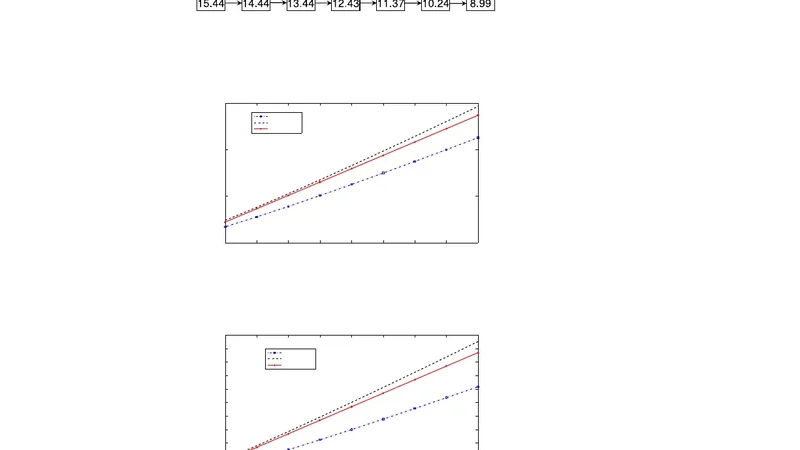
This paper provides analysis to a generalized version of the coupon collector problem, in which the collector gets $d$ distinct coupons each run and she chooses the one that she has the least so far. On the asymptotic case when the number of coupons $n$ goes to infinity, we show that on average $\frac{n\log n}{d} + \frac{n}{d}(m-1)\log\log{n}+O(mn)$ runs are needed to collect $m$ sets of coupons. An efficient exact algorithm is also developed for any finite case to compute the average needed runs exactly. Numerical examples are provided to verify our theoretical predictions.
💡 Research Summary
The paper tackles a natural extension of the classic coupon collector problem by allowing the collector to receive d distinct coupons in each draw and to retain only the coupon of which she currently has the fewest copies. This “least‑collected‑first” rule models situations where a system strives for balanced acquisition of multiple item types, such as load‑balancing in distributed networks, multi‑set sampling in statistics, or promotional campaigns that aim to give each user a roughly equal set of rewards.
The authors first formalize the stochastic process. The state of the system at any time is represented by an n‑dimensional vector whose i‑th component counts how many copies of coupon i have been collected. In each round a subset of size d is drawn uniformly without replacement from the n coupon types. Among these d candidates the collector deterministically picks the one with the smallest current count (breaking ties arbitrarily). This deterministic selection eliminates the need for an additional random choice and creates a Markov chain whose transition probabilities can be expressed in closed form using binomial coefficients.
The core theoretical contribution is an asymptotic expression for the expected number of rounds required to complete m full sets of coupons when n tends to infinity. By carefully analyzing the expected increase in the minimum count after each round, the authors derive
\
📜 Original Paper Content
🚀 Synchronizing high-quality layout from 1TB storage...