Diffusion and Auction on Graphs
Auction is the common paradigm for resource allocation which is a fundamental problem in human society. Existing research indicates that the two primary objectives, the seller’s revenue and the allocation efficiency, are generally conflicting in auction design. For the first time, we expand the domain of the classic auction to a social graph and formally identify a new class of auction mechanisms on graphs. All mechanisms in this class are incentive-compatible and also promote all buyers to diffuse the auction information to others, whereby both the seller’s revenue and the allocation efficiency are significantly improved comparing with the Vickrey auction. It is found that the recently proposed information diffusion mechanism is an extreme case with the lowest revenue in this new class. Our work could potentially inspire a new perspective for the efficient and optimal auction design and could be applied into the prevalent online social and economic networks.
💡 Research Summary
The paper “Diffusion and Auction on Graphs” introduces a novel auction framework that operates on a social network graph, where buyers can only learn about the sale through their neighbors. Traditional auction design typically balances two conflicting objectives: maximizing the seller’s revenue and achieving allocative efficiency (social welfare). Existing approaches improve revenue by either employing optimal auctions (requiring knowledge of value distributions) or by attracting additional bidders, yet they do not address how to recruit those extra participants in a realistic setting.
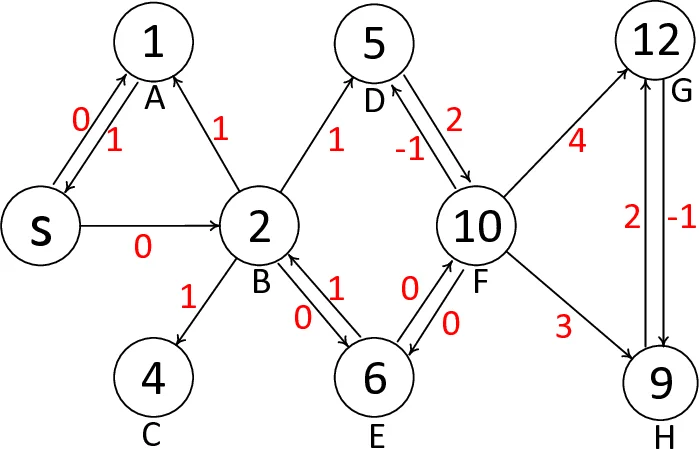
The authors model the market as a directed graph G = (V, E) with a single seller s and a set of buyers V \ {s}. Each buyer i has a private type t_i = (v_i, r_i) where v_i is the valuation for the item and r_i is the set of neighbors to whom i can forward the sale information. Initially only the seller’s direct neighbors are informed. A buyer can participate only if at least one neighbor has already joined and passed the information. Edge weights w(i, j) represent transportation or transmission costs; the paper first treats the unweighted case (w = 0) and later extends to weighted graphs.
A central concept is the critical diffusion node. For any buyer i, there exists a set C_i(t) of nodes that lie on every possible path from the seller to i; without any of these nodes, i cannot receive the sale information. Ordering these nodes yields the critical diffusion sequence C*_i(t) = {s₁, s₂, …, i}. The authors define d_i as the set of buyers whose critical diffusion sequences contain i; removing i disconnects all buyers in d_i from the auction.
Based on this structure, the paper proposes the Critical Diffusion Mechanism (CDM) (Algorithm 1). The mechanism works as follows:
- Identify the highest reported bid m and compute its critical diffusion sequence C*_m.
- For each node i in C*_m (in order from the seller outward), compute a cut set α_i of edges that, if removed, would block the information flow to the next node in the sequence. The cut set must satisfy three properties: (i) Information blocking – removing α_i prevents the downstream node from joining; (ii) Node independence – α_i does not depend on the strategies of downstream nodes; (iii) Diffusion monotonicity – expanding a node’s diffusion set can only enlarge the set of participants.
- If the bidder’s valuation v_i equals the optimal social welfare W*(t \ α_i) computed on the graph with α_i removed, then i wins the item and pays W*(t \ i). The algorithm stops.
- Otherwise, i receives a payment x_i = W*(t \ i) − W*(t \ α_i).
The mechanism guarantees individual rationality (IR) because every participant’s utility is non‑negative when reporting truthfully and diffusing to all neighbors. It also ensures incentive compatibility (IC): truthful reporting and full diffusion are dominant strategies. The proof hinges on the fact that a node’s payment depends only on the welfare of the graph after removing its own participation or the minimal cut α_i, both of which are monotone in the diffusion set.
Crucially, the authors show that CDM dominates the classic Vickrey auction. The seller’s revenue under CDM is at least W*(t \ 1), which corresponds to the second‑highest bid among the initially informed neighbors in a Vickrey auction. Moreover, because only nodes in the winner’s critical diffusion sequence can receive non‑zero payments, the revenue is the sum of welfare differences across successive cuts, which is never less than the Vickrey revenue.
The paper also demonstrates that the previously proposed Information Diffusion Mechanism (IDM) (Li et al., 2017) is a special instantiation of CDM where each α_i is simply the single edge from i to the next node in the sequence. Consequently, IDM yields the lowest possible revenue among all CDM variants. By choosing different α_i (e.g., the minimal edge cut β_i), a designer can trade off between higher revenue and potentially lower allocative efficiency.
In the second part, the authors extend the framework to weighted graphs, introducing the Weighted Diffusion Mechanism (WDM). Here each edge carries a non‑negative cost w(i, j). The welfare of a trading path π is defined as the winner’s valuation minus the sum of edge costs along the path. The optimal welfare W*(·) is computed using shortest‑path calculations, and the same CDM logic is applied with the weighted welfare values. This extension captures realistic scenarios such as logistics costs, communication delays, or any externalities associated with transferring the item through the network.
The paper concludes with discussions on practical applications: online marketplaces (e.g., eBay), crowdsourcing platforms, sharing‑economy services, and viral marketing campaigns. By embedding diffusion incentives directly into the auction rules, the mechanisms align individual self‑interest with network‑wide information spread, thereby enlarging the bidder pool and improving both revenue and efficiency without requiring external advertising.
Overall, the contribution is threefold: (1) formalizing auction design on graphs with explicit diffusion constraints; (2) introducing a flexible class of mechanisms (CDM/WDM) that are truthful, individually rational, and revenue‑dominant over Vickrey; and (3) revealing the spectrum of possible mechanisms within this class, with IDM as the revenue‑lowest point. Future work suggested includes multi‑unit extensions, heterogeneous items, dynamic network evolution, and empirical validation on real social‑network data.
Comments & Academic Discussion
Loading comments...
Leave a Comment