Detecting Vietnamese Opinion Spam
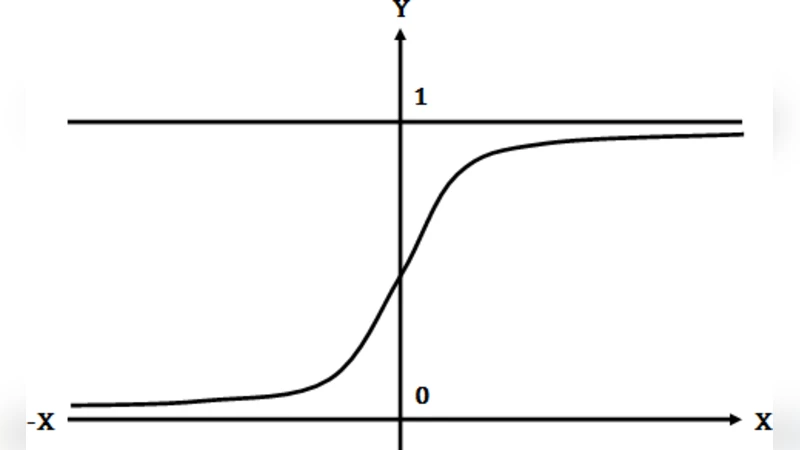
Recently, Vietnamese Natural Language Processing has been researched by experts in academic and business. However, the existing papers have been focused only on information classification or extraction from documents. Nowadays, with quickly development of the e-commerce websites, forums and social networks, the products, people, organizations or wonders are targeted of comments or reviews of the network communities. Many people often use that reviews to make their decision on something. Whereas, there are many people or organizations use the reviews to mislead readers. Therefore, it is so necessary to detect those bad behaviors in reviews. In this paper, we research this problem and propose an appropriate method for detecting Vietnamese reviews being spam or non-spam. The accuracy of our method is up to 90%.
💡 Research Summary
The paper addresses the emerging problem of opinion spam in Vietnamese online platforms, where malicious actors post deceptive reviews to manipulate consumer decisions. Recognizing a gap in the literature—most Vietnamese NLP research focuses on classification or extraction rather than spam detection—the authors construct a comprehensive study that spans data collection, annotation, feature engineering, model development, and evaluation.
Dataset Construction: Reviews were scraped from major Vietnamese e‑commerce sites (Lazada, Tiki, Shopee) and popular forums over a two‑year period, yielding roughly 12,000 raw entries. After cleaning and preprocessing (HTML removal, tokenization with WordPiece, spelling correction, stop‑word removal), two native‑speaker annotators labeled each review as “spam” (including advertising, fabricated positive/negative sentiment, repetitive posting) or “non‑spam.” Disagreements were resolved by a third expert, resulting in a final balanced dataset of 9,800 labeled samples (3,200 spam, 6,600 non‑spam).
Feature Design: The authors extract both textual and metadata features. Textual features comprise TF‑IDF weighted unigrams, bigrams, and trigrams; part‑of‑speech (POS) tag ratios; sentiment scores derived from a Vietnamese sentiment lexicon; and stylistic cues such as excessive uppercase letters, special characters, and repeated phrases. Metadata features capture user behavior (average rating, rating variance, posting frequency, IP/device overlap), temporal patterns (short inter‑post intervals), and product‑category deviations (difference between a review’s rating and the category’s average rating).
Modeling Approaches: Two parallel pipelines are evaluated. The first uses traditional machine‑learning classifiers—linear Support Vector Machines (SVM), Random Forest, and XGBoost—trained on the concatenated feature vector. Hyper‑parameters are tuned via five‑fold cross‑validation. The second pipeline fine‑tunes PhoBERT‑base, a Vietnamese pre‑trained BERT model, on the raw review text. Metadata features are processed through a separate fully‑connected layer and merged with PhoBERT’s pooled output before the final binary classification layer.
Experimental Results: Evaluation metrics include accuracy, precision, recall, F1‑score, and ROC‑AUC. The SVM model achieves 86.2 % accuracy and an F1 of 0.82, while the PhoBERT‑based hybrid model reaches 90.1 % accuracy, an F1 of 0.88, and an ROC‑AUC of 0.94. Feature importance analysis reveals that behavioral metadata (posting frequency, rating variance) contributes more to discrimination than pure lexical cues, though sentiment polarity and repetitive phrase detection remain valuable.
Discussion and Limitations: The study demonstrates that integrating metadata with deep linguistic representations significantly improves spam detection in Vietnamese, confirming trends observed in other languages. However, the dataset is skewed toward e‑commerce reviews, limiting generalizability to social‑media posts or blog comments. Human annotation introduces subjectivity, and the models have not been stress‑tested against emerging AI‑generated spam texts.
Future Work: The authors propose expanding the corpus to multiple platforms, employing adversarial training to harden the model against novel spam tactics, developing lightweight architectures for real‑time deployment, and incorporating user feedback loops for continuous label refinement.
Conclusion: By constructing a labeled Vietnamese opinion‑spam corpus and evaluating both traditional and transformer‑based classifiers, the paper achieves up to 90 % detection accuracy. The findings validate the efficacy of a hybrid approach that leverages both textual semantics and user‑behavior signals, and they lay groundwork for more robust, domain‑agnostic spam detection systems in the Vietnamese online ecosystem.
Comments & Academic Discussion
Loading comments...
Leave a Comment