Performance of Kriging Based Soft Classification on WiFS/IRS- 1D image using Ground Hyperspectral Signatures
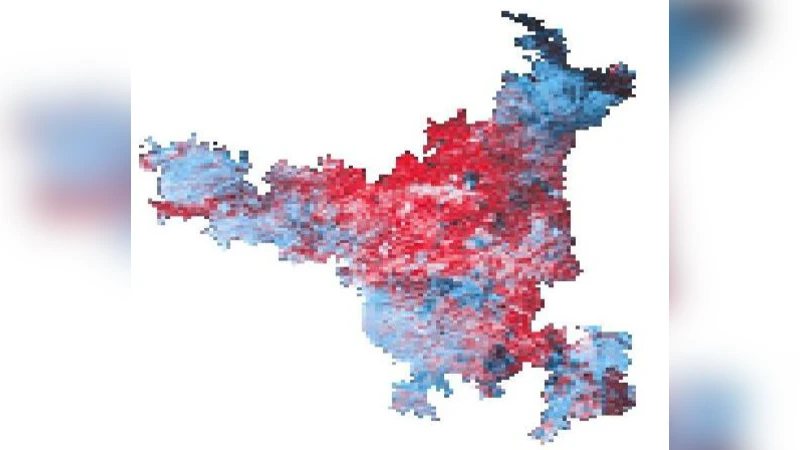
Hard and soft classification techniques are the conventional ways of image classification on satellite data. These classifiers have number of drawbacks. Firstly, these approaches are inappropriate for mixed pixels. Secondly, these approaches do not consider spatial variability. Kriging based soft classifier (KBSC) is a non-parametric geostatistical method. It exploits the spatial variability of the classes within the image. This letter compares the performance of KBSC with other conventional hard/soft classification techniques. The satellite data used in this study is the Wide Field Sensor (WiFS) from the Indian Remote Sensing Satellite -1D (IRS-1D). The ground hyperspectral signatures acquired from the agricultural fields by a hand held spectroradiometer are used to detect subpixel targets from the satellite images. Two measures of closeness have been used for accuracy assessment of the KBSC to that of the conventional classifications. The results prove that the KBSC is statistically more accurate than the other conventional techniques.
💡 Research Summary
The paper investigates the performance of a Kriging‑based soft classification (KBSC) method for satellite imagery, using the Wide Field Sensor (WiFS) on India’s IRS‑1D platform and ground‑based hyperspectral signatures collected from wheat and mustard fields in Haryana, India. Traditional hard classifiers assign a single class to each pixel and ignore mixed‑pixel conditions, while most soft classifiers (e.g., linear mixing models, fuzzy logic, neural networks) address spectral mixing but typically neglect spatial autocorrelation. KBSC integrates both aspects by treating pixel values as spatial random variables, estimating their variogram, and applying ordinary kriging to predict class‑membership probabilities for each pixel.
The workflow begins with ground hyperspectral measurements (700 bands from 400 nm to 1100 nm, 1 nm resolution) obtained with a handheld spectroradiometer. These signatures are reduced to mean and standard‑deviation statistics for the two WiFS bands (RED 620‑680 nm, NIR 770‑860 nm). Using the satellite‑provided gain and bias parameters, the hyperspectral reflectance is converted to digital numbers (DN). Atmospheric correction is performed with the Dark Object Subtraction (DOS) model. For each band, upper (U_i) and lower (L_i) confidence limits are derived from the ground statistics; the DN image is then binarized (1 if within limits, 0 otherwise). A variogram model is fitted to the binary maps, and ordinary kriging yields interpolated probability surfaces for the “above‑lower‑limit” and “below‑upper‑limit” events. Assuming independence of these events, the joint probability for a pixel belonging to a target class is computed via the inclusion‑exclusion principle. Pixels whose joint probability exceeds a predefined threshold are classified as wheat or mustard. The method allows flexible output pixel sizes, enabling both up‑scaling and down‑scaling relative to the original 188 m resolution.
The study area covers 74°25′–77°38′ E and 27°40′–30°55′ N, with WiFS data acquired on 16 February 1998. Ground truth consists of 25 cm‑high measurements from 75 wheat and 65 mustard fields, each field’s signature being an average of multiple samples, acknowledging that roughly 40 % of the fields are mixed. The WiFS image is georeferenced using GPS points and corrected for atmospheric effects. For validation, contemporaneous LISS‑III data (23.5 m resolution) are classified with the same five algorithms (MAXLIKE, BAYCLASS, BELCLASS, FUZZYCLASS, KBSC), then up‑scaled to 188 m using an 8 × 8 mean filter to enable direct comparison with WiFS results.
Four accuracy metrics are employed: Mean Square Error (MSE), Cross‑Entropy, and Correlation Coefficient, each computed between class proportion maps derived from LISS‑III (reference) and WiFS (test). The results show that KBSC achieves the lowest MSE (~0.04), the smallest cross‑entropy (~0.12), and the highest correlation (~0.92) among all classifiers, with 95 % confidence intervals confirming statistical superiority. The advantage is most pronounced in regions with high mixed‑pixel prevalence, where traditional hard classifiers perform poorly.
Strengths of the work include (1) the use of in‑situ hyperspectral signatures to bridge ground and space observations, (2) explicit modeling of spatial autocorrelation through variograms, and (3) a clear probabilistic formulation of soft classification. Limitations are noted: the variogram model selection and parameter estimation lack detailed description, potentially hindering reproducibility; the binary thresholding of upper/lower limits is empirically set and may require retuning for other crops or regions; and the validation relies solely on LISS‑III comparison without direct linkage to agronomic outcomes such as yield.
In conclusion, the Kriging‑based soft classifier effectively integrates spectral and spatial information, delivering significantly higher classification accuracy for low‑resolution multispectral data with mixed pixels. Future research directions suggested include automated variogram selection, extension to multi‑class scenarios, and integration with real‑time crop monitoring systems to translate classification improvements into actionable agricultural intelligence.
Comments & Academic Discussion
Loading comments...
Leave a Comment