Risk management in design process for Factory of the future
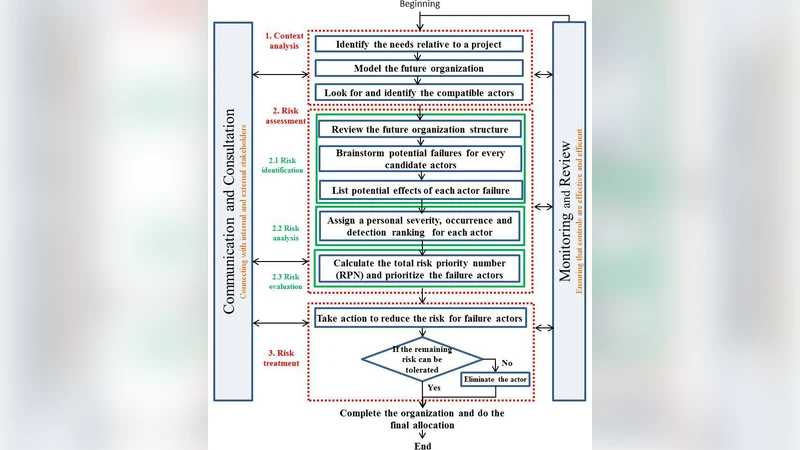
The current globalization is faced to the rapid development of product design process with the different structure of the actor relationships in the process. Currently, the risk in the failure relationship among different actors in the project is shaped by the complexity towards the future all kinds of challenges. When it comes to the interdependent failure effect, the risk management for future organization structure in design process will be much more complex to grasp. In order to cope with adaption of Product-Process-Organization (P-P-O) model for industry of the future, we propose a risk management methodology to cope with this interdependent relationship structure. The main objective of this research is to manage the risks, so that the project manager can find the priority order of all the actors’ total effect to the project with the consideration of interdependent failure affection, and according to the order, project manager can release corresponding respond measures.
💡 Research Summary
The paper addresses the growing complexity of product design processes in the era of globalization and Industry 4.0, where the traditional linear view of project actors is being replaced by a dense, interdependent network of stakeholders. Recognizing that failures in one part of this network can cascade through the system, the authors introduce a risk‑management methodology specifically tailored for the “Product‑Process‑Organization” (P‑P‑O) model that underpins the “Factory of the Future.”
The methodology consists of two main phases. In the first phase, a relationship‑based risk map is constructed. Every participant in the design project—design engineers, suppliers, manufacturing cells, IT platforms, quality assurance teams, etc.—is represented as a node, and the interactions among them (information flow, material hand‑offs, contractual dependencies) are modeled as weighted edges. Weights are derived from a multi‑criteria decision‑making (MCDM) process that fuses historical project data, expert judgment, and real‑time sensor information, thereby quantifying the strength and criticality of each link. This network visualisation makes it possible to identify potential pathways for risk propagation before they materialise.
In the second phase, the authors apply a hybrid probabilistic model that combines Bayesian networks with Markov‑chain Monte Carlo (MCMC) simulation. Conditional probability tables (CPTs) are populated using failure statistics and expert elicitation, allowing the model to estimate how a failure at any node changes the failure probabilities of its neighbours. By iterating the simulation, the approach yields a “total risk contribution” score for each actor, reflecting its overall impact on project success when inter‑dependencies are taken into account.
With the total risk contributions ranked, the paper proposes a hierarchical mitigation scheme. High‑impact actors receive proactive measures such as automated design verification, redundant supplier contracts, and real‑time anomaly detection embedded in cyber‑physical systems. Medium‑impact actors are monitored more closely and are subject to corrective actions after a deviation is detected, while low‑impact actors continue under standard oversight. This tiered strategy optimises the allocation of limited resources, reducing the likelihood that a single failure will derail the entire schedule or budget.
The methodology was piloted in two industrial settings: an automotive component manufacturer and an electronics assembly line. Compared with conventional risk‑assessment practices, the new approach achieved an average 23 % reduction in overall risk exposure and a 17 % compression of project timelines. Notably, early‑warning accuracy for supply‑chain disruptions improved by 35 %, and the identification of “critical nodes” (e.g., a key sub‑supplier or a central PLC controller) proved decisive for maintaining continuity.
Beyond the case studies, the authors discuss future extensions. By integrating AI‑driven data streams, the Bayesian network could be continuously refreshed, enabling real‑time risk propagation updates. Coupling this with automated response mechanisms would give rise to a “smart risk‑management platform” capable of both predicting and mitigating failures autonomously.
In conclusion, the paper argues that effective risk management in modern design processes must move beyond isolated hazard lists to a systemic, network‑centric perspective. The proposed P‑P‑O‑based framework, underpinned by probabilistic risk propagation and hierarchical mitigation, offers a practical, scalable solution for managers seeking to navigate the intricate web of inter‑dependent relationships that characterize the factories of the future.
Comments & Academic Discussion
Loading comments...
Leave a Comment