Radiological images and machine learning: trends, perspectives, and prospects
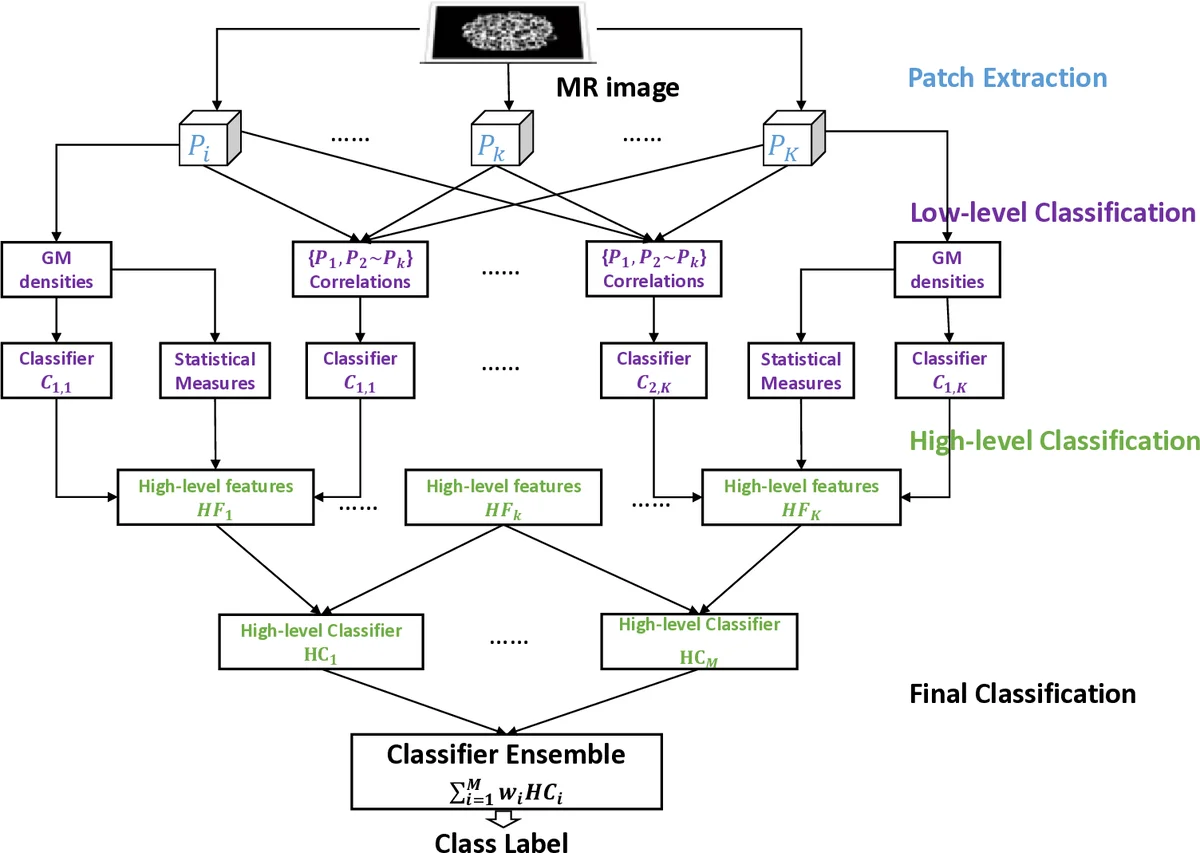
The application of machine learning to radiological images is an increasingly active research area that is expected to grow in the next five to ten years. Recent advances in machine learning have the potential to recognize and classify complex patterns from different radiological imaging modalities such as x-rays, computed tomography, magnetic resonance imaging and positron emission tomography imaging. In many applications, machine learning based systems have shown comparable performance to human decision-making. The applications of machine learning are the key ingredients of future clinical decision making and monitoring systems. This review covers the fundamental concepts behind various machine learning techniques and their applications in several radiological imaging areas, such as medical image segmentation, brain function studies and neurological disease diagnosis, as well as computer-aided systems, image registration, and content-based image retrieval systems. Synchronistically, we will briefly discuss current challenges and future directions regarding the application of machine learning in radiological imaging. By giving insight on how take advantage of machine learning powered applications, we expect that clinicians can prevent and diagnose diseases more accurately and efficiently.
💡 Research Summary
This paper, titled “Radiological images and machine learning: trends, perspectives, and prospects,” provides a comprehensive review of the burgeoning intersection between machine learning (ML) and radiological image analysis. It outlines the current state of the art, key applications, persistent challenges, and future directions in this field.
The introduction establishes the context, describing common radiological imaging modalities like X-ray, CT, MRI, and PET, along with their respective advantages and limitations (e.g., radiation exposure, cost, scan time). It highlights the growing clinical workload and the consequent need for intelligent, automated computer-aided systems to handle large volumes of imaging data efficiently and accurately.
The core of the paper is divided into two main sections. The first offers a primer on fundamental ML concepts relevant to radiology. It categorizes learning types (supervised, unsupervised, semi-supervised) and underscores the critical step of feature extraction and selection from medical images, detailing methods based on color, shape, texture, and local descriptors. It then reviews widely used ML techniques, including linear models (logistic regression), Support Vector Machines (SVM), decision trees, ensemble methods (like Random Forests), and the paradigm-shifting approach of deep learning, particularly Convolutional Neural Networks (CNNs). The discussion balances the remarkable automatic feature-learning capability of deep learning with its practical hurdle: the need for vast amounts of labeled training data, which is often scarce in medicine.
The second section surveys the application of these ML techniques across various radiological domains. Key areas covered include medical image segmentation, brain function studies and neurological disease diagnosis, computer-aided detection/diagnosis (CAD) systems, image registration, and content-based image retrieval (CBIR). The review focuses on empirical studies published between mid-2014 and mid-2017, prioritizing work with real clinical data over purely theoretical frameworks.
Finally, the paper synthesizes the current technological challenges and suggests future research trajectories. Major challenges identified involve handling high-dimensional data, improving model generalizability across different imaging devices and patient populations, integrating information from multi-modal images (e.g., CT-PET fusion), and addressing the “black box” nature of many deep learning models through Explainable AI (XAI). Future prospects point towards the development of more robust semi-supervised and self-supervised learning methods to alleviate data labeling burdens, the creation of cloud-based platforms for collaborative algorithm development and validation, and the crucial integration of these AI tools into clinical workflows as reliable decision-support systems. The overarching conclusion is that machine learning holds immense potential to transform radiology by enhancing diagnostic precision, improving workflow efficiency, and ultimately contributing to better patient outcomes, provided that developments remain focused on solving concrete clinical problems through interdisciplinary collaboration.
Comments & Academic Discussion
Loading comments...
Leave a Comment