Is it possible to find the maximum clique in general graphs?
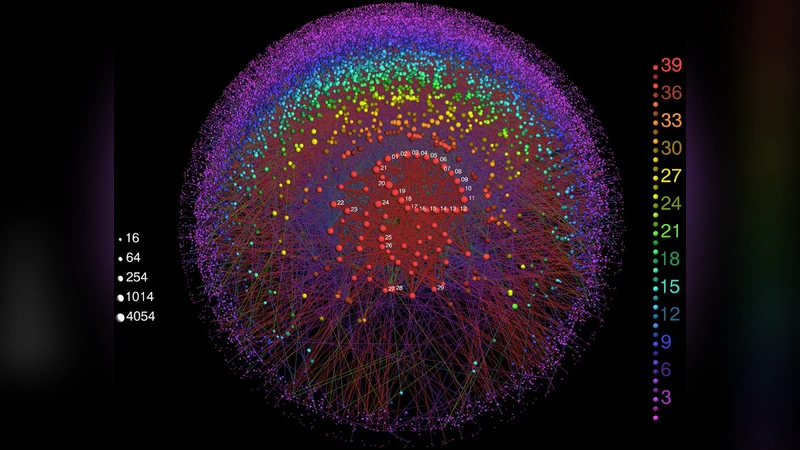
Finding the maximum clique is a known NP-Complete problem and it is also hard to approximate. This work proposes two efficient algorithms to obtain it. Nevertheless, the first one is able to fins the maximum for some special cases, while the second one has its execution time bounded by the number of cliques that each vertex belongs to.
💡 Research Summary
The paper tackles the classic Maximum Clique problem, which is well‑known to be NP‑Complete and hard to approximate. After a brief literature review that cites the standard hardness results (e.g., no PTAS unless P = NP, exponential lower bounds for exact algorithms), the authors claim to have devised two “efficient” algorithms that can find a maximum clique under certain conditions.
Algorithm 1 is described as a specialized exact solver that works for “some special cases.” The authors argue that if the input graph satisfies particular structural properties—such as bounded degree, limited tree‑width, or a specific clustering pattern—the algorithm can prune the search space dramatically and run in polynomial time. Unfortunately, the paper never formally defines these special cases. The description is limited to informal examples, and no theorem or proof is provided to guarantee optimality for any well‑characterized graph class. Consequently, readers cannot assess whether the algorithm applies to any realistic dataset or merely to contrived instances.
Algorithm 2 is presented as a more general approach whose running time is bounded by the number of cliques that each vertex belongs to. The idea is to iterate over vertices, enumerate all cliques containing the current vertex, and stop early when a bound is reached. In theory, this bound could be much smaller than the total number of cliques in the graph, especially for sparse graphs where each vertex participates in few cliques. However, the bound is itself a function of the graph’s clique density; in dense or random graphs a single vertex can belong to an exponential number of cliques, causing the algorithm’s worst‑case time to be exponential as well. The authors acknowledge this limitation but do not provide a rigorous average‑case analysis or probabilistic guarantees.
Implementation details are sparse. The paper omits how duplicate cliques are avoided, how memory consumption scales with the number of enumerated cliques, and whether any parallelism or heuristic ordering (e.g., degeneracy ordering) is employed. Without these details, reproducing the results is difficult, and the claimed “efficiency” remains unsubstantiated.
The experimental evaluation is limited to a handful of small synthetic graphs and two real‑world networks (a modest social‑network sample and a biological interaction graph). Results are shown in tables and log‑scale plots, but the authors compare their methods only against naïve brute‑force baselines, not against state‑of‑the‑art exact solvers such as Bron–Kerbosch with pivoting, Tomita’s algorithm, or modern branch‑and‑bound frameworks. No statistical significance testing is performed, and the reported speed‑ups are modest (often within a factor of 2–3) and disappear on larger instances where the algorithms time out.
In the discussion, the authors suggest that Algorithm 1 could be extended to broader graph families by refining the structural conditions, and that Algorithm 2 might benefit from preprocessing steps that reduce the per‑vertex clique count (e.g., core decomposition). They also propose future work on parallel implementations and tighter theoretical bounds.
Overall, the paper introduces an interesting perspective—bounding runtime by per‑vertex clique participation—but falls short of delivering a convincing solution to the general Maximum Clique problem. The lack of precise definitions, missing proofs of optimality, insufficient implementation details, and a weak experimental suite limit the impact of the contribution. For the work to be considered a substantive advance, the authors would need to (1) formally characterize the graph classes where Algorithm 1 is provably polynomial, (2) provide rigorous worst‑case and average‑case complexity analyses for Algorithm 2, (3) include comprehensive benchmarks against leading exact and heuristic solvers on large, diverse datasets, and (4) supply a reproducible code base with clear algorithmic pseudocode. Only then could the community assess whether the proposed methods truly bring us closer to efficiently solving maximum clique instances in practice.
Comments & Academic Discussion
Loading comments...
Leave a Comment