Tutorial: Deriving The Efficient Influence Curve for Large Models
This paper aims to provide a tutorial for upper level undergraduate and graduate students in statistics, biostatistics and epidemiology on deriving influence functions for non-parametric and semi-parametric models. The author will build on previously known efficiency theory and provide a useful identity and formulaic technique only relying on the basics of integration which, are self-contained in this tutorial and can be used in most any setting one might encounter in practice. The paper provides many examples of such derivations for well-known influence functions as well as for new parameters of interest. The influence function remains a central object for constructing efficient estimators for large models, such as the one-step estimator and the targeted maximum likelihood estimator. We will not touch upon these estimators at all but readers familiar with these estimators might find this tutorial of particular use.
💡 Research Summary
The paper presents a pedagogical guide for deriving efficient influence curves (EICs) in non‑parametric and semi‑parametric settings, targeting upper‑level undergraduate, graduate, and early‑career researchers in statistics, biostatistics, and epidemiology. It begins by motivating the central role of the EIC in constructing efficient estimators such as the one‑step estimator and targeted maximum likelihood estimator, even though the paper deliberately avoids discussing those estimators in detail.
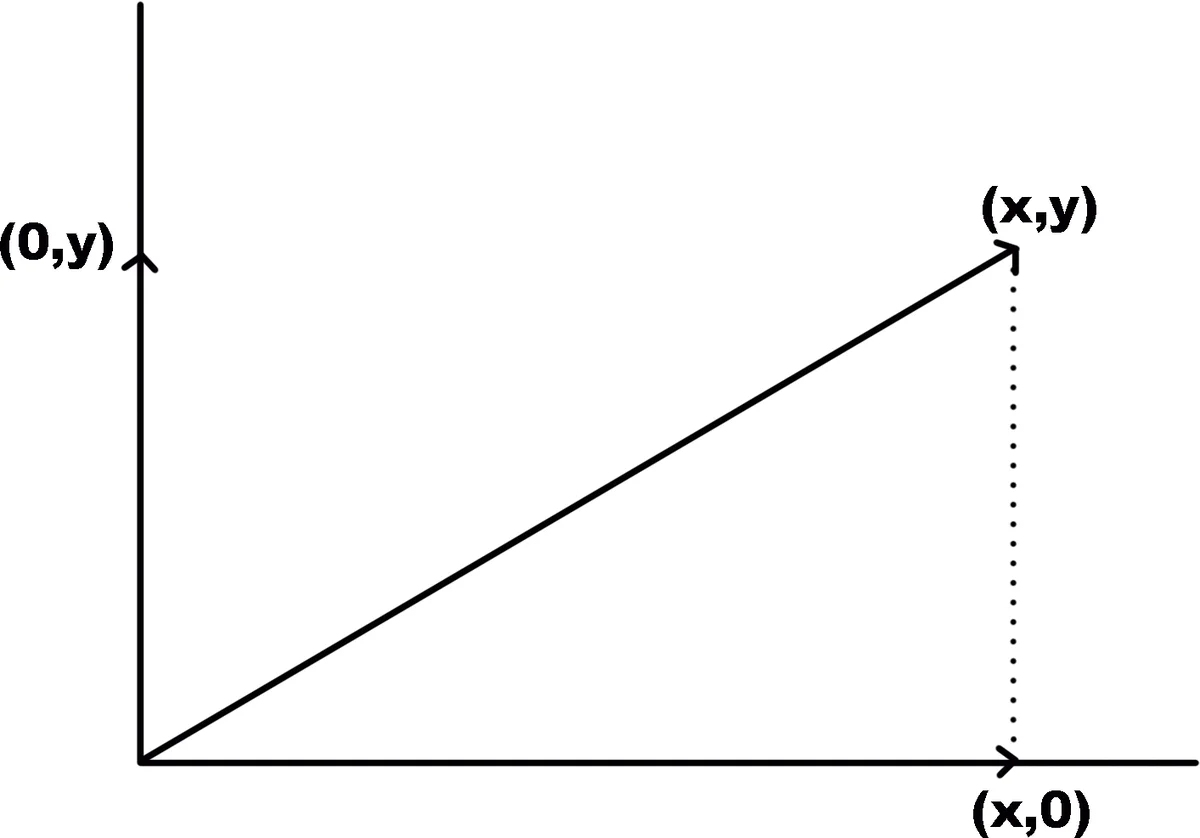
The authors first introduce the necessary functional‑analytic background, focusing on Hilbert spaces. They define a Hilbert space (H) with an inner product (\langle\cdot,\cdot\rangle) and illustrate the concepts with the familiar Euclidean space (\mathbb{R}^2) and the infinite‑dimensional space (L^2_0(P)) of mean‑zero, finite‑variance functions under a probability law (P). In this setting, the inner product is the covariance (\langle f,g\rangle = E_P
Comments & Academic Discussion
Loading comments...
Leave a Comment