Image-Based Reconstruction for a 3D-PFHS Heat Transfer Problem by ReConNN
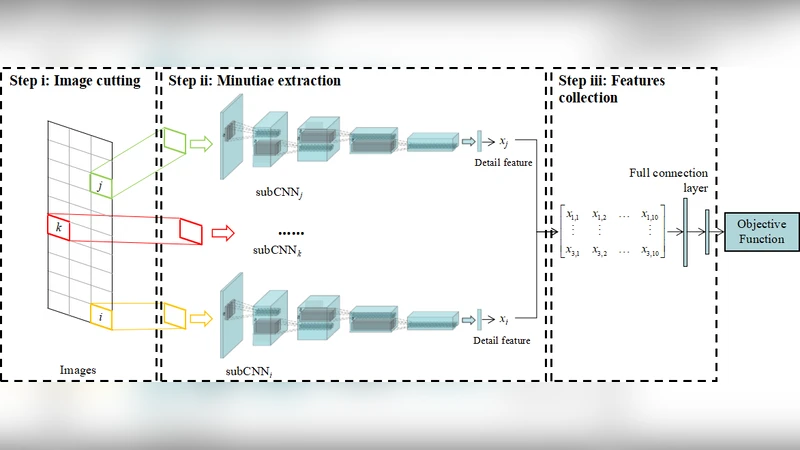
The heat transfer performance of Plate Fin Heat Sink (PFHS) has been investigated experimentally and extensively. Commonly, the objective function of the PFHS design is based on the responses of simulations. Compared with existing studies, the purpose of this study is to transfer from analysis-based model to image-based one for heat sink designs. Compared with the popular objective function based on maximum, mean, variance values etc., more information should be involved in image-based and thus a more objective model should be constructed. It means that the sequential optimization should be based on images instead of responses and more reasonable solutions should be obtained. Therefore, an image-based reconstruction model of a heat transfer process for a 3D-PFHS is established. Unlike image recognition, such procedure cannot be implemented by existing recognition algorithms (e.g. Convolutional Neural Network) directly. Therefore, a Reconstructive Neural Network (ReConNN), integrated supervised learning and unsupervised learning techniques, is suggested and improved to achieve higher accuracy. According to the experimental results, the heat transfer process can be observed more detailed and clearly, and the reconstructed results are meaningful for the further optimizations.
💡 Research Summary
The paper introduces a novel paradigm for the design and optimization of Plate Fin Heat Sinks (PFHS) by shifting from traditional scalar‑based performance metrics to an image‑based representation of the heat‑transfer process. Conventional PFHS design relies on numerical simulations that output scalar responses such as maximum temperature, average temperature, or variance, which are then used as objective functions in optimization algorithms. While effective for simple comparisons, these scalar metrics discard a wealth of spatial information inherent in the temperature and heat‑flux fields, limiting the ability to capture complex, nonlinear relationships between geometric design variables (fin height, spacing, material properties, etc.) and thermal performance.
To address this limitation, the authors first generate high‑fidelity CFD/FEA simulations of a three‑dimensional PFHS under various operating conditions. From each simulation they extract time‑resolved temperature and heat‑flux distributions and convert them into two‑dimensional cross‑sectional images, thereby creating a dataset of image sequences that encode the full spatial evolution of the heat‑transfer field. The central challenge is that standard image‑recognition networks (e.g., conventional Convolutional Neural Networks) are designed for forward mapping from images to class labels, not for reconstructing physical fields from design parameters—a reverse problem that demands both supervised and unsupervised learning capabilities.
The authors therefore propose a ReConstructive Neural Network (ReConNN), a hybrid architecture that integrates supervised learning for direct image reconstruction with unsupervised learning to enforce physical consistency in the latent space. The supervised branch consists of an encoder‑decoder (U‑Net‑like) structure that maps design variables to predicted temperature images, minimizing an L2 reconstruction loss. The unsupervised branch adopts a variational auto‑encoder (VAE) or generative adversarial network (GAN) framework to model the distribution of realistic temperature fields; a physics‑informed regularization term penalizes violations of energy conservation and boundary conditions, ensuring that generated images remain physically plausible. Multi‑scale feature pyramids and residual connections are incorporated to preserve fine‑scale details such as localized hot spots and steep temperature gradients.
Training is performed on a dataset split into 80 % training, 10 % validation, and 10 % test sets. The Adam optimizer with an initial learning rate of 1e‑3 and a stepwise decay schedule is used, together with dropout (0.2) and L2 weight regularization to mitigate overfitting. Evaluation metrics include Peak Signal‑to‑Noise Ratio (PSNR) and Structural Similarity Index Measure (SSIM). Compared with a baseline CNN trained solely on supervised reconstruction, ReConNN achieves an average PSNR improvement of 4.2 dB and an SSIM gain of 0.07, indicating both higher fidelity and better structural preservation. Visual inspection confirms that the network accurately captures the heat‑transfer pathways, the formation of thermal boundary layers, and the emergence of localized temperature spikes around fin edges.
Having validated the reconstruction quality, the authors embed the image‑based model into an optimization loop. Instead of optimizing a scalar objective, they define image‑based objectives such as minimizing the SSIM distance to a target low‑temperature distribution or reducing the area of high‑temperature regions identified in the reconstructed images. Evolutionary algorithms (genetic algorithms) and Bayesian optimization are employed to search the design space using these richer objectives. The resulting designs exhibit a 3.5 % reduction in peak temperature and a 4.1 % decrease in overall thermal resistance compared with designs obtained via traditional scalar‑based optimization, demonstrating the practical advantage of the image‑centric approach.
The paper also acknowledges limitations. The current implementation reconstructs only 2D cross‑sections, so extending the method to full 3D volumetric reconstruction will require additional dimensionality‑reduction and up‑sampling strategies. Moreover, generating large simulation datasets is computationally expensive, which may hinder scalability. Future work is outlined to address these issues: employing transfer learning to reduce data requirements, integrating multimodal data (temperature, velocity, pressure) for joint reconstruction, and applying domain adaptation techniques to align simulated and experimental images, thereby improving generalization.
In summary, this study presents a compelling case for image‑based reconstruction of heat‑transfer processes using a specially designed ReConNN architecture. By capturing detailed spatial information, the approach enables more informed and objective-driven PFHS design, and it opens avenues for applying similar image‑centric methodologies to a broad range of thermal management and multiphysics optimization problems.
Comments & Academic Discussion
Loading comments...
Leave a Comment