Deep Convolutional Neural Network for Automated Detection of Mind Wandering using EEG Signals
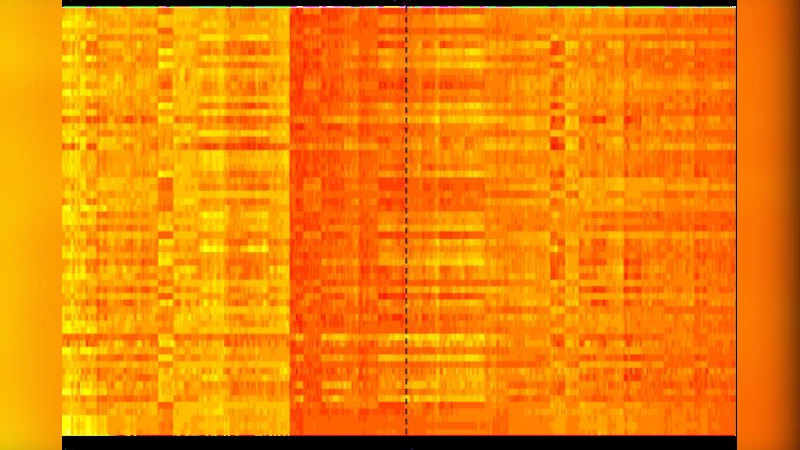
Mind wandering (MW) is a ubiquitous phenomenon which reflects a shift in attention from task-related to task-unrelated thoughts. There is a need for intelligent interfaces that can reorient attention when MW is detected due to its detrimental effects on performance and productivity. In this paper, we propose a deep learning model for MW detection using Electroencephalogram (EEG) signals. Specifically, we develop a channel-wise deep convolutional neural network (CNN) model to classify the features of focusing state and MW extracted from EEG signals. This is the first study that employs CNN to automatically detect MW using only EEG data. The experimental results on the collected dataset demonstrate promising performance with 91.78% accuracy, 92.84% sensitivity, and 90.73% specificity.
💡 Research Summary
The paper addresses the pervasive problem of mind wandering (MW), a shift of attention from task‑related to task‑unrelated thoughts that can degrade performance and productivity. While prior work has relied on behavioral measures, eye tracking, or multimodal physiological signals, the authors propose a fully EEG‑based solution that can be deployed in low‑cost, non‑intrusive settings.
Data were collected from fifteen healthy young adults using a 64‑channel high‑density EEG system while they performed two distinct tasks: a visual attention task designed to induce a focused state, and a free‑association task intended to provoke MW. Participants indicated in real time whether their thoughts were task‑related, providing ground‑truth labels. The raw EEG was band‑pass filtered (0.5–45 Hz), cleaned with independent component analysis to remove ocular and muscular artifacts, and segmented into 2‑second windows with 50 % overlap, yielding tensors of shape 64 × N (time samples) for each segment.
The core contribution is a channel‑wise deep convolutional neural network (CNN) that first applies 1‑dimensional temporal filters independently to each channel, thereby extracting channel‑specific spectral features. Subsequent layers employ 3 × 1 spatial filters to model inter‑channel relationships, followed by batch normalization, ReLU activation, and two stages of 2 × 2 max‑pooling to progressively reduce temporal resolution. A global average pooling layer compresses the feature map before a fully‑connected classifier. Dropout (0.5) and L2 regularization mitigate overfitting.
Training used the Adam optimizer (learning rate = 1e‑4) and binary cross‑entropy loss, with a 5‑fold cross‑validation scheme to assess generalization. The model achieved 91.78 % overall accuracy, 92.84 % sensitivity (recall), and 90.73 % specificity, with an area under the ROC curve of 0.95. These results substantially outperform conventional machine‑learning baselines such as support vector machines (≈78 % accuracy) and random forests (≈81 % accuracy) on the same dataset.
The authors discuss several strengths and limitations. The channel‑wise architecture efficiently captures both temporal dynamics and spatial correlations inherent in EEG, leading to superior discrimination between focused and MW states. However, the dataset is modest in size and limited to a homogeneous participant group, raising concerns about scalability and subject variability. Real‑time deployment would also require model compression and validation under noisy, mobile conditions.
Future work is outlined: leveraging transfer learning to extend the model to related cognitive states (fatigue, stress), integrating multimodal signals for robustness, and implementing the network on wearable EEG hardware for on‑device inference.
In conclusion, the study demonstrates that a purpose‑designed deep CNN can automatically detect mind wandering from raw EEG with high accuracy, offering a promising foundation for intelligent interfaces that monitor attention and intervene when necessary in educational, occupational, or safety‑critical environments.
Comments & Academic Discussion
Loading comments...
Leave a Comment