Agent-Based Simulation Modelling for Reflecting on Consequences of Digital Mental Health
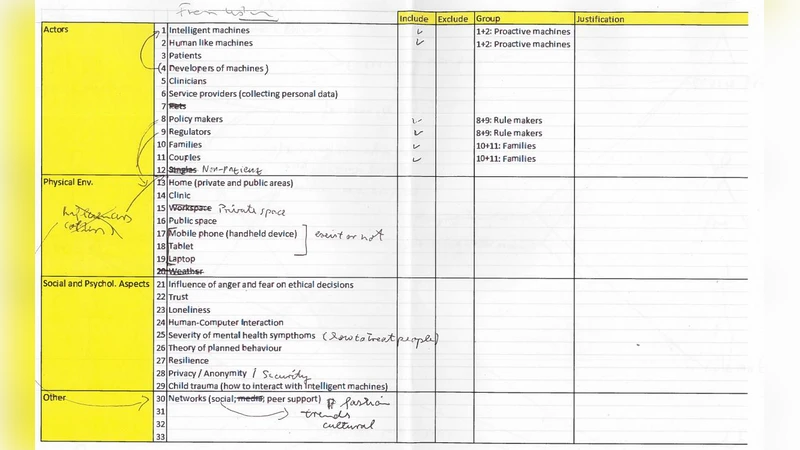
The premise of this working paper is based around agent-based simulation models and how to go about creating them from given incomplete information. Agent-based simulations are stochastic simulations that revolve around groups of agents that each have their own characteristics and can make decisions. Such simulations can be used to emulate real life situations and to create hypothetical situations without the need for real-world testing prior. Here we describe the development of an agent-based simulation model for studying future digital mental health scenarios. An incomplete conceptual model has been used as the basis for this development. To define differences in responses to stimuli we employed fuzzy decision making logic. The model has been implemented but not been used for structured experimentation yet. This is planned as our next step.
💡 Research Summary
The paper presents the development of an agent‑based simulation (ABS) model intended to explore future scenarios in digital mental health, starting from an incomplete conceptual framework. Recognizing the rapid expansion of digital mental health services and the need for policymakers and clinicians to anticipate outcomes without costly real‑world trials, the authors adopt ABS because it can capture heterogeneous agents, non‑linear interactions, and emergent system dynamics that traditional statistical models cannot.
The authors first construct a “partial” conceptual model by synthesizing literature, expert interviews, and limited empirical data. Core components identified include individual agents (characterized by demographics and baseline mental‑health states), digital interventions (mobile apps, tele‑therapy, AI chatbots), environmental factors (social support, workplace stress, pandemic shocks), and policy levers (subsidies, regulation, data‑privacy rules). Because many relationships among these components are uncertain or poorly quantified, the model incorporates fuzzy decision‑making logic to handle linguistic uncertainty (“high”, “medium”, “low”) and to translate expert‑derived if‑then rules into actionable agent behavior. For example, a rule might state: “If stress level is high and digital‑therapy usage frequency is low, then the probability of depressive episode increases.” Membership functions assign degrees of truth to each linguistic term, allowing agents to react in a graded rather than binary fashion.
Implementation is carried out in Python using the Mesa framework. Agents are initialized with demographic attributes (age, gender, socioeconomic status) and mental‑health scores (depression, anxiety, stress). At each simulation tick, agents receive stimuli from the environment (e.g., a new pandemic wave) and from policy changes (e.g., increased reimbursement for digital therapy). The fuzzy inference engine evaluates the rule base and updates each agent’s mental‑health state accordingly. A synchronous scheduler updates all agents simultaneously, ensuring that peer effects—such as the diffusion of attitudes toward digital tools—are captured in real time. Random seeds are fixed to guarantee reproducibility, and multiple runs are aggregated to produce confidence intervals for key outcomes (e.g., prevalence of depressive episodes under different policy scenarios).
At the time of writing, the model is fully coded but has not yet been subjected to systematic experimentation or validation. The authors acknowledge several limitations: the rule base is derived primarily from expert opinion rather than empirical data; parameter values for membership functions and transition probabilities are provisional; and there is no external benchmark to assess model fidelity. Consequently, the paper outlines a roadmap for future work that includes (1) calibrating the model against longitudinal mental‑health surveys, (2) conducting sensitivity analyses to identify the most influential parameters, (3) exploring alternative decision‑making mechanisms such as reinforcement learning or Bayesian networks to replace or augment the fuzzy rule set, and (4) running policy experiments (e.g., varying subsidy levels, altering privacy regulations) to generate evidence for decision‑makers.
The key contributions of the study are threefold. First, it demonstrates how fuzzy logic can be integrated into ABS to manage uncertainty when data are scarce, offering a pragmatic bridge between qualitative expert knowledge and quantitative simulation. Second, it provides a flexible platform that can generate synthetic “what‑if” scenarios, allowing stakeholders to visualize the ripple effects of digital mental‑health interventions across a population. Third, it establishes a foundation for more rigorous, data‑driven validation and for extending the model to incorporate economic evaluation, equity analysis, and cross‑sectoral impacts. By doing so, the work advances the methodological toolkit available for digital mental‑health policy assessment and sets the stage for subsequent empirical studies that can refine and operationalize the simulation for real‑world decision support.
Comments & Academic Discussion
Loading comments...
Leave a Comment