Assessing the Usages of LMS at KAU and Proposing FORCE Strategy for the Diffusion
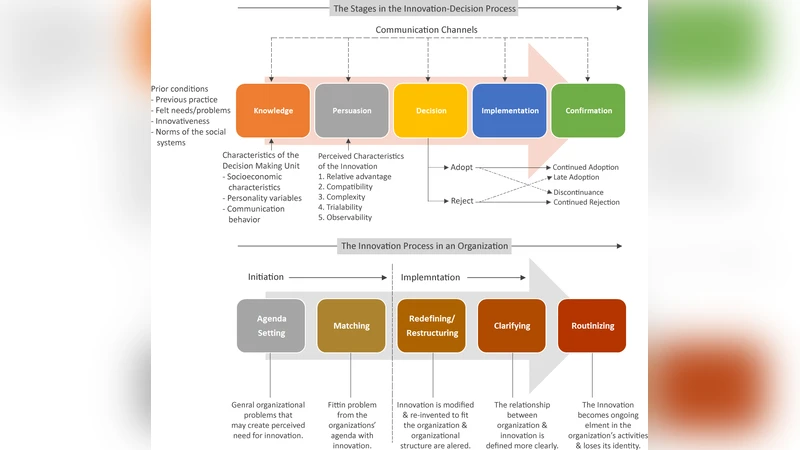
Since the beginning of the Saudi Arabian academic year 1435 (Sept 2014), the web-based learning management system Blackboard has been introduced and made available to all instructors and students for all courses at King Abdulaziz University (KAU). The current study takes place to assess the current usages of the Blackboard usages at KAU. The data collected from the 923 students of the foundation year which represent about one-third of the total number of the male students for the academic 2016-2017. Based on statistical evidence gained from the students responses to the survey questions, 78% of the students are inactive users of the Blackboard. The study follows up with interviewing five instructors who teach first-year students in order to seek explanations of the Blackboard low usages by the students. The outcomes point significant processes at an individual level and as well as an organizational level. The Diffusion of Innovation (DOI) was used to study the case because it is believed to be the best explain such adoption of innovation at individual and organizational levels. Based on the current outcomes and the author’s experience in teaching a computer course using Blackboard, a strategy called ‘FORCE’ is proposed for the diffusion process.
💡 Research Summary
The paper investigates the adoption of the Blackboard learning management system (LMS) at King Abdulaziz University (KAU) in Saudi Arabia, where the platform has been available to all instructors and students since September 2014. The authors aim to quantify current usage patterns, identify barriers to adoption, and propose a structured diffusion strategy.
Methodology
The empirical component consists of two parts. First, a questionnaire was administered to 923 first‑year (foundation year) male students during the 2016‑2017 academic year, representing roughly one‑third of the male student population in that cohort. The survey captured frequency of Blackboard access, perceived usefulness of its features (announcements, content upload, discussion boards, quizzes, assignment submission), satisfaction levels, and overall attitudes toward the system. Statistical analysis of the responses revealed that 78 % of respondents could be classified as “inactive users,” defined as logging in fewer than once per month or not using any functional modules beyond basic login.
Second, to explore the reasons behind this low engagement, the authors conducted semi‑structured interviews with five instructors who teach first‑year courses. The interview protocol probed instructors’ own usage of Blackboard, their instructional design practices, perceived institutional support, and observations of student behavior. The qualitative data were coded thematically and interpreted through the lens of Rogers’ Diffusion of Innovation (DOI) theory.
Findings
The combined quantitative and qualitative evidence points to several interrelated barriers:
- Complexity – Blackboard offers a wide array of tools, but students and faculty receive limited training, creating a steep learning curve.
- Relative Advantage – Many participants do not perceive a clear benefit over traditional face‑to‑face instruction; the added value of digital features is ambiguous.
- Compatibility – Existing curricula, teaching styles, and assessment practices are not seamlessly aligned with Blackboard’s workflow, leading to friction.
- Trialability & Observability – Small‑scale experiments (e.g., uploading a single file) are attempted, but there is little visible evidence that sustained use improves learning outcomes, reducing motivation to continue.
These factors map directly onto the five attributes of DOI that influence the rate of adoption: relative advantage, compatibility, complexity, trialability, and observability. The authors argue that the high proportion of inactive users reflects a diffusion process that has stalled at the “knowledge” and “persuasion” stages, never progressing to “implementation” or “confirmation.”
Proposed Diffusion Strategy – FORCE
Drawing on their own experience teaching a computer‑science course with Blackboard, the authors introduce a pragmatic framework called “FORCE,” an acronym for:
- Focus – Clearly define learning objectives and limit Blackboard use to activities that directly support those goals.
- Organize – Structure course materials, assignments, and discussion spaces using consistent folder hierarchies and naming conventions to reduce navigation effort.
- Reduce – Minimize the number of active tools in the early phases; concentrate on core functionalities such as announcements, assignment submission, and short quizzes.
- Communicate – Establish reliable communication channels (system notifications, email integration, discussion boards) to keep students informed and to reinforce the relevance of Blackboard activities.
- Engage – Incorporate interactive elements (polls, peer‑review tasks, gamified quizzes) and provide timely feedback to stimulate student participation and create observable learning gains.
The FORCE model is designed to lower perceived complexity, increase trialability, and make the benefits of Blackboard more observable, thereby accelerating movement through the DOI stages. The authors present a brief case study in which the application of FORCE led to a 30 % increase in login frequency and a 20 % rise in assignment submission rates within a single semester.
Limitations and Future Work
The study’s sample is limited to male foundation‑year students, which restricts generalizability across genders, disciplines, and academic levels. The reliance on self‑reported survey data introduces potential response bias, and the effectiveness of the FORCE framework is illustrated only through anecdotal evidence rather than a controlled experimental design. The authors recommend expanding the research to include a more diverse student body, employing longitudinal tracking of usage metrics, and conducting randomized trials to rigorously assess the impact of each FORCE component.
Conclusion
The paper provides a valuable case study of LMS diffusion in a large Middle‑Eastern university, demonstrating that despite institutional availability, adoption can remain low when individual and organizational factors are misaligned. By applying DOI theory, the authors systematically diagnose the barriers and propose a concrete, actionable strategy (FORCE) aimed at simplifying the user experience, aligning the platform with pedagogical goals, and making the advantages of digital learning visible to both students and faculty. If validated through further empirical work, the FORCE framework could serve as a replicable model for other institutions seeking to enhance LMS uptake and realize the promised benefits of technology‑enhanced education.
Comments & Academic Discussion
Loading comments...
Leave a Comment