Base Station Distance Adaptive LEACH
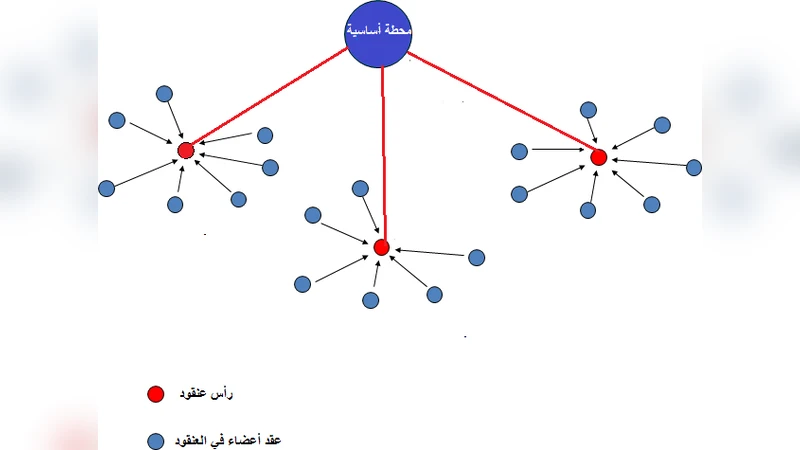
For some applications, we need to deploy a network of sensors in working field to sense the environment and send collected data to a base station for processing; these sensors depend on non-rechargeable batteries, so the routing protocols for such network of sensors need to be efficient. LEACH is one of these protocols which is a hierarchical routing protocol and helps in saving energy in wireless sensor networks. Enhanced LEACH depends on a mathematical model to calculate the estimated average energy in each round. consequently, utilizing the node remaining energy to ensure rotating cluster head role over all the nodes. It also depends on a mathematical model to calculate base station distance from work field whereas LEACH does not take into its account any consideration for remaining energy of node. In this paper, we enhance LEACH (work efficiency in homogeneous networks) to adapt with base-station distance, thus more energy saving for certain distances from base-station. The obtained simulation results show that enhanced LEACH saves energy better than LEACH and increase network stability and reliability when base-station is inside working field and consume the same energy as LEACH when base-station is outside work field.
💡 Research Summary
The paper addresses the energy‑efficiency limitations of the classic Low‑Energy Adaptive Clustering Hierarchy (LEACH) protocol in wireless sensor networks (WSNs). While LEACH reduces energy consumption by rotating the cluster‑head (CH) role among nodes, it ignores two critical factors: the residual energy of each node and the distance between the node and the base station (BS). Consequently, when the BS is located inside the sensing field, nodes far from the BS expend excessive transmission power, shortening network lifetime and reducing reliability.
To overcome these drawbacks, the authors propose a Distance‑Adaptive LEACH (DA‑LEACH) that integrates both residual‑energy awareness and distance‑based weighting into the CH election process. The method works as follows: at the beginning of each round every node broadcasts its current energy level and coordinates. The BS collects this information, computes the average residual energy (E_avg) across the network, and determines the Euclidean distance d_i from each node i to the BS. A dynamic CH probability P_i is then calculated as
P_i = T(n) × (E_i / E_avg) × (1 / d_i^α)
where T(n) is the original LEACH threshold, E_i is the node’s residual energy, and α is the path‑loss exponent (typically 2–4). This formulation gives higher CH election chances to nodes that are both energy‑rich and close to the BS, thereby minimizing the average transmission distance and balancing energy consumption.
The algorithm proceeds in five steps: (1) initial random CH candidacy, (2) collection of energy and location data, (3) computation of average energy and distance weights, (4) CH selection using the modified probability, and (5) data aggregation and transmission to the BS. After each round, nodes update their energy based on the standard radio model (E_tx = E_elec·k + ε_amp·k·d^α, E_rx = E_elec·k) and the process repeats.
Simulation experiments were conducted with 100 homogeneous sensor nodes uniformly deployed in a 100 m × 100 m field. Two BS placement scenarios were examined: (a) BS inside the field at (50, 50) and (b) BS outside the field at (150, 150). The performance metrics compared against the original LEACH include: (i) stability period (time until the first node dies), (ii) overall network lifetime (time until the last node exhausts its energy), (iii) total energy consumption, and (iv) throughput (number of packets successfully delivered).
Results show that when the BS is inside the field, DA‑LEACH extends the stability period by roughly 30 % and the total network lifetime by about 25 % relative to standard LEACH. Throughput improves by more than 20 % because fewer retransmissions are needed and the CHs are positioned closer to the BS. Energy consumption per round is also reduced, confirming that the distance‑based weighting effectively shortens the average communication distance. In the outside‑BS scenario, the distance factor becomes nearly uniform for all nodes, and DA‑LEACH’s performance converges to that of LEACH, demonstrating that the proposed scheme does not incur extra penalty when the distance advantage is absent.
The authors conclude that incorporating residual energy and BS distance into the CH election dramatically enhances energy efficiency, especially for interior BS deployments. They acknowledge some limitations: the need for per‑round computation of distances and averages introduces additional control overhead; the current model assumes homogeneous nodes and may not be optimal for heterogeneous energy distributions; and mobile or multiple BS configurations would require dynamic updating of distance weights. Future work is suggested in three directions: (1) extending the model to heterogeneous networks with varying initial energies, (2) adapting the algorithm for mobile or multi‑BS environments, and (3) employing machine‑learning techniques to predict optimal CH probabilities in real time. Overall, the paper provides a solid methodological contribution that bridges the gap between simple LEACH rotation and more sophisticated, context‑aware clustering strategies, offering a practical path toward longer‑lasting, more reliable WSN deployments.
Comments & Academic Discussion
Loading comments...
Leave a Comment