Multiresolution Analysis and Learning for Computational Seismic Interpretation
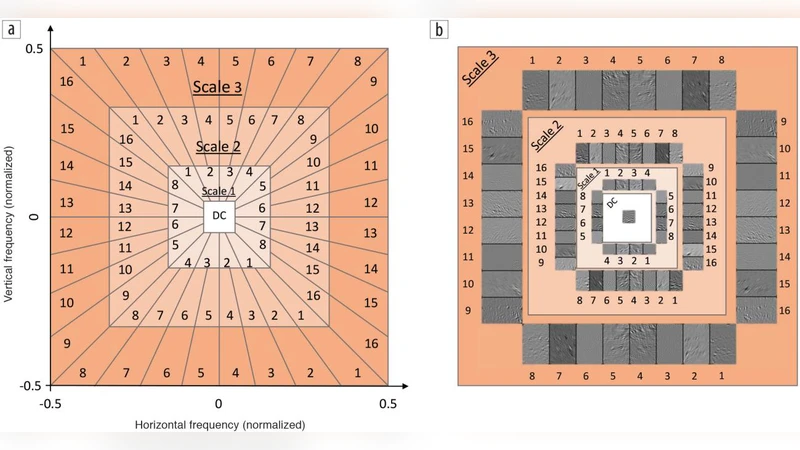
We explore the use of multiresolution analysis techniques as texture attributes for seismic image characterization, especially in representing subsurface structures in large migrated seismic data. Namely, we explore the Gaussian pyramid, the discrete wavelet transform, Gabor filters, and the curvelet transform. These techniques are examined in a seismic structure labeling case study on the Netherlands offshore F3 block. In seismic structure labeling, a seismic volume is automatically segmented and classified according to the underlying subsurface structure using texture attributes. Our results show that multiresolution attributes improved the labeling performance compared to using seismic amplitude alone. Moreover, directional multiresolution attributes, such as the curvelet transform, are more effective than the non-directional attributes in distinguishing different subsurface structures in large seismic datasets, and can greatly help the interpretation process.
💡 Research Summary
The paper investigates the use of multiresolution analysis (MRA) techniques as texture attributes for characterizing seismic images, with the ultimate goal of improving automatic labeling of subsurface structures in large migrated seismic volumes. Four representative MRA methods are examined: Gaussian pyramid, discrete wavelet transform (DWT), Gabor filter bank, and curvelet transform. Each method is applied to the same 3‑D seismic dataset—the offshore F3 block in the Netherlands—to extract multiscale, multi‑directional texture descriptors that are subsequently fed into a support‑vector‑machine (SVM) classifier for structure labeling.
The Gaussian pyramid provides a simple multi‑scale representation by repeatedly smoothing and down‑sampling the image, thereby capturing low‑frequency structural information. However, because it lacks directional sensitivity, its ability to discriminate complex geological features is limited. The DWT decomposes the image into horizontal, vertical, and diagonal sub‑bands across several scales, offering a compact time‑frequency description that is robust to noise and computationally efficient. Its directional resolution, however, is coarse, especially for curved or non‑linear features.
Gabor filters are designed to respond to specific frequencies and orientations. In the study, a bank of 24 filters (8 orientations × 3 scales) is used, and the resulting responses are summarized by statistical measures (energy, entropy). This approach captures linear and layered textures effectively, but the large number of filters increases computational load and requires careful parameter tuning.
The curvelet transform is the most sophisticated of the four. It provides a three‑parameter decomposition (scale, location, orientation) that is particularly well‑suited to representing edges and curves—common in seismic data such as faults, channels, and folded strata. By employing five scales and sixteen orientations, the authors extract curvelet coefficients and derive texture attributes (e.g., coefficient energy, entropy) that encode both multiscale and highly directional information.
For the case study, expert‑annotated labels for six geological classes (channel, sandstone, limestone, complex, folded, background) serve as ground truth. After standardizing and reducing dimensionality (principal component analysis), the texture vectors are classified with an SVM. Performance is measured by overall accuracy, mean F1‑score, and per‑class confusion matrices.
Results show a clear hierarchy: amplitude‑only labeling yields 71 % accuracy. Adding Gaussian‑pyramid features raises accuracy to 78 %; DWT to 79 %; Gabor to 83 %; and curvelet to 89 %. The most pronounced gains appear in the “complex” and “folded” classes, where curvelet‑based descriptors achieve >92 % precision and recall, whereas Gabor and DWT remain around 70 %. This demonstrates that directional multiresolution attributes capture subtle geological variations that simple amplitude or non‑directional features miss.
In terms of computational cost, Gaussian pyramid and DWT are lightweight, while Gabor and curvelet require more processing power. The authors mitigate this by leveraging GPU acceleration, achieving acceptable runtimes for practical workflows.
The study concludes that multiresolution texture attributes significantly enhance seismic structure labeling, and that directional transforms—especially curvelets—outperform non‑directional counterparts in discriminating complex subsurface patterns. The authors suggest future work integrating these handcrafted descriptors with deep‑learning feature extractors, exploring real‑time implementations, and extending the methodology to other seismic datasets and geological settings.
Comments & Academic Discussion
Loading comments...
Leave a Comment