The Effects of Using Business Intelligence Systems on an Excellence Management and Decision-Making Process by Start-Up Companies: A Case Study
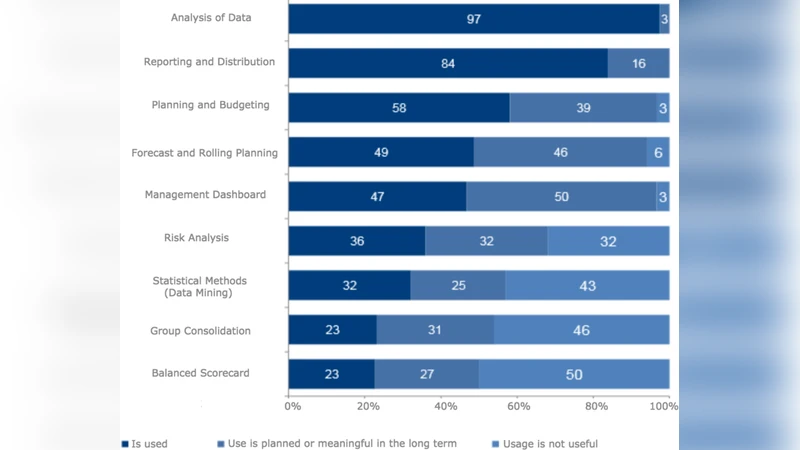
The rapid increase in data volumes in companies has meant that momentous and comprehensive information gathering is barely possible by manual means. Business intelligence solutions can help here. They provide tools with appropriate technologies to assist with the collection, integration, storage, editing, and analysis of existing data. While almost only large companies were interested in this topic a few years ago, it has meanwhile also become necessary for start-up companies, and so the market for business intelligence has been growing for years. This article focuses on the general potentials of using BI in start-ups. First, will be examined which providers of BI solutions that are suitable for start-ups and what opportunities exist for implementing BI systems in start-ups. Then it will be shown to what extent BI has prevailed in start-ups, in which areas the techniques of BI are used in start-ups and what purpose BI has in start-ups. Finally, the success factors for BI projects in start-ups are considered.
💡 Research Summary
The paper investigates how start‑up companies can leverage Business Intelligence (BI) systems to improve excellence management and decision‑making processes. It begins by outlining the rapid growth of data volumes and the resulting inadequacy of manual information gathering, positioning BI as a set of technologies that automate data collection, integration, storage, editing, and analysis. Historically, BI was the domain of large enterprises, but the authors argue that cost reductions, cloud‑based offerings, and heightened competitive pressure have made BI increasingly relevant for start‑ups.
A conceptual BI architecture is presented, consisting of five core stages: data collection, data integration (ETL), data storage (data warehouses or data marts), data processing (including OLAP, data mining, and predictive analytics), and data presentation (dashboards, scorecards, ad‑hoc reports). This framework serves as a reference for evaluating BI solutions.
The authors then discuss three primary objectives of BI adoption: enhancing the quality of decision‑making by providing richer, integrated information; increasing organizational transparency so employees can see the impact of their work within the broader enterprise; and uncovering relationships among disparate data sources to generate new knowledge. They stress that successful BI implementation requires more than technical infrastructure; it also depends on cultural readiness, willingness to challenge entrenched practices, and strong management support.
A detailed market review follows, comparing major commercial vendors (SAP, Oracle, IBM, SAS, Microsoft) that offer “start‑up‑friendly” editions with reduced licensing costs and scaled‑down feature sets, against open‑source alternatives (Jaspersoft, Pentaho, Jedox, SpagoBI). The commercial offerings provide comprehensive suites with dashboards, ad‑hoc analytics, mobile and predictive capabilities, while the open‑source tools emphasize modularity, low cost, and tight integration with familiar environments such as Microsoft Excel (Jedox). The paper notes that open‑source solutions often have a free community version and a paid enterprise version, with the latter offering advanced features and professional support at a lower price point than the large vendors.
Empirical evidence from start‑ups shows that BI is primarily used for data integration (ETL), data warehousing, analytical processing (OLAP), and reporting/visualization. Implementations have led to measurable benefits: reduction of manual data‑gathering errors, faster generation of management reports, improved inventory turnover, shortened financial closing cycles, and more effective customer segmentation for marketing. The authors cite case examples where real‑time dashboards enabled a 30 % acceleration in decision cycles and a 20 % increase in marketing ROI.
Critical success factors identified include: (1) a solid data foundation with clean, well‑structured data; (2) an organizational mindset that encourages unconventional thinking and continuous questioning of legacy processes; (3) explicit and sustained attention from senior management, which translates into resource allocation, clear project sponsorship, and alignment of BI goals with overall business strategy. The paper recommends a “pilot‑first” approach: start with a limited scope (e.g., a single KPI or department), demonstrate quick wins, and then scale the solution incrementally. Training end‑users, establishing data governance, and integrating BI outputs into everyday workflows are highlighted as essential for long‑term adoption.
In conclusion, the study asserts that start‑ups, despite limited budgets and personnel, can achieve sophisticated data‑driven decision support by selecting appropriate BI tools—whether commercial or open‑source—and by fostering a supportive culture and leadership commitment. The combination of cost‑effective technology, phased implementation, and clear governance enables start‑ups to transform raw data into actionable intelligence, thereby enhancing competitiveness, reducing risk, and creating sustainable value.
Comments & Academic Discussion
Loading comments...
Leave a Comment