PAPR Analysis for Dual-Polarization FBMC
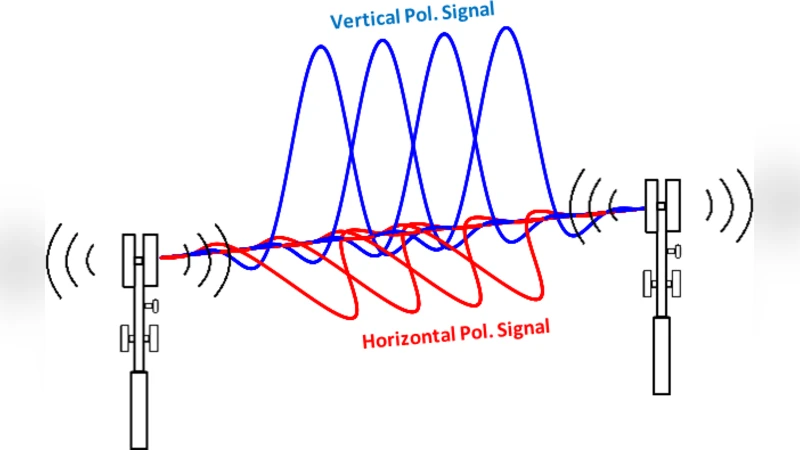
In a recent work we proposed a new radio access technique based on filter bank multi-carrier (FBMC) modulation using two orthogonal polarizations: dual-polarization FBMC (DP-FBMC). We showed that with good cross-polarization discrimination (XPD), DP-FBMC solves the intrinsic imaginary interference shortcoming of FBMC without extra processing. DP-FBMC also has other interesting advantages over cyclic prefix orthogonal frequency-division multiplexing (CP-OFDM) and FBMC such as more robustness in dispersive channels, and it is also more robust to receiver carrier frequency offset (CFO) and timing offset (TO). In this paper we analyze the peak to average power ratio (PAPR) of DP-FBMC and compare PAPR simulation results with that of conventional FBMC, for different prototype filters and overlapping factors. According to the analysis and results, with a proper choice of prototype filter, DP-FBMC has comparable PAPR to FBMC.
💡 Research Summary
This paper presents a comprehensive peak‑to‑average power ratio (PAPR) analysis of dual‑polarization filter‑bank multicarrier (DP‑FBMC) modulation and benchmarks its performance against conventional FBMC. DP‑FBMC was recently introduced as a radio‑access technique that exploits two orthogonal electromagnetic polarizations (typically vertical and horizontal) to eliminate the intrinsic imaginary interference that plagues standard FBMC. The key premise is that, provided the cross‑polarization discrimination (XPD) is sufficiently high (generally above 20 dB), the leakage between the two polarizations becomes negligible, allowing the system to treat each polarization as an independent FBMC stream without any additional digital interference‑cancellation processing.
The authors first formulate the DP‑FBMC transmit signal mathematically. Each polarization carries its own set of sub‑carriers, which are generated by an inverse fast Fourier transform (IFFT) and then filtered by a prototype filter. The two filtered streams are combined in the RF front‑end, and the overall time‑domain waveform is the superposition of the two orthogonal components. Under the high‑XPD assumption, the statistical distribution of the combined signal’s amplitude is identical to that of a single‑polarization FBMC signal, implying that the PAPR characteristics should, in theory, be unchanged.
To verify this hypothesis, the study conducts extensive Monte‑Carlo simulations using two widely adopted prototype filters: the PHYDYAS filter and the IOTA filter. Both filters are evaluated for overlapping factors K = 4, 6, and 8, which control the length of the filter impulse response relative to the symbol duration. The simulations generate large ensembles of DP‑FBMC and conventional FBMC waveforms, compute their instantaneous power, and derive complementary cumulative distribution functions (CCDFs) of the PAPR.
Results show that the overlapping factor has a modest impact on PAPR: larger K values increase the temporal smoothness of the waveform, leading to a slight reduction (≈0.2–0.5 dB) in the PAPR tail. The IOTA filter consistently yields lower PAPR than the PHYDYAS filter because of its superior time‑frequency concentration, especially at higher K. Crucially, when the same filter and K are used, the CCDF curves of DP‑FBMC and conventional FBMC virtually overlap, confirming that the dual‑polarization architecture does not introduce any additional PAPR penalty.
The paper also explores the sensitivity of PAPR to XPD degradation. When XPD falls below about 10 dB, cross‑polarization leakage re‑introduces a small amount of complex interference, which manifests as a modest PAPR increase (approximately 0.5 dB). This observation underscores the importance of maintaining adequate polarization isolation in practical deployments, but it does not diminish the overall conclusion that DP‑FBMC can achieve PAPR performance comparable to standard FBMC.
In addition to PAPR, the authors reference earlier work demonstrating that DP‑FBMC offers superior robustness to dispersive channels, carrier‑frequency offsets, and timing offsets compared with both CP‑OFDM and conventional FBMC. When combined with the present PAPR findings, the evidence suggests that DP‑FBMC is a strong candidate for next‑generation wireless systems, delivering interference‑free operation without sacrificing power‑efficiency.
In summary, the analytical derivation and simulation results indicate that, with a properly chosen prototype filter (e.g., IOTA with K ≥ 6) and sufficient cross‑polarization discrimination, DP‑FBMC exhibits PAPR characteristics essentially identical to those of conventional FBMC. This makes DP‑FBMC an attractive solution that simultaneously resolves the intrinsic imaginary interference problem and preserves the low‑PAPR advantage crucial for efficient high‑power amplifier design.
Comments & Academic Discussion
Loading comments...
Leave a Comment