Somatic Practices for Understanding Real, Imagined, and Virtual Realities
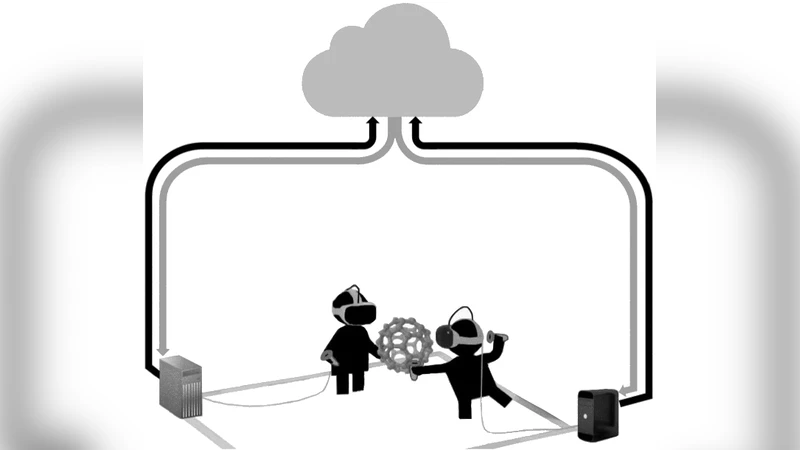
In most VR experiences, the visual sense dominates other modes of sensory input, encouraging non-visual senses to respond as if the visual were real. The simulated visual world thus becomes a sort of felt actuality, where the ‘actual’ physical body and environment can ‘drop away’, opening up possibilities for designing entirely new kinds of experience. Most VR experiences place visual sensory input (of the simulated environment) in the perceptual foreground, and the physical body in the background. In what follows, we discuss methods for resolving the apparent tension which arises from VR’s prioritization of visual perception. We specifically aim to understand how somatic techniques encouraging participants to ‘attend to their attention’ enable them to access more subtle aspects of sensory phenomena in a VR experience, bound neither by rigid definitions of vision-based virtuality nor body-based corporeality. During a series of workshops, we implemented experimental somatic-dance practices to better understand perceptual and imaginative subtleties that arise for participants whilst they are embedded in a multi-person VR framework. Our preliminary observations suggest that somatic methods can be used to design VR experiences which enable (i) a tactile quality or felt sense of phenomena in the virtual environment (VE), (ii) lingering impacts on participant imagination even after the VR headset is taken off, and (iii) an expansion of imaginative potential.
💡 Research Summary
This paper tackles a fundamental problem in contemporary virtual reality (VR) design: the dominance of visual input creates a “perception gap” between what users see in the simulated environment and what their bodies actually feel. While many researchers have attempted to close this gap with haptic devices, technical limitations and high costs have prevented widespread adoption. The authors propose an alternative approach that leverages somatic practices—body‑centered techniques drawn from dance, mindfulness, breath work, and visualization—to train users to attend to their internal sensations and thereby reduce reliance on vision.
The study was conducted at the Intangible Realities Laboratory (University of Bristol) using a multi‑user VR framework that streams a real‑time molecular dynamics simulation of a C₆₀ (buckminsterfullerene) molecule. Six sensory stages (S1–S6) were designed for public workshops held in 2018. Participants moved through the following sequence: (S1) handling a physical C₆₀ model, (S2) closing their eyes and imagining a ball‑shaped structure, (S3) interacting with the simulation using only audio feedback, (S4) experiencing the visual VR representation without sound, (S5) experiencing both visual and audio cues together, and (S6) re‑imagining the structure with eyes closed after all prior experiences. At each stage participants were prompted to “notice how the objects feel” and to record their observations, while brief somatic interventions (breathing cues, body scans) were inserted to facilitate transitions between sensory modes.
Qualitative analysis of post‑workshop interviews, drawings, and written reflections revealed three high‑level themes. First, Connectivity: early stages showed awkwardness in relating to both the physical model and other participants, but as the workshop progressed participants reported a growing sense of shared presence and a “social space” within the VR environment. Second, Barriers: technical constraints (e.g., the HTC Vive controllers limited tactile feedback) and cognitive difficulties in switching between visual and tactile modalities emerged. Somatic practices helped participants manage these transitions by encouraging self‑monitoring of bodily sensations. Third, Imagination Expansion: many participants initially claimed they lacked imagination, yet by the final stage they were able to freely reconstruct the molecule in their mind, indicating that the combination of somatic attention and multimodal VR can broaden imaginative capacity beyond culturally conditioned visual norms.
The authors distill three core findings: (i) participants reported a tactile “felt sense” of the virtual molecule even when visual cues were absent, demonstrating that somatic training can substitute for hardware haptics; (ii) the experience left a lingering imaginative imprint after headset removal, suggesting potential for long‑term learning or therapeutic effects; (iii) the process expanded participants’ imaginative horizons, highlighting the role of embodied cognition in creative VR applications.
Overall, the paper argues for a paradigm shift in HCI and VR design: rather than focusing solely on improving hardware, designers should cultivate users’ perceptual sensitivities through embodied practices. This approach promises more accessible, cost‑effective ways to achieve multimodal immersion and could be applied to education, scientific visualization, art, and rehabilitation. Future work is suggested to compare different somatic techniques, measure long‑term outcomes, and explore other domains where embodied imagination can enrich virtual experiences.
Comments & Academic Discussion
Loading comments...
Leave a Comment