Theory and Algorithms for Pulse Signal Processing
The integrate and fire converter transforms an analog signal into train of biphasic pulses. The pulse train has information encoded in the timing and polarity of pulses. While it has been shown that any finite bandwidth analog signal can be reconstructed from these pulse trains with an error as small as desired, there is a need for fundamental signal processing techniques to operate directly on pulse trains without signal reconstruction. In this paper, the feasibility of performing online the signal processing operations of addition, multiplication, and convolution of analog signals using their pulses train representations is explored. Theoretical framework to perform signal processing with pulse trains imposing minimal restrictions is derived, and algorithms for online implementation of the operators are developed. Performance of the algorithms in processing simulated data is studied. An application of noise subtraction and representation of relevant features of interest in electrocardiogram signal is demonstrated with mean pulse rate less than 20 pulses per second.
💡 Research Summary
The paper introduces a novel signal‑processing paradigm that operates directly on the pulse trains generated by an integrate‑and‑fire converter (IFC), bypassing the conventional step of reconstructing the original analog waveform. An IFC converts a finite‑bandwidth analog signal into a sequence of biphasic pulses; each pulse’s polarity encodes the sign of the integrated signal, while the inter‑pulse interval Δt encodes the amount of signal area accumulated between two threshold crossings (±θ). Because the area under the analog signal over a pulse interval is proportional to Δt·θ, the pulse train can be regarded as a time‑domain representation of the signal’s cumulative area.
Building on this observation, the authors develop a rigorous mathematical framework for three fundamental operations—addition, multiplication, and convolution—performed directly on pulse trains. The key assumption is that the input signal is approximately constant within each inter‑pulse interval, which allows the area to be treated as a scalar quantity. Observation 1 establishes that, under this assumption, the relationship between area and Δt is exact, and the mean‑value theorem is used to bound the error when the assumption is violated.
Theorem 1 formalizes online addition: given two pulse trains representing signals x₁(t) and x₂(t), the sum’s pulse times are obtained by solving for the combined area that reaches the threshold θ, while handling “carry‑over” events when the summed area exceeds the threshold more than once within a single interval. The resulting algorithm updates pulse timestamps and polarities in real time, without buffering the entire signal. Multiplication is treated as a nonlinear operation on areas; the authors propose an approximate linearization followed by iterative redistribution of excess area to generate the appropriate output pulses. Convolution is expressed as a sliding‑window accumulation of overlapping pulse‑interval areas, again yielding output pulses whenever the accumulated area reaches ±θ. All three operators are implemented as online procedures that emit output pulses immediately as input pulses arrive.
Algorithmic complexity scales linearly with the average pulse rate, which the authors demonstrate to be modest (≤ 20 pulses s⁻¹) for typical biomedical signals. The paper also discusses practical limits: near the noise floor, the constant‑signal assumption becomes less accurate, leading to timing jitter and reduced precision; decreasing the threshold θ reduces reconstruction error but increases pulse density, potentially negating the bandwidth advantage.
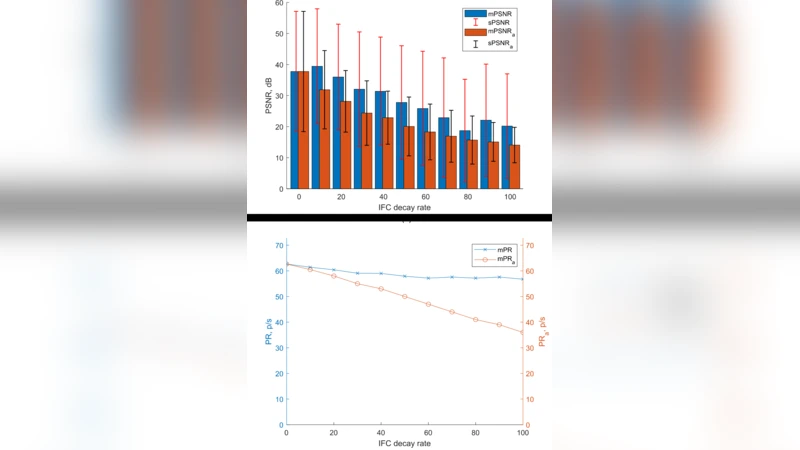
Experimental validation uses both synthetic band‑limited signals and real electrocardiogram (ECG) recordings. For synthetic data, the authors compare the pulse‑based results with conventional digital processing of reconstructed signals, showing comparable SNR and accurate preservation of spectral content. In the ECG application, two recordings are converted to pulse trains; one serves as a noise reference and is subtracted from the other using the pulse‑based subtraction algorithm. The result is a significant reduction of low‑frequency baseline wander while preserving the QRS complexes and other diagnostically relevant features. The mean pulse rate remains below 20 Hz, illustrating the method’s suitability for low‑power, low‑bandwidth IoT sensor nodes.
The authors provide MATLAB implementations of the core algorithms, facilitating reproducibility and further research. In the discussion, they highlight the advantages of the pulse‑domain approach for event‑driven, power‑constrained systems, while acknowledging the need for adaptive threshold selection and multi‑channel extensions to mitigate the identified limitations.
Overall, the paper delivers a comprehensive theory and practical algorithms that enable real‑time arithmetic and convolution directly on IFC pulse streams, opening a path toward efficient, event‑centric signal processing for next‑generation sensing platforms.
Comments & Academic Discussion
Loading comments...
Leave a Comment