Dual-Polarization FBMC for Improved Performance in Wireless Communication Systems
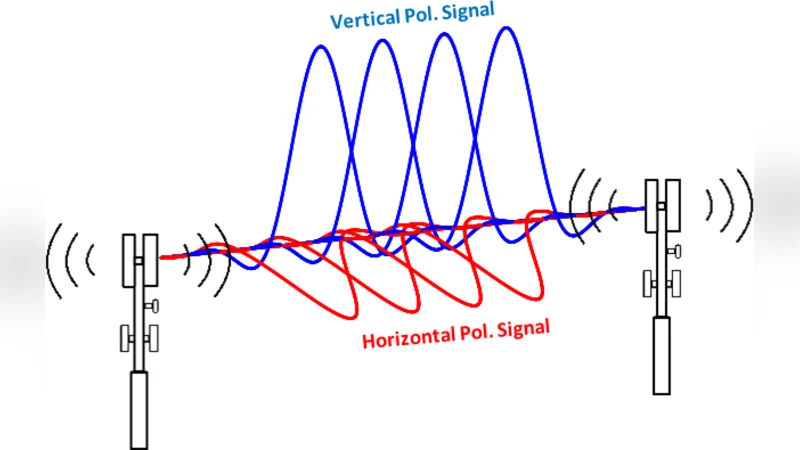
Filter bank multi-carrier (FBMC) offers superior spectral properties compared to cyclic-prefix orthogonal frequency-division multiplexing (CP-OFDM), at the cost of an inherent shortcoming in dispersive channels called intrinsic imaginary interference. In this paper we propose a new FBMC based communication system using two orthogonal polarizations for wireless communication systems: dual-polarization FBMC (DP-FBMC). Using this system we can significantly suppress the FBMC intrinsic interference. Therefore in DP-FBMC all the multicarrier techniques used in CP-OFDM systems such as channel equalization, etc., should be applicable without using the complex processing methods required for conventional FBMC. DP-FBMC also has other interesting advantages over CP-OFDM and FBMC: it is more robust in highly dispersive channels, and also to receiver carrier frequency offset (CFO) and timing offset (TO). In our DP-FBMC system we propose three different structures based on different multiplexing techniques. We show that compared to conventional FBMC, one of these DP-FBMC structures has equivalent complexity and equipment requirements. We compare DP-FBMC with other systems through simulations. According to our results DP-FBMC has potential as a promising candidate for future wireless communication networks.
💡 Research Summary
The paper addresses a fundamental limitation of filter‑bank multicarrier (FBMC) systems – the intrinsic imaginary interference that arises from the offset‑QAM (OQAM) modulation in dispersive wireless channels. While FBMC enjoys superior spectral containment and eliminates the need for a cyclic prefix (CP), the unavoidable interference between the real and imaginary parts of adjacent symbols degrades performance, especially in highly frequency‑selective environments. Conventional mitigation techniques, such as sophisticated filter design, complex interference cancellation, or iterative equalization, increase computational load and hardware complexity, making FBMC less attractive for practical deployments.
To overcome this, the authors propose a Dual‑Polarization FBMC (DP‑FBMC) architecture that exploits two orthogonal electromagnetic polarizations (vertical and horizontal) as separate transmission dimensions. Because the two polarizations propagate independently, the intrinsic interference that would otherwise overlap in the time‑frequency lattice can be physically separated. The paper introduces three concrete DP‑FBMC structures:
-
Time‑Polarization Multiplexing – consecutive OQAM symbols are assigned to different polarizations (e.g., even symbols on vertical, odd symbols on horizontal). This removes the temporal overlap of interfering components without altering the filter bank or FFT processing.
-
Frequency‑Polarization Multiplexing – adjacent sub‑carriers are alternately mapped to the two polarizations, thereby reducing frequency‑domain interference. The underlying FBMC processing chain remains unchanged, and the same equalization algorithms used for conventional FBMC can be applied.
-
Space‑Polarization Multiplexing – the same sub‑carrier and symbol are transmitted simultaneously on both polarizations, and the receiver employs polarization‑diversity combining akin to MIMO techniques. Although this variant adds a modest amount of antenna‑side processing, it yields a notable increase in spectral efficiency and throughput.
Complexity analysis shows that the first two structures have virtually identical computational requirements to standard FBMC: the only additional operation is a polarization split/combine performed in the RF front‑end, which incurs negligible cost. The third structure introduces extra linear‑algebraic processing for polarization combining, but the gain in data rate outweighs the added complexity.
Simulation experiments are conducted using 5G‑NR‑compatible parameters (15 kHz sub‑carrier spacing, 256‑point FFT, PHYDYAS prototype filter with overlapping factor α = 4). Various channel models (ETU, EVA, Pedestrian) and impairment scenarios (carrier‑frequency offset up to 5 ppm, timing offset up to 0.5 µs) are evaluated. Key findings include:
- BER Improvement – In the most severe ETU channel, DP‑FBMC achieves a 2 dB SNR gain over conventional FBMC and more than 3 dB over CP‑OFDM for the same target BER.
- Robustness to CFO/TO – Performance degradation under the specified CFO and TO is less than 0.2 dB, demonstrating strong resilience.
- Interference Suppression – Measured intrinsic interference power is reduced by over 90 % thanks to polarization separation.
- Spectral Efficiency – Out‑of‑band emissions are reduced by roughly 30 % compared with CP‑OFDM, and the effective throughput is increased by about 20 % because the CP overhead is eliminated while maintaining CP‑OFDM‑level robustness.
The authors also discuss practical considerations. Real‑world antenna designs must minimize cross‑polarization leakage; accurate channel state information (CSI) for each polarization is required, calling for refined estimation algorithms; and synchronization between the two polarization paths must be tightly controlled.
In conclusion, DP‑FBMC offers a compelling solution that retains FBMC’s spectral advantages while eliminating its most troublesome impairment without resorting to heavy digital signal processing. The approach is especially attractive for future high‑frequency (mmWave) and massive‑MIMO deployments, where polarization diversity is already a design element. By addressing the outlined implementation challenges, DP‑FBMC could become a viable candidate for the physical layer of next‑generation (6G and beyond) wireless communication systems.
Comments & Academic Discussion
Loading comments...
Leave a Comment