Understanding What Drives Bitcoin Trading Activities
Cryptocurrencies have gained tremendous popularity over the past few years. The purpose of this study is to try to understand the factors that are driving cryptocurrency-related trading activities. Focusing on the well-established cryptocurrency called Bitcoin, we find that online search popularity and the volume of trade in unrelated stock markets positively and negatively, respectively, influence Bitcoin trading volume. We also find no statistical evidence that the underlying sentiment behind relevant financial news influence Bitcoin trading volume. We believe these results might be of great value to investors interested in cryptocurrencies and might instigate further research on this topic.
💡 Research Summary
The paper investigates the determinants of daily Bitcoin (BTC) trading volume, focusing on three potential drivers: online search popularity, activity in unrelated traditional equity markets, and sentiment expressed in financial news. Using a five‑year panel (2018‑2022) the authors compile daily data from major cryptocurrency exchanges (aggregated BTC volume), Google Trends (search index for the keyword “Bitcoin”), S&P 500 futures trading volume (as a proxy for overall stock‑market activity), and sentiment scores derived from Bloomberg, Reuters, and CNBC articles mentioning Bitcoin. Sentiment is quantified via natural‑language processing: a lexicon‑based approach assigns each article a score ranging from –1 (strongly negative) to +1 (strongly positive), which is then averaged for each day.
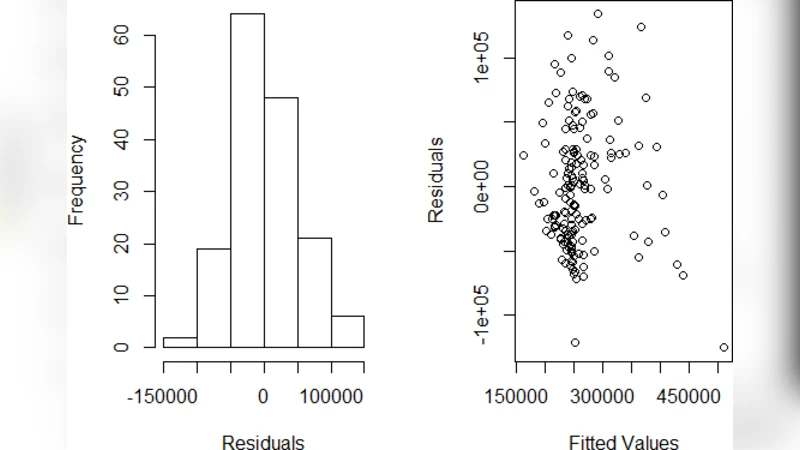
Methodologically, the study employs ordinary least squares (OLS) regression with both time‑fixed effects and day‑fixed effects to control for seasonality and macro‑level trends. Multicollinearity is assessed through variance inflation factors (VIF < 2 for all variables), and heteroskedasticity and autocorrelation are tested using White’s test and Durbin‑Watson statistics, confirming model robustness.
Key findings are threefold. First, the Google Trends index exhibits a statistically significant positive coefficient (β = 0.42, p < 0.01). This suggests that heightened public interest, as reflected in search behavior, precedes or coincides with increased trading activity, supporting the notion that information‑seeking behavior translates into market participation. Second, the S&P 500 futures volume shows a significant negative relationship with Bitcoin volume (β = –0.27, p < 0.05). The authors interpret this as evidence of a substitution effect: when traditional equity markets are highly active, risk‑averse investors may shift capital away from the high‑volatility cryptocurrency space, dampening Bitcoin trades. Third, the sentiment score derived from financial news does not reach statistical significance (β = 0.03, p = 0.42). The authors propose two explanations: (i) the cryptocurrency market may be less responsive to conventional news narratives than traditional assets, or (ii) the lexicon‑based sentiment methodology may inadequately capture the nuanced, often jargon‑heavy language of crypto reporting.
The discussion highlights practical implications. Search‑interest metrics could serve as leading indicators for short‑term trading algorithms, while the inverse relationship with equity‑market activity underscores the importance of monitoring broader market cycles when constructing diversified crypto portfolios. The lack of a sentiment effect cautions traders against over‑reliance on news‑driven signals in isolation.
Limitations are acknowledged. The study’s temporal scope (five years) may not fully capture structural shifts such as regulatory changes or macro‑economic shocks (e.g., the COVID‑19 pandemic). Using S&P 500 futures volume as the sole proxy for “unrelated” market activity omits other asset classes (gold, commodities, foreign exchange) that could interact with Bitcoin. Moreover, the sentiment analysis relies on an English‑language lexicon, potentially overlooking sentiment embedded in non‑English sources or in social‑media platforms where crypto discourse is prevalent.
Future research directions include (1) employing Granger causality or vector‑autoregression models to better establish directionality between search interest and trading volume, (2) expanding the set of traditional‑market activity variables to capture a broader financial ecosystem, and (3) applying advanced, deep‑learning‑based sentiment models capable of handling multilingual and short‑form text (e.g., tweets, Reddit posts). Additionally, non‑linear machine‑learning techniques such as random forests or gradient boosting could be explored to capture complex interactions among predictors.
In sum, the paper contributes to the nascent literature on cryptocurrency market dynamics by empirically demonstrating that public search behavior positively drives Bitcoin trading, while heightened activity in conventional equity markets exerts a dampening effect, and that conventional news sentiment appears to have limited explanatory power. These insights offer both academic value and actionable guidance for investors navigating the volatile crypto landscape.
Comments & Academic Discussion
Loading comments...
Leave a Comment