Chaotic dynamics of movements stochastic instability and the hypothesis of N.A. Bernstein about "repetition without repetition"
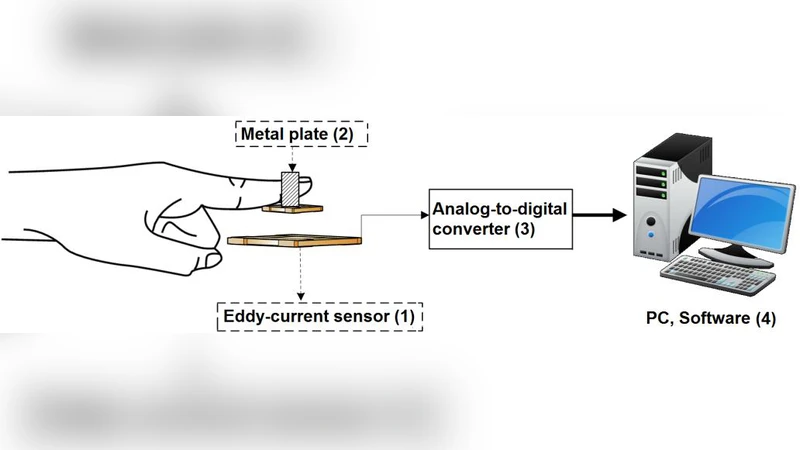
The registration of tremor was performed in two groups of subjects (15 people in each group) with different physical fitness at rest and at a static loads of 3N. Each subject has been tested 15 series (number of series N=15) in both states (with and without physical loads) and each series contained 15 samples (n=15) of tremorogramm measurements (500 elements in each sample, registered coordinates x1(t) of the finger position relative to eddy current sensor) of the finger. Using non-parametric Wilcoxon test of each series of experiment a pairwise comparison was made forming 15 tables in which the results of calculation of pairwise comparison was presented as a matrix (15x15) for tremorogramms are presented. The average number of hits random pairs of samples (
💡 Research Summary
The paper investigates finger tremor as a manifestation of chaotic dynamics and attempts to validate N.A. Bernstein’s “repetition without repetition” hypothesis. Two groups of fifteen participants each, differing in physical fitness, were examined under two conditions: resting (no load) and a static load of 3 N applied to the index finger. For each participant, fifteen experimental series were recorded in each condition; each series comprised fifteen samples, and each sample contained 500 data points of the finger’s x‑coordinate (x₁(t)) captured at a 0.01 s sampling interval (5 s duration).
Data processing employed a non‑parametric Wilcoxon signed‑rank test for every pair of samples within a series, yielding a 15 × 15 matrix of pairwise comparisons. An element of “1” indicated that the two samples could not be distinguished statistically (a “hit”). For each participant and condition, the authors computed the average number of hits ⟨k⟩ and its standard deviation across the fifteen matrices. They reported that the presence of the 3 N load roughly doubled ⟨k⟩, suggesting that the load makes tremor patterns more similar across repetitions.
In addition, the authors introduced a “special quasi‑attractor” defined simply as the product of the range of the position signal (Δx₁) and the range of its first derivative (Δx₂), i.e., S = Δx₁·Δx₂. This scalar was calculated for every sample and used to differentiate loaded from unloaded states; the loaded condition produced larger S values, which the authors interpreted as a broader attractor region in phase space.
Based on these findings, the paper draws three main conclusions: (1) all tremor recordings exhibit a “stochastic unstable” character, incompatible with purely deterministic models; (2) a static load increases both the similarity of tremor samples (higher ⟨k⟩) and the quasi‑attractor area, indicating a more constrained dynamical regime; (3) these observations support Bernstein’s principle that the nervous system reproduces movements without exact repetition, and they invoke the EskoV‑Zinchenko effect to argue that small external perturbations can substantially reshape system dynamics.
Critical appraisal reveals several methodological concerns. First, performing 225 Wilcoxon tests per series without correcting for multiple comparisons inflates the false‑positive rate; the reported “hits” may therefore be statistical artifacts. Second, the binary outcome of the Wilcoxon test does not directly measure similarity of complex time‑series dynamics, so summarizing the matrices by a single ⟨k⟩ value oversimplifies the underlying information. Third, defining a quasi‑attractor merely as Δx₁·Δx₂ ignores the richer structure of chaotic attractors; standard nonlinear tools such as Lyapunov exponents, correlation dimension, or recurrence quantification would provide a more rigorous characterization. Fourth, the paper does not present a statistical comparison between the two fitness groups, nor does it analyze gender effects beyond descriptive tables, leaving the claim that fitness modulates chaotic dynamics unsubstantiated. Finally, the link between increased ⟨k⟩ under load and Bernstein’s “repetition without repetition” is conceptually inconsistent: a higher number of indistinguishable samples suggests greater repetition, not its absence.
In summary, the study offers an interesting dataset on finger tremor under load and introduces a novel, albeit simplistic, metric for phase‑space analysis. However, the statistical handling, the definition of dynamical invariants, and the theoretical interpretation lack sufficient rigor. Future work should incorporate proper multiple‑testing corrections, employ established nonlinear dynamical measures, and explicitly test the influence of physical fitness on chaotic signatures to substantiate the proposed neurophysiological hypotheses.
Comments & Academic Discussion
Loading comments...
Leave a Comment