Toward an Anthropocentric Approach for Hybrid Control Architectures: Case of a Furniture Factory
Typology of goods and services’ consumption has changed. In order to adapt to this change, it is relevant for a company to turn toward new ways of production and management. Slowly, the concept of industry 4.0 starts to set up in manufacturing companies. Research on hybrid control systems favours achieving automated and flexible production system through “jidoka” (or au-tonomation) and Just In Time principles. Still, studies stay mainly techno-centred rather than anthropocentric. Parisot company suffers today of a lack of reactivity to its market and of a production tool maladjusted to customer’s consumption habits. This article aims to sum up the company’s current situation, and to introduce the project that intends to back it through its economic, technological and sociological transition toward a flexible, adaptive and sustainable human-centred manufacturing system.
💡 Research Summary
The paper examines the current state of Parisot Meubles, a French furniture manufacturer, and proposes a comprehensive, human‑centred roadmap for transitioning the company toward Industry 4.0. It begins by highlighting the shift in consumer behaviour toward mass‑customisation, low‑price online purchasing, and rapid delivery. Parisot’s legacy reliance on large‑batch production for specialised and DIY superstores makes it vulnerable to volatile demand. To address this, the authors outline an economic transition that restructures the New Product Development (NPD) process into two streams—client‑initiated requests and internally generated product ranges—and sets ambitious targets: 25 % of sales from e‑commerce and 35 % from exports by 2018‑2020.
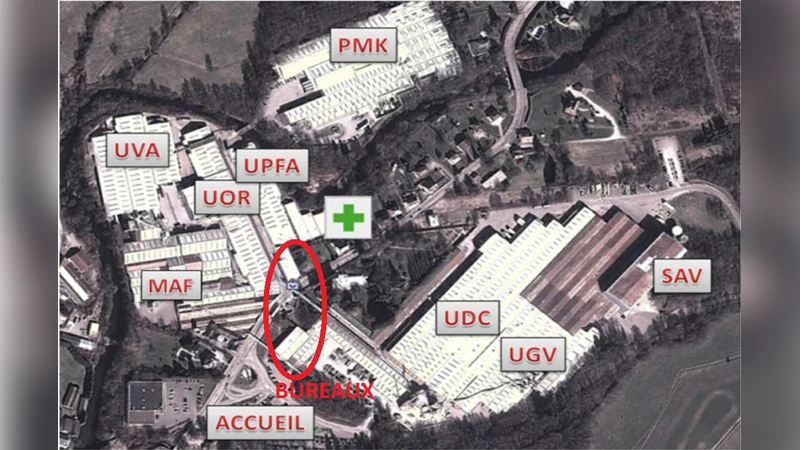
The technological analysis reveals that the plant’s production layout, built over the past eight decades, consists of autonomous production units (APUs) and a single remaining autonomous unit (PMK). Over time, these units have become increasingly centralised, eroding on‑site autonomy. The authors propose a physical re‑organisation that merges the UVG and UVA units and introduces modern material‑handling technologies such as AGV 5 and drones. Key technical challenges include (1) seamless integration of mobile and fixed equipment, (2) defining the decision‑making authority of mobile agents, and (3) ensuring cyber‑security and operator safety.
On the information side, the paper advocates for an ICT‑driven “digital twin” that links enterprise‑wide ERP with shop‑floor SCADA, enabling real‑time data exchange, predictive sales forecasting, dynamic production scheduling, and inventory optimisation through machine‑learning and data‑mining techniques. To overcome the prevalent data silos and fragmented responsibility, the concept of “reliance” is introduced, encouraging inter‑departmental knowledge sharing and joint accountability.
The sociological section stresses that operators are the most flexible element of the system. While a QRQC/Gemba culture exists, it suffers from a lack of formalisation, continuous improvement processes, training, and clear accountability, leading to sub‑optimal performance. The authors suggest embedding Lean principles—particularly Just‑In‑Time (JIT) and Jidoka (autonomation)—into a digital framework. Visual cues (andon) and kanban signals would be generated and displayed through the digital platform, allowing workers to detect anomalies, stop the line, and communicate directly with higher‑level control systems. This creates a feedback loop where human intuition and creativity are amplified by real‑time analytics, rather than being sidelined.
Overall, the paper proposes an integrated “human‑centred hybrid control architecture” that aligns economic diversification, advanced automation, data‑driven decision making, and a revitalised organisational culture. By treating technology, humans, and processes as interdependent parts of a holon, Parisot can move from a rigid, batch‑oriented operation to a flexible, adaptive, and sustainable manufacturing system capable of meeting contemporary market demands.
Comments & Academic Discussion
Loading comments...
Leave a Comment