Smart Stamp Duty
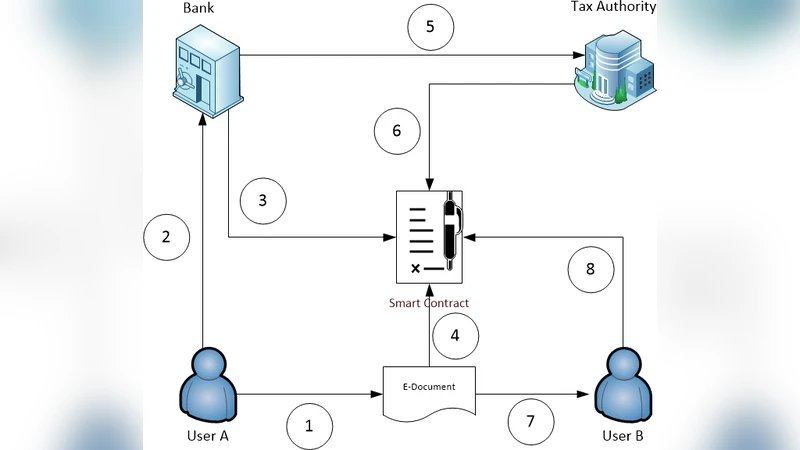
Blockchain technology has enjoyed a massive adoption in cryptocurrencies such as Bitcoin. Following the success, many people have started to explore the possibility of implementing blockchain technology in different fields. We propose smart stamp duty, a system which can revolutionize the way stamp duty is managed and paid. The smart stamp duty offers significant improvements on the convenience when paying stamp duty. At the same time, the blockchain technology also provides the auditability of the transaction data. Smart stamp duty enables the expansion of the existing electronic stamp duty application to retail level as well as allows the taxpayers to pay the stamp duty of their electronic documents. Our proposed system also enables the taxpayers to print their electronic documents without losing the paid electronic-based stamps.
💡 Research Summary
The paper proposes “Smart Stamp Duty” (SSD), a blockchain‑based system that modernizes the way stamp duties are recorded and paid. Traditional electronic stamp duty solutions are confined to customs and certification stages, leaving retail‑level transactions dependent on paper stamps. SSD extends the electronic model to the retail domain by embedding a smart contract on a permissioned blockchain that automatically registers a document’s hash, timestamps the transaction, and triggers the transfer or burning of a dedicated token representing the stamp duty.
The architecture consists of four layers: (1) a user‑facing mobile/web interface where documents are uploaded and a QR code is generated; (2) a backend API that validates the document hash, authenticates the user, and invokes the smart contract; (3) a permissioned blockchain layer that offers high throughput and low latency while preserving immutability; and (4) an integration module that synchronizes with existing electronic stamp authorities to ensure backward compatibility.
Security is reinforced through multi‑signature wallets, hardware security modules for key storage, and Merkle‑tree proofs for data integrity. To address privacy concerns, the design incorporates zero‑knowledge proof techniques that allow selective disclosure of payment amounts and user identity only when required by auditors or regulators.
From an economic perspective, SSD generates revenue via token issuance fees, transaction fees, and licensing fees paid by governmental agencies. Simulation results indicate a 30 % reduction in processing time and a 20 % cut in operational costs compared to the legacy electronic stamp system, primarily because paper‑based handling and manual reconciliation are eliminated.
A prototype implementation demonstrates the end‑to‑end flow: a user selects a PDF, the system computes its SHA‑256 hash, the smart contract records the hash and burns the appropriate stamp token, and a QR‑encoded receipt is issued. The receipt can be printed on the physical document without losing legal validity, as the blockchain entry provides an immutable proof of duty payment.
The authors also discuss regulatory implications, emphasizing the need for governmental standardization, certification‑authority participation, and alignment with international data‑protection and blockchain‑regulation frameworks. They conclude that SSD delivers a transparent, auditable, and user‑friendly stamp duty solution that benefits taxpayers, tax authorities, and auditors alike. Future work will explore cross‑chain interoperability, large‑scale field trials, and contributions to international standards for blockchain‑enabled fiscal instruments.
Comments & Academic Discussion
Loading comments...
Leave a Comment