Realizing Edge Marketplaces: Challenges and Opportunities
The edge of the network has the potential to host services for supporting a variety of user applications, ranging in complexity from data preprocessing, image and video rendering, and interactive gaming, to embedded systems in autonomous cars and built environments. However, the computational and data resources over which such services are hosted, and the actors that interact with these services, have an intermittent availability and access profile, introducing significant risk for user applications that must rely on them. This article investigates the development of an edge marketplace, which is able to support multiple providers for offering services at the network edge, and to enable demand supply for influencing the operation of such a marketplace. Resilience, cost, and quality of service and experience will subsequently enable such a marketplace to adapt its services over time. This article also describes how distributed-ledger technologies (such as blockchains) provide a promising approach to support the operation of such a marketplace and regulate its behavior (such as the GDPR in Europe) and operation. Two application scenarios provide context for the discussion of how such a marketplace would function and be utilized in practice.
💡 Research Summary
The paper presents a comprehensive vision for an “edge marketplace” that enables multiple providers to offer computing, storage, and sensor services at the network edge while allowing consumers to acquire these resources through demand‑driven mechanisms. The authors begin by highlighting the growing importance of edge computing for tasks such as data preprocessing, video rendering, interactive gaming, autonomous vehicle control, and smart‑building automation. They point out that edge resources are inherently fragmented: they belong to different owners, exhibit intermittent availability due to power, connectivity, or policy changes, and thus pose a reliability risk for applications that depend on them.
To mitigate this risk, the paper proposes a marketplace architecture that treats each edge resource as a tokenizable asset. Providers register their assets, specifying capabilities, location, cost, and Service Level Agreement (SLA) parameters. Consumers discover, negotiate, and acquire resources either via real‑time auctions, reservations, or subscription models. The marketplace is designed around three pillars: resilience, cost‑effectiveness, and Quality‑of‑Service (QoS) management. Resilience is achieved through replication of services across multiple edge nodes and multi‑path routing, allowing automatic fail‑over when a node becomes unavailable. Cost‑effectiveness stems from usage‑based billing and dynamic pricing that reflects supply‑demand fluctuations, encouraging efficient utilization of otherwise idle edge capacity. QoS management relies on continuous monitoring of latency, bandwidth, and energy consumption; these metrics are recorded as metadata and enforced by smart contracts that trigger penalties when SLA thresholds are breached.
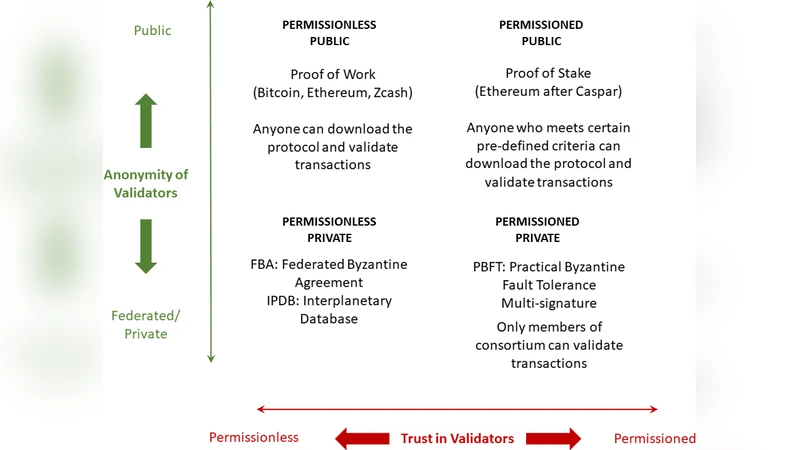
A central contribution of the work is the integration of Distributed Ledger Technologies (DLTs) to provide trust, auditability, and transparency. The authors critically evaluate existing public and private (permissioned) blockchains. Public chains, exemplified by Bitcoin, offer decentralization and immutability but suffer from low throughput, high latency, and a direct conflict with GDPR’s “right to be forgotten” because data stored on‑chain cannot be erased. Private or federated blockchains, such as Hyperledger Fabric or Sawtooth, deliver higher transaction rates and fine‑grained access control but rely on a limited set of validators, reducing the trust model’s openness. To reconcile these trade‑offs, the paper proposes a hybrid architecture: edge nodes operate a lightweight permissioned ledger for recording resource transactions and metadata, while periodically anchoring a cryptographic hash of the ledger’s state onto a public chain. This approach preserves the immutability needed for audit trails while keeping the bulk of data off‑chain, thereby enabling GDPR‑compliant deletion by revoking the off‑chain reference. Smart contracts encode the SLA logic, automate payments, and enforce penalties without human intervention.
Two real‑world scenarios illustrate the applicability of the proposed marketplace. In the “Smart Cities and Digital Twins” case, heterogeneous sensors owned by municipalities, private utilities, commercial venues, and citizens generate high‑frequency streams of traffic, air‑quality, water‑flow, and energy‑demand data. By exposing these streams through the edge marketplace, city planners can acquire only the data they need, paying per use and contributing to the funding of sensor deployments. The marketplace also supplies provenance certificates stored on the ledger, addressing concerns about data quality, trust, and provenance that are critical for accurate digital‑twin simulations. In the “Healthcare Rehabilitation” case, the Lokomat gait‑analysis system produces detailed biomechanical data that is stored locally on a Raspberry Pi edge device. The paper proposes encrypting the data, generating a hash, and recording the hash on the ledger before sharing the CSV file with other care providers. This ensures data integrity, enables fine‑grained access control, and provides an immutable audit trail, while still allowing patients to exercise their GDPR rights through off‑chain deletion mechanisms.
Finally, the authors identify open challenges that must be addressed before large‑scale deployment. These include (1) defining standard APIs that abstract heterogeneous edge hardware (ARM CPUs, GPUs, FPGAs, micro‑datacenters) and network conditions; (2) establishing robust resource‑auditing and trust‑evaluation frameworks; (3) designing interoperable protocols that bridge existing cloud/edge orchestration platforms with the DLT layer; and (4) aligning the marketplace’s governance model with regulatory requirements such as GDPR, data sovereignty, and sector‑specific compliance (e.g., medical device regulations). The paper calls for pilot implementations, performance benchmarking of hybrid consensus mechanisms, and active participation in standards bodies to refine the model. In sum, the work offers a multidisciplinary roadmap that blends edge computing, blockchain, economics, and law to realize resilient, transparent, and economically viable edge marketplaces.
Comments & Academic Discussion
Loading comments...
Leave a Comment