A Brief survey on Smart Community and Smart Transportation
World population growing in conjunction with the preference to live in the cities; make the city management a challenging issue. Traditional Cities with their common features will not be able to handle the human needs. As a result, smart city and its beneficial outcomes will attract a lot of attention recently. In fact, Smart city/community that is the field of collecting and processing data from so many different areas while making proper decisions and feeding to all parts of the system will be the future style of the cities. In other words, smart community is a complex big data problem which should combine different fields of research to make a unit environment. This brief survey will deal with all aspects of the smart communities. There will also be explained different categories of the smart communities in addition to their future challenges. In this work we try to introduce some aspects of the smart transportation in more detail.
💡 Research Summary
The paper opens by highlighting the rapid urbanization of the world’s population and the resulting strain on traditional city management approaches. It argues that the conventional model cannot satisfy the growing needs of urban dwellers and therefore introduces the concept of a “smart city” or “smart community” as a data‑driven, interdisciplinary solution. The authors define a smart community as a large‑scale big‑data problem that integrates sensing, communication, computation, and decision‑making across multiple domains.
The manuscript is organized into several sections. Section II surveys the main functional areas of a smart city, grouping them into four categories: healthcare, environment, energy, and transportation.
In the healthcare subsection, the authors describe how wearable devices, mobile sensors, and ambient IoT nodes can continuously monitor physiological parameters. They discuss the role of blockchain for secure data transmission and machine‑learning analytics for personalized treatment and predictive health management. A schematic (Fig. 1) illustrates the end‑to‑end data flow from sensors to clinicians and city‑wide health dashboards.
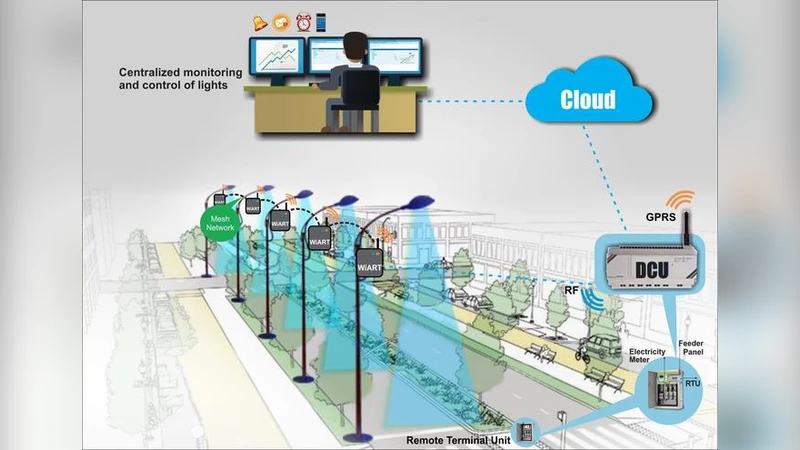
The environment subsection emphasizes the decreasing cost of environmental sensors and their deployment in large‑scale monitoring networks (e.g., Chicago’s “Array of Things”). Real‑time measurements of air quality, noise, temperature, and humidity are linked to city policies such as school placement, traffic routing, and public‑health alerts. The paper also touches on smart street‑lighting, noting that lighting accounts for roughly 19 % of municipal electricity consumption and can be dynamically dimmed based on traffic flow predictions derived from sensor data and machine‑learning models.
The energy subsection focuses on distributed generation (DG), energy storage, and the emergence of prosumer households that both consume and produce electricity. The authors argue that a unified big‑data platform must aggregate production capacity, storage status, and consumption patterns to enable optimal dispatch and cost‑effective operation of the smart grid. Figure 6 depicts a complex interaction diagram among autonomous vehicles, renewable generators, and consumer‑producer homes, underscoring the scale of the data‑integration challenge.
Section III delves into smart transportation, identified as a pivotal component of any smart community. The authors review recent research on autonomous vehicles, vehicle‑to‑infrastructure (V2X) communication, and intelligent traffic‑signal control. They argue that a tightly coupled system—where autonomous cars, smart roads, and centralized traffic‑management servers exchange high‑frequency data—can achieve “quantum‑like” improvements in safety, congestion reduction, and energy efficiency. Path‑planning algorithms, real‑time traffic prediction using regression or deep learning, and the integration of traffic data with other city services (e.g., street‑light dimming) are discussed.
Section IV outlines open research problems and future directions. Key challenges include data standardization across heterogeneous sensors, privacy and security safeguards for personal and civic data, scalable cloud‑edge architectures for real‑time analytics, and the development of policy and regulatory frameworks that support interoperable smart‑city deployments. The authors stress the necessity of interdisciplinary collaboration among engineers, computer scientists, urban planners, and policymakers.
The conclusion (Section V) reiterates that a smart community is more than a collection of isolated technologies; it is an integrated ecosystem that can substantially improve urban quality of life, sustainability, and economic efficiency. While the paper provides a broad overview of existing technologies and potential applications, it lacks detailed experimental results, quantitative performance evaluations, and a clear roadmap for implementation. Nonetheless, it serves as a useful introductory survey for researchers and practitioners interested in the convergence of IoT, big data, and urban infrastructure.
Comments & Academic Discussion
Loading comments...
Leave a Comment