The Indus Script and Economics. A Role for Indus Seals and Tablets in Rationing and Administration of Labor
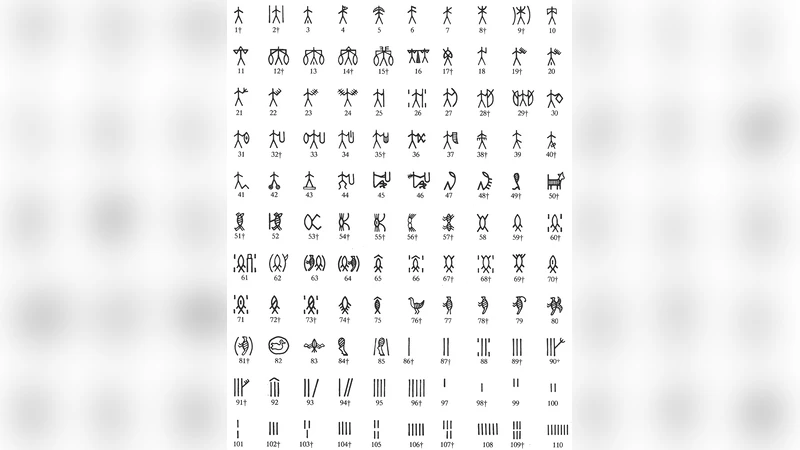
The Indus script remains one of the last major undeciphered scripts of the ancient world. We focus here on Indus inscriptions on a group of miniature tablets discovered by Meadow and Kenoyer in Harappa in 1997. By drawing parallels with proto-Elamite and proto-Cuneiform inscriptions, we explore how these miniature tablets may have been used to record rations allocated to porters or laborers. We then show that similar inscriptions are found on stamp seals, leading to the potentially provocative conclusion that rather than simply indicating ownership of property, Indus seals may have been used for generating tokens, tablets and sealings for repetitive economic transactions such as rations and exchange of canonical amounts of goods, grains, animals, and labor in a barter-based economy.
💡 Research Summary
The paper investigates a small corpus of miniature clay tablets bearing Indus script signs, discovered at Harappa in 1997 by Meadow and Kenoyer, and argues that these objects functioned as administrative records for the allocation of rations and labor. The authors first document the physical characteristics of the tablets: each measures roughly 2 × 3 cm, carries four to seven signs, and exhibits a high degree of craftsmanship. Using high‑resolution photography and 3D scanning, the team creates digital replicas and catalogs the signs against the existing Indus sign database, identifying three principal sign families—dot‑line composites, curved perforations, and angular strokes. Frequency analysis shows that a “three‑dot” sign and a “horizontal line plus dot” combination dominate the corpus, suggesting a numerical function.
To interpret these signs, the authors adopt a comparative epigraphic approach, aligning the Indus signs with those found on proto‑Elamite and proto‑Cuneiform tablets that are known to record rations, wages, and commodity exchanges. In early Mesopotamian contexts, a typical entry consists of a quantity sign followed by a recipient or commodity sign, encoding standardized amounts of barley, beer, livestock, or labor days. The Indus tablets display analogous structures: a numeric sign (e.g., three dots) paired with a curved‑perforation sign that the authors propose marks a specific labor group such as porters or craftsmen. Some tablets even contain repeated sign groups, which the authors interpret as “double allocation” or “multiple recipients.”
A pivotal observation is that the same sign clusters appear on stamp seals (or “sealings”) found at contemporary Indus sites. Traditionally, these seals have been read as markers of ownership or personal identity. The paper challenges this view by suggesting that seals served as portable “token generators.” When a seal was impressed onto a fresh clay tablet, it reproduced the same sign sequence, thereby creating a new, authenticated record of a transaction without the need for a scribal class. This mechanism mirrors the token‑tablet system of early Mesopotamia, but with a crucial difference: the Indus system embeds the semantic content directly in the sign itself, rather than relying on separate token shapes.
From these observations, the authors propose a model of a decentralized rationing network. Individual laborers carried personal seals; when they received a ration, a clerk would imprint the seal onto a tablet, noting the quantity and the labor category. The tablet could then be stored, exchanged, or presented as proof of entitlement. Such a system would have facilitated the distribution of canonical amounts of grain, livestock, or labor time in a barter‑based economy, ensuring consistency across a wide geographic area without a centralized bureaucracy.
The paper acknowledges several limitations. The sample size is small, the stratigraphic context of the tablets is not fully resolved, and the proposed sign‑meaning correspondences are based on statistical similarity rather than direct decipherment. Alternative readings—religious symbols, personal names, or geographic markers—cannot be ruled out. The authors recommend further work, including radiocarbon dating of the tablets, micro‑graphite residue analysis to detect any organic binders, and experimental replication of seal‑impression processes to test the feasibility of the token‑tablet hypothesis.
In sum, the study offers a provocative reinterpretation of Indus seals and miniature tablets, positioning them as functional components of an early administrative apparatus for rationing and labor management. If substantiated, this would add a new dimension to our understanding of the economic sophistication of the Indus civilization, aligning it more closely with contemporaneous Near Eastern bureaucratic practices while preserving its distinctive script‑based approach.
Comments & Academic Discussion
Loading comments...
Leave a Comment