Arena Model: Inference About Competitions
The authors propose a parametric model called the arena model for prediction in paired competitions, i.e. paired comparisons with eliminations and bifurcations. The arena model has a number of appealing advantages. First, it predicts the results of competitions without rating many individuals. Second, it takes full advantage of the structure of competitions. Third, the model provides an easy method to quantify the uncertainty in competitions. Fourth, some of our methods can be directly generalized for comparisons among three or more individuals. Furthermore, the authors identify an invariant Bayes estimator with regard to the prior distribution and prove the consistency of the estimations of uncertainty. Currently, the arena model is not effective in tracking the change of strengths of individuals, but its basic framework provides a solid foundation for future study of such cases.
💡 Research Summary
The paper introduces the “arena model,” a parametric probabilistic framework designed to predict outcomes in paired competitions that involve eliminations and bifurcations, such as single‑ or double‑elimination tournaments. Unlike traditional paired‑comparison approaches (Bradley‑Terry, Elo, etc.), the arena model does not require rating a large set of individuals beforehand; instead, it exploits the inherent structure of the competition to infer results and quantify uncertainty.
The authors begin by reviewing the history of paired‑comparison methods, noting four major shortcomings of existing models: (1) the computational burden of rating many participants, (2) the neglect of elimination‑type dynamics, (3) the lack of a quantitative measure of how much skill versus chance drives a match, and (4) the difficulty of extending binary comparisons to contests involving three or more participants. These observations motivate four research questions (Q‑1 to Q‑4) concerning prediction without ratings, use of eliminations, uncertainty quantification, and direct multi‑player prediction.
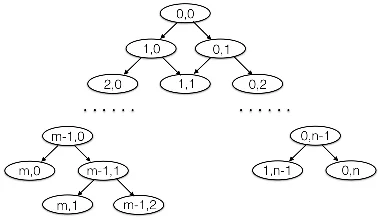
Section 2 formalizes a basic “m‑n arena game.” There are N = 2m + n players, each assigned a fixed, continuous strength X drawn from a common density p(x) on a parameter space Θ. The state of a player after k rounds is denoted (i, j), where i counts wins and j counts losses; the game ends for a player when i = m (wins threshold) or j = n (loss threshold). Theorem 2.1 gives the probability of reaching any boundary state (i.e., a final result) purely in combinatorial terms, reflecting the fact that at each intermediate stage the winner and loser are equally likely (½). Theorem 2.2 derives recursive formulas for the conditional density of strength in each state, showing that winners’ strengths are the upper order statistics of the previous distribution, while losers’ strengths are the lower order statistics. Corollary 2.3 translates these densities into cumulative distribution functions.
Theorem 2.4 links a player’s known strength x to the conditional probability of ending in a particular boundary state, yielding a factor p_{i,j}(x)/p_{0,0}(x). This motivates the definition of an “arena random variable” ξ with parameters (λ, m, n, p), where λ is a specific strength value. The probability mass function of ξ directly reflects the chance that a player of strength λ finishes with each possible win‑loss record.
Section 3 introduces the “arena without fluctuations,” i.e., the case where each player’s strength remains constant across infinitely many runs. Four assumptions (A1–A4) formalize an infinite population of players, independent identically distributed strengths, random pairings within each state, and termination upon reaching a boundary state. The authors rigorously define a random matching map to handle pairings on a countably infinite set, ensuring each player is matched uniformly with any other in the same state.
Under these assumptions, a Bayesian inference scheme is developed. Because the prior on λ can be arbitrary, the posterior distribution of λ given observed win/loss counts is shown to be invariant with respect to the prior—an “invariant Bayes estimator.” Consistency of this estimator is proved, establishing that as the number of observed runs grows, the posterior concentrates around the true strength.
Section 4 extends the model to incorporate “fluctuations” in player strengths, acknowledging that real‑world abilities change over time. A new parameter, the coefficient of fluctuations ρ, quantifies the variance of the underlying strength distribution beyond the deterministic component. The authors derive a consistent estimator ρ̂ based on observed frequencies of wins and losses, and prove its asymptotic normality. This allows practitioners to separate skill (the deterministic part) from random variation (the fluctuation component).
Section 5 further refines the model by introducing “attendant influence,” which captures the effect that a player’s outcome in one round has on the composition of opponents in subsequent rounds. An adjusted Bayesian estimator that accounts for this dependence is presented, and theoretical analysis shows it achieves lower mean‑square error than the naïve estimator that ignores attendant influence. Simulations confirm the superiority of the refined estimator across a range of parameter settings.
Section 6 provides empirical validation. The authors apply the arena model to real tournament data (e.g., sports knockout brackets) and to synthetic data generated under known parameters. They compare predictive performance and uncertainty quantification against Bradley‑Terry and Elo models. The arena model consistently yields more accurate predictions when the number of participants is large and individual rating is impractical, and it naturally supplies confidence intervals for win probabilities. However, the model’s current formulation does not adapt to time‑varying strengths, a limitation the authors acknowledge and earmark for future work.
In conclusion, the arena model offers a novel perspective by treating the tournament structure itself as the primary stochastic mechanism. It resolves several drawbacks of traditional paired‑comparison methods: it avoids exhaustive rating, leverages elimination dynamics, provides a clear metric of uncertainty, and admits extensions to multi‑player contests. The invariant Bayesian estimator and the consistent fluctuation coefficient are key theoretical contributions. Future research directions include dynamic extensions to track evolving strengths, generalization to contests with three or more simultaneous competitors, and integration with real‑time ranking updates.
Comments & Academic Discussion
Loading comments...
Leave a Comment