Introduction to Astronomy with Radioactivity
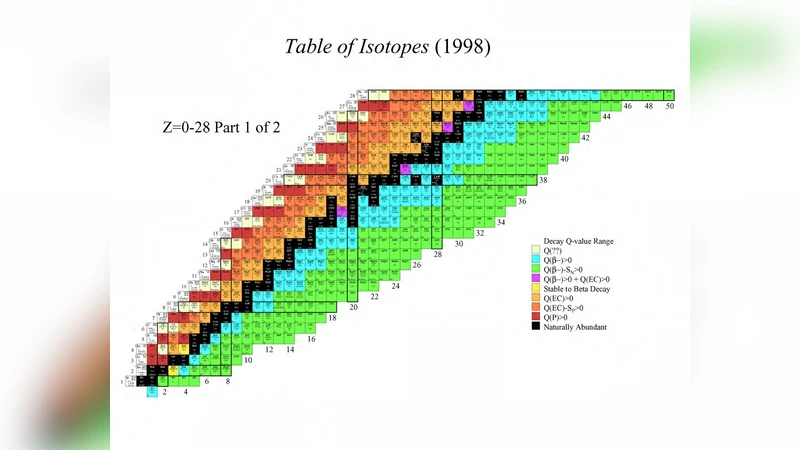
In the late nineteenth century, Antoine Henri Becquerel discovered radioactivity and thus the physics of weak interactions, well before atomic and quantum physics was known. The different types of radioactive decay, alpha, beta, and gamma decay, all are different types of interactions causing the same, spontaneous, and time-independent decay of an unstable nucleus into another and more stable nucleus. Nuclear reactions in cosmic sites re-arrange the basic constituents of atomic nuclei (neutrons and protons) among the different configurations which are allowed by Nature, thus producing radioactive isotopes as a by-product. Throughout cosmic history, such reactions occur in different sites, and lead to rearrangements of the relative abundances of cosmic nuclei, a process called cosmic chemical evolution, which can be studied through the observations of radioactivity. The special role of radioactivity in such studies is contributed by the intrinsic decay of such material after it has been produced in cosmic sites. This brings in a new aspect, the clock of the radioactive decay. Observational studies of cosmic radioactivities intrinsically obtain isotopic information which are at the heart of cosmic nucleosynthesis. They are best performed by precision mass spectroscopy in terrestrial laboratories, which has been combined with sophisticated radiochemistry to extract meteoritic components originating from outside the solar system, and by spectroscopy of characteristic gamma-ray lines emitted upon radioactive decay in cosmic environments and measured with space-based telescopes. This book describes where and how specific astronomical messages from cosmic radioactivity help to complement the studies of cosmic nucleosynthesis sites anad of cosmic chemical evolution.
💡 Research Summary
The paper presents a comprehensive overview of how radioactivity serves as a unique probe of cosmic nucleosynthesis and chemical evolution. Beginning with the historical note that Henri Becquerel’s discovery of radioactivity in the late 19th century pre‑dated modern atomic and quantum physics, the author emphasizes that the three classic decay modes—alpha, beta, and gamma—represent distinct fundamental interactions (strong, weak, and electromagnetic) that all lead to the spontaneous, time‑independent transformation of an unstable nucleus into a more stable one. In astrophysical environments, nuclear reactions rearrange protons and neutrons among the many configurations allowed by the strong force, thereby producing a suite of radioactive isotopes as by‑products. Because each isotope decays with a characteristic half‑life that is essentially immune to external conditions, these nuclides act as natural clocks that record the time elapsed since their synthesis.
Two complementary observational strategies are examined. The first relies on laboratory analysis of extraterrestrial samples—meteorites, lunar rocks, and even terrestrial atmospheric deposits. By applying sophisticated radiochemical separation techniques and ultra‑high‑precision mass spectrometry (e.g., MC‑ICP‑MS, TIMS), scientists can measure isotopic ratios such as ^26Al/^27Al, ^60Fe/^56Fe, or ^244Pu/^238U with parts‑per‑billion accuracy. Knowing the decay constants, the measured ratios can be back‑calculated to infer the production epoch, the astrophysical site (e.g., supernova, asymptotic‑giant‑branch star, neutron‑star merger), and the physical conditions (temperature, neutron density) prevailing at that time. The second strategy exploits the fact that radioactive decay emits photons of well‑defined energies. Space‑based gamma‑ray observatories (INTEGRAL/SPI, COMPTEL, Fermi/GBM, and future missions such as AMEGO or e‑ASTROGAM) detect characteristic lines—1.809 MeV from ^26Al, 1.157 MeV from ^44Ti, 0.511 MeV from positron annihilation, etc.—providing a direct, real‑time map of where radioactive material is currently decaying in the Galaxy. These observations reveal ongoing nucleosynthesis in massive‑star regions, the recent history of core‑collapse supernovae (e.g., ^44Ti in Cassiopeia A), and the imprint of nearby supernova events through excess ^60Fe deposited on Earth.
The paper highlights several key insights. First, radioactive isotopes constitute “cosmic chronometers” that allow astrophysicists to date nucleosynthetic events across a vast temporal range—from a few years (short‑lived ^44Ti) to billions of years (^238U). Second, the measured isotopic abundances provide stringent constraints on nuclear reaction networks and stellar evolution models, because the production of a given nuclide depends sensitively on temperature, density, and neutron‑capture rates. Third, gamma‑ray line astronomy offers a unique window that is inaccessible to other wavelengths: it directly observes the decay of freshly synthesized nuclei, thereby mapping the spatial distribution of active nucleosynthesis throughout the Milky Way. Fourth, the combination of laboratory isotopic studies and space‑based gamma‑ray spectroscopy enables a holistic reconstruction of cosmic chemical evolution, linking the microscopic processes that create nuclei to the macroscopic evolution of galaxies. For example, the Galactic ^26Al mass inferred from the 1.809 MeV line traces the recent star‑formation rate, while the detection of ^60Fe in deep‑sea sediments records a supernova that exploded within a few hundred parsecs of the Solar System a few million years ago.
Technical limitations are also addressed. Current mass‑spectrometers, while achieving sub‑ppb precision, still struggle with ultra‑trace amounts of short‑lived isotopes, and sample preparation for micron‑sized presolar grains remains challenging. Gamma‑ray instruments are limited by modest energy resolution and sensitivity, restricting detections to the brightest sources. The author argues that forthcoming advances—higher‑efficiency ion sources, laser‑ablation techniques for single‑grain analysis, and next‑generation Compton telescopes with superior spectral resolution—will dramatically improve detection thresholds. Such progress will allow the identification of many more weak lines (e.g., from ^22Na, ^56Co, ^57Co) and enable time‑resolved studies of individual supernova remnants.
In conclusion, the paper positions radioactivity as a bridge between nuclear physics, astrophysics, and cosmochemistry. The intrinsic decay clock, the distinctive gamma‑ray signatures, and the precision isotopic measurements together provide a powerful, multi‑modal toolkit for probing where, when, and how the elements were forged. As instrumentation advances, radioactivity will play an increasingly central role in unraveling the history of nucleosynthesis, the lifecycle of matter in galaxies, and the broader narrative of cosmic chemical evolution.
Comments & Academic Discussion
Loading comments...
Leave a Comment