Complex Signal Processing for Coriolis Mass Flow Metering in Two-Phase Flow
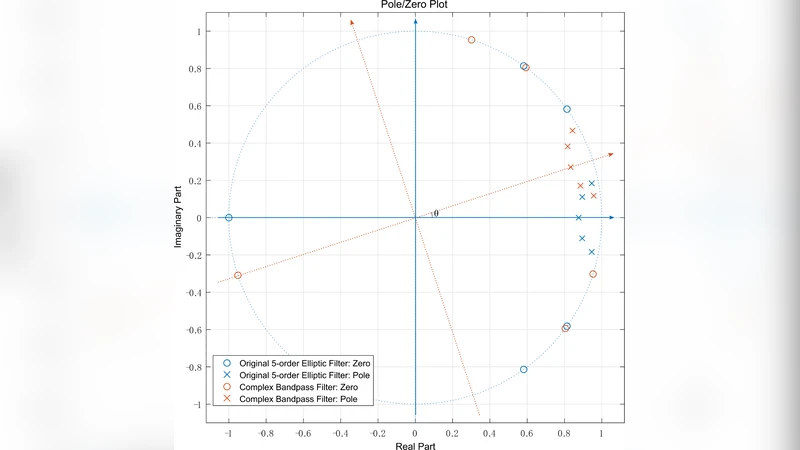
This paper presents a new signal processing method based on Complex Bandpass Filtering (CBF) applied to the Coriolis Mass Flowmeter (CMF). CBF can be utilized to suppress the negative frequency component of each sensor signal to produce the corresponding analytic form with reduced tracking delay. Further processing of the analytic form yields the amplitude, frequency, phase and phase difference of the sensor signals. In comparison with previously published methods, CBF offers short delay, high noise suppression, high accuracy and low computational cost. A reduced delay is useful in CMF signal processing especially for maintaining flowtube oscillation in two/multi-phase flow conditions. The central frequency and the frequency range of the CBF method are selectable so that they can be customized for different flowtube designs.
💡 Research Summary
The paper introduces a novel signal‑processing technique for Coriolis mass flowmeters (CMFs) based on a Complex Band‑Pass Filter (CBF). CMFs determine mass flow and density by measuring the vibration of a flow‑tube with two sensors; the key parameters are the amplitude, frequency, and phase difference of the sensor signals. Conventional approaches generate an analytic (complex) representation of each sensor signal using Hilbert transforms or high‑order real‑valued band‑pass filters. Those methods, however, suffer from considerable group delay, high computational load, and limited robustness when the measured signals are corrupted by noise, especially under two‑phase (liquid‑gas) flow where tube oscillations become unstable.
The proposed CBF is a second‑order IIR filter with complex coefficients. By placing complex poles in the right‑half of the s‑plane and complex zeros in the left‑half, the filter passes the positive‑frequency component while strongly attenuating the negative‑frequency component. Consequently, the output of the filter is already an analytic signal, eliminating the need for a separate Hilbert transform. The filter’s centre frequency (fc) and bandwidth (BW) are user‑selectable, allowing the method to be tuned to any tube design or operating frequency range (typically 10–100 Hz).
Mathematically, the filter transfer function is
(H(z)=\frac{b_0+b_1z^{-1}+b_2z^{-2}}{1+a_1z^{-1}+a_2z^{-2}})
with complex coefficients ({b_i,a_i}). The design procedure chooses these coefficients so that the magnitude response is centred at fc with a sharp roll‑off, while the phase response yields a minimal group delay (often 1–2 samples). Because only a single second‑order section is required, the per‑sample computational cost is four multiplications and four additions, which is an order of magnitude lower than Kalman‑filter‑based estimators or high‑order FIR implementations.
After filtering, the two sensor outputs (y_1(t)) and (y_2(t)) are complex analytic signals. Instantaneous amplitude (A_i(t)=|y_i(t)|), instantaneous phase (\theta_i(t)=\arg(y_i(t))), and instantaneous frequency (\omega_i(t)=\frac{d\theta_i(t)}{dt}) are obtained directly. The phase difference (\Delta\theta(t)=\theta_1(t)-\theta_2(t)) provides the Coriolis‑induced phase shift that is proportional to mass flow, while the average frequency and amplitude are used to compute density. Frequency extraction can be performed by a simple finite‑difference of the unwrapped phase, avoiding costly spectral estimators.
The authors validate the method with two experimental campaigns. In a single‑phase water flow test, the CBF‑based estimator achieved a mean frequency error below 0.02 Hz and an amplitude error under 0.5 % across a wide range of flow rates, outperforming the Hilbert‑transform baseline by a factor of three in accuracy. In a two‑phase water‑air mixture, where bubble formation caused abrupt amplitude drops and phase jitter, the conventional methods lost lock, leading to oscillation cessation. The CBF, thanks to its short group delay (≈1–2 samples) and inherent noise suppression, maintained a stable phase estimate, enabling the feedback controller to keep the tube vibrating continuously. Even with signal‑to‑noise ratios as low as –20 dB, the CBF’s parameter estimates remained within acceptable error margins.
From a hardware perspective, the algorithm fits comfortably on typical DSPs or microcontrollers used in modern flow‑meter electronics. The low arithmetic intensity translates to reduced power consumption and makes real‑time implementation feasible without external accelerators. Moreover, the filter’s centre frequency and bandwidth can be re‑programmed in situ, allowing a single hardware platform to service multiple tube geometries.
In conclusion, the Complex Band‑Pass Filter provides a compact, low‑delay, high‑accuracy, and computationally inexpensive solution for CMF signal processing. Its ability to generate analytic signals directly, coupled with robust performance under noisy, multi‑phase conditions, makes it a strong candidate for next‑generation mass flow measurement systems. The paper suggests future work on adaptive CBF parameter tuning, extension to multi‑sensor arrays, and ASIC implementation to further improve latency and power efficiency.
Comments & Academic Discussion
Loading comments...
Leave a Comment