Classification of cyber-physical production systems applications: Proposition of an analysis framework
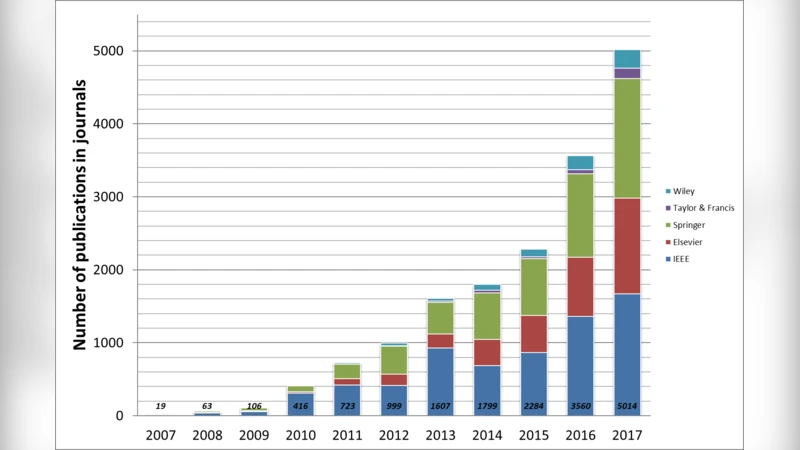
Cyber-physical systems have encountered a huge success in the past decade in several scientific communities, and specifically in production topics. The main attraction of the concept relies in the fact that it encompasses many scientific topics that were distinct before. The downside is the lack of readability of the current developments about cyber-physical production systems (CPPS). Indeed, the large scientific area of CPPS makes it difficult to identify clearly and rapidly, in the various applications that were made of CPPS, what are the choices, best practices and methodology that are suggested and that could be used for a new application. This work intends to introduce an analysis framework able to classify those developments. An extensive study of literature enabled to extract the major criteria that are to be used in the framework, namely: Development Extent; Research Axis; Instrumenting; Communication standards; Intelligence deposit; Cognition level; Human factor. Several recent examples of CPPS developments in literature are used to illustrate the use of the framework and brief conclusions are drawn from the comparative analysis of those examples.
💡 Research Summary
The paper addresses a growing problem in the field of cyber‑physical production systems (CPPS): the sheer breadth of research and application domains makes it difficult for scholars and practitioners to quickly identify the design choices, best practices, and methodological guidelines that are relevant to a new CPPS project. To remedy this, the authors conduct an extensive literature review and extract a set of seven classification criteria that together form an “analysis framework” for CPPS applications.
The seven criteria are:
-
Development Extent – the maturity level of the system (laboratory prototype, pilot plant, or full‑scale commercial deployment). This dimension reflects investment size, risk exposure, and expected impact.
-
Research Axis – the primary research focus, such as improving manufacturing efficiency, enhancing flexibility, raising product quality, or enabling new business models. It clarifies the value proposition of the CPPS under study.
-
Instrumenting – the type, density, resolution, and real‑time capabilities of sensors and actuators. High‑resolution, real‑time instrumentation is a prerequisite for data‑driven decision making and machine‑learning model training.
-
Communication Standards – the industrial networking protocols employed (e.g., OPC UA, MQTT, DDS, PROFINET). Standardized communication underpins interoperability, security, and scalability across heterogeneous devices.
-
Intelligence Deposit – the location where data, models, and analytics reside (cloud, edge, or local device). This influences latency, privacy, and computational cost.
-
Cognition Level – the degree of system intelligence, ranging from reactive (simple rule‑based control) through predictive (forecasting, optimization) to autonomous (self‑learning, self‑healing). The cognition level dictates algorithmic complexity and data quality requirements.
-
Human Factor – the interaction between operators and the CPPS, including user interfaces, training needs, safety considerations, and operator trust. Human‑centric design is essential for technology acceptance and sustainable deployment.
The authors apply the framework to several recent CPPS case studies, illustrating how different projects occupy distinct positions across the seven dimensions. For example, a German smart‑factory pilot combines a high Development Extent with a focus on flexibility and new business models, uses OPC UA for communication, places intelligence at the edge, and operates at a predictive cognition level while explicitly addressing human‑robot collaboration. In contrast, a Japanese small‑batch component line relies on low‑cost sensors, MQTT, a cloud‑centric intelligence deposit, and remains at a reactive cognition level, with minimal discussion of human factors. A large‑scale U.S. automotive assembly plant exemplifies a fully commercialized, autonomous CPPS that blends DDS and OPC UA, distributes intelligence across cloud and edge, and integrates advanced AR/VR training for operators.
Through these comparative analyses, the paper demonstrates that the framework not only categorizes existing work but also reveals gaps in the literature. Notably, the Human Factor dimension is under‑represented, suggesting a need for more research on operator trust, collaborative robot interfaces, and systematic training programs.
The conclusions emphasize the practical benefits of the framework: it provides a common language for interdisciplinary stakeholders, supports systematic early‑stage design decision making, helps identify risk and success factors, and can guide future standardization efforts. The authors propose that the framework be continuously refined and populated with new case studies, thereby evolving into a living knowledge base that can accelerate the development and deployment of CPPS across industries.
Comments & Academic Discussion
Loading comments...
Leave a Comment